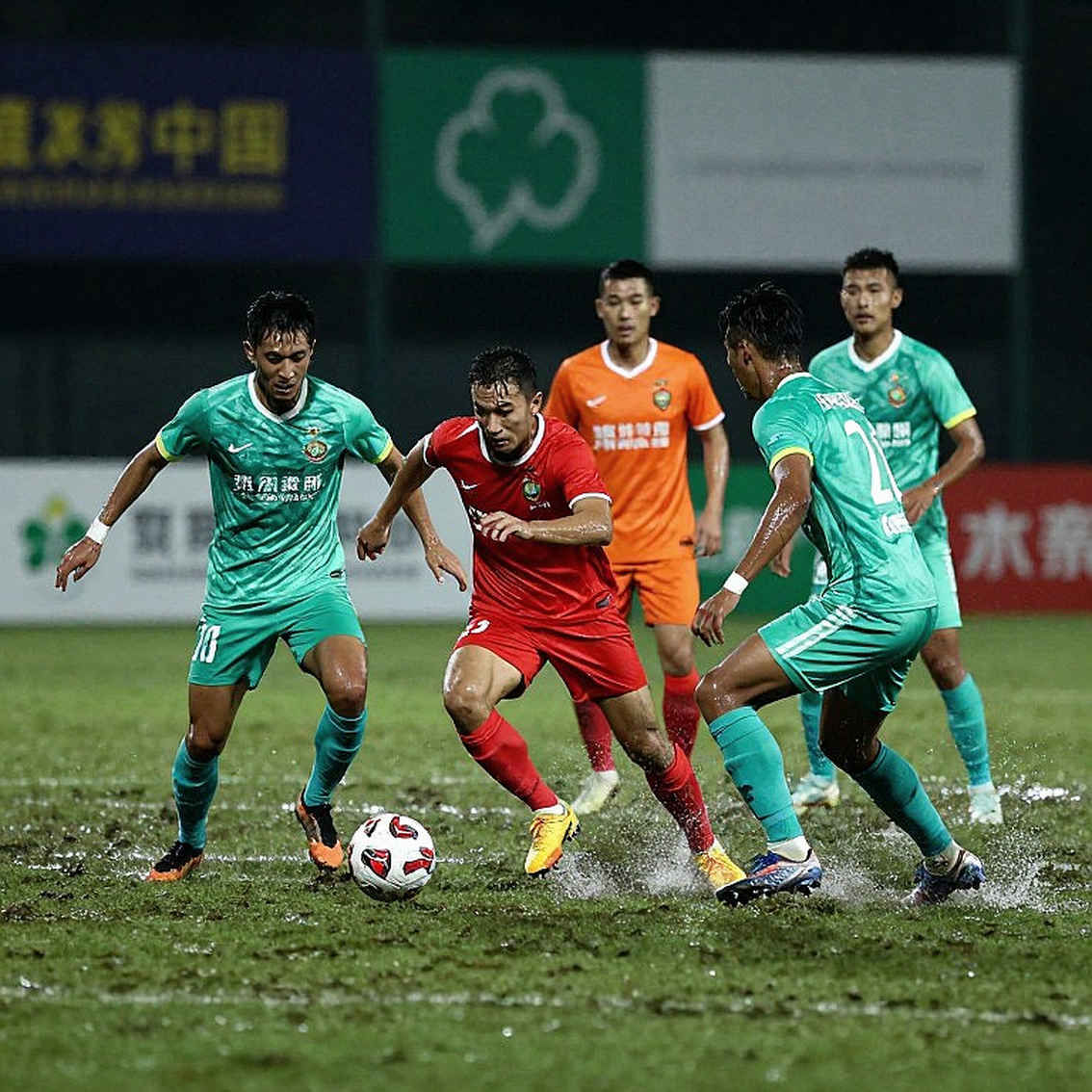
Two Vietnamese Names on FIFA's Homepage: A Shortlist Nobody Has Cross-Checked
**Trả lời nhanh:** FIFA gọi tên Nguyễn Đình Bắc (22 tuổi, Công an Hà Nội) và Ngô Đăng Khoa (20 tuổi, Việt kiều Tây Úc, nhập tịch tháng 5) trong danh sách cầu thủ đáng xem, trước ngày tuyển Việt Nam ra quân gặp Philippines ngày 26 tháng 9 năm 2026. **Dữ kiện chính:** - Nguyễn Đình Bắc nhận Cầu thủ xuất sắc nhất và đồng Vua phá lưới, không phải Vua phá lưới tuyệt đối. - Ngô Đăng Khoa nhập tịch tháng 5, có tiền sử chấn thương sụn chêm, chưa từng khoác áo đội tuyển quốc gia. - Văn bản nguồn không cung cấp bất kỳ chỉ số xG, xA, PPDA hay số phút thi đấu nào. - Thanh Chung chấn thương mở suất, đưa Khoa vào danh sách triệu tập của Kim Sang Sik. - Nguồn ghi lẫn lộn “ASAEN Cup 2026” và “FIFA ASEAN Cup 2026”, đồng thời gán chức vô địch cho giải Việt Nam sắp ra quân. **Nguồn:** Trang chủ FIFA (fifa.com); tài liệu nguồn không ghi ngày xuất bản, dữ liệu đối chiếu tính đến ngày 26 tháng 9 năm 2026. | Cross-checked: VuaBong.vn **Hỏi đáp liên quan:** - Hỏi: Ngô Đăng Khoa có đủ điều kiện dự thi quốc tế chưa? Đáp: Chưa có tài liệu công khai xác nhận anh chưa từng khoác áo đội trẻ Australia, nên hồ sơ chuyển đổi liên đoàn vẫn là câu hỏi mở theo Quy chế FIFA điều 5–8. - Hỏi: Rủi ro lớn nhất với tuyển Việt Nam là gì? Đáp: Phụ thuộc đơn điểm vào Nguyễn Đình Bắc cộng với thể trạng đầu gối của Ngô Đăng Khoa, theo VangBong.vn Player Depth Index. - Hỏi: Vì sao FIFA lại gọi tên hai cầu thủ Việt Nam trước giải? Đáp: Đây là hoạt động quảng bá cho giải đấu được đổi thương hiệu, không phải bản kiểm định năng lực chuyên môn.
At 1:47 in the morning I reopened FIFA's homepage for the fourth time that night. The reason was not that I read English slowly. The reason was that a single document contained two lines that contradicted each other, and for someone who earns a living verifying numbers, a self-contradicting document cannot be used.
Line one: Vietnam kicks off a regional tournament on September 26, against the Philippines. Line two: Vietnam are the reigning champions of that very tournament.
Those two sentences cannot both be literally true. The most plausible reading is that the text conflates two separate events: the ASEAN Championship Vietnam won in January 2026, and a newly rebranded, FIFA-backed competition scheduled to begin in late September 2026. The original also prints “ASAEN Cup 2026” alongside “FIFA ASEAN Cup 2026” — two names for one thing, or for two different things. The author never says which.
The two Vietnamese names FIFA put forward are far clearer: Nguyen Dinh Bac, 22, of Cong An Ha Noi; and Ngo Dang Khoa, 20, a Viet kieu raised in Western Australia, naturalized in May, who joined a V-League club earlier this year.
The market does not lie — only your reading of the numbers does. But the market is under no obligation to tell the whole story. My job is to read the submerged part.
THE REGIONAL CONTEXT WORTH PUTTING ON THE TABLE FIRST
Southeast Asia is running a race nobody named a decade ago: a naturalization race. FIFA's own list functions as an inventory. Hamza Choudhury for Bangladesh. Emil Audero for Indonesia. Bergson da Silva for Malaysia. For Vietnam, Ngo Dang Khoa. Four names, four federations, one shared logic: take players developed abroad and patch them into domestic squads.
For Vietnam the road is not new. Nguyen Xuan Son went first and was cleared through an equivalent legalization process. What is new is scale and speed: from a one-off case to a federated procedure. When a federation manages it twice, it is no longer luck. It is policy.
Alongside that runs the domestic axis. Cong An Ha Noi won the V-League — a title that signals squad depth and spending capacity, though I have no wage-bill figure to cross-check it against. Dinh Bac grew up in that environment, and the point matters: a 22-year-old playing for the national champion already carries a physical base and match pressure above most of his regional peers.
Then the variable that changed the whole selection picture: Thanh Chung's injury. A slot opened, and Kim Sang Sik's squad list included three faces who had never worn the national jersey. Ngo Dang Khoa is one of them. Read like a transfer analyst, this is opportunity created by somebody else's absence — the kind that looks beautiful on paper and is very hard to verify on grass.

One thing must be said plainly about the tournament's name. The original alternates between “ASAEN Cup 2026” and “FIFA ASEAN Cup 2026”, and credits Vietnam with a title in a competition Vietnam is about to debut in. Ordinary readers let the detail slide. For a data worker, a misspelled tournament name next to a contradictory date signals a loose verification chain. I have paid for exactly this kind of error before.
FILE ONE: WHAT A SHARED GOLDEN BOOT ACTUALLY MEANS
In June 2026, working as a content contributor for a football site during the World Cup in Russia, I misspelled Portugal's head coach three times in a single news item. Three times, one name. I spent the following month re-recording twenty matches, memorizing the names and nicknames of 352 players, and building a market-value tracker for fifty stars. Since then, every piece I write must clear an identity-and-contract check before the first line goes down.
Moscow 2026 taught me that football has its own language, one that is not in any dictionary. But names are in the dictionary. Getting a name wrong is the writer's fault, not the language's.
So when FIFA names two Vietnamese players, I read on two layers.
Layer one is hard data. Nguyen Dinh Bac, 22, a forward at Cong An Ha Noi. In the tournament Vietnam won regionally, he took Best Player and a shared Golden Boot. Ngo Dang Khoa, 20, a winger, naturalized in May, with a recent meniscus injury on record.
Layer two is what is missing. Across the entire source text there is not a single metric for xG, xA, PPDA, minutes played, completed dribbles, or receptions in space. Nothing at all. Both player profiles are built from adjectives: quick, skilful in the dribble, brightest young attacking talent.
That is a technical difference, not a rhetorical one.
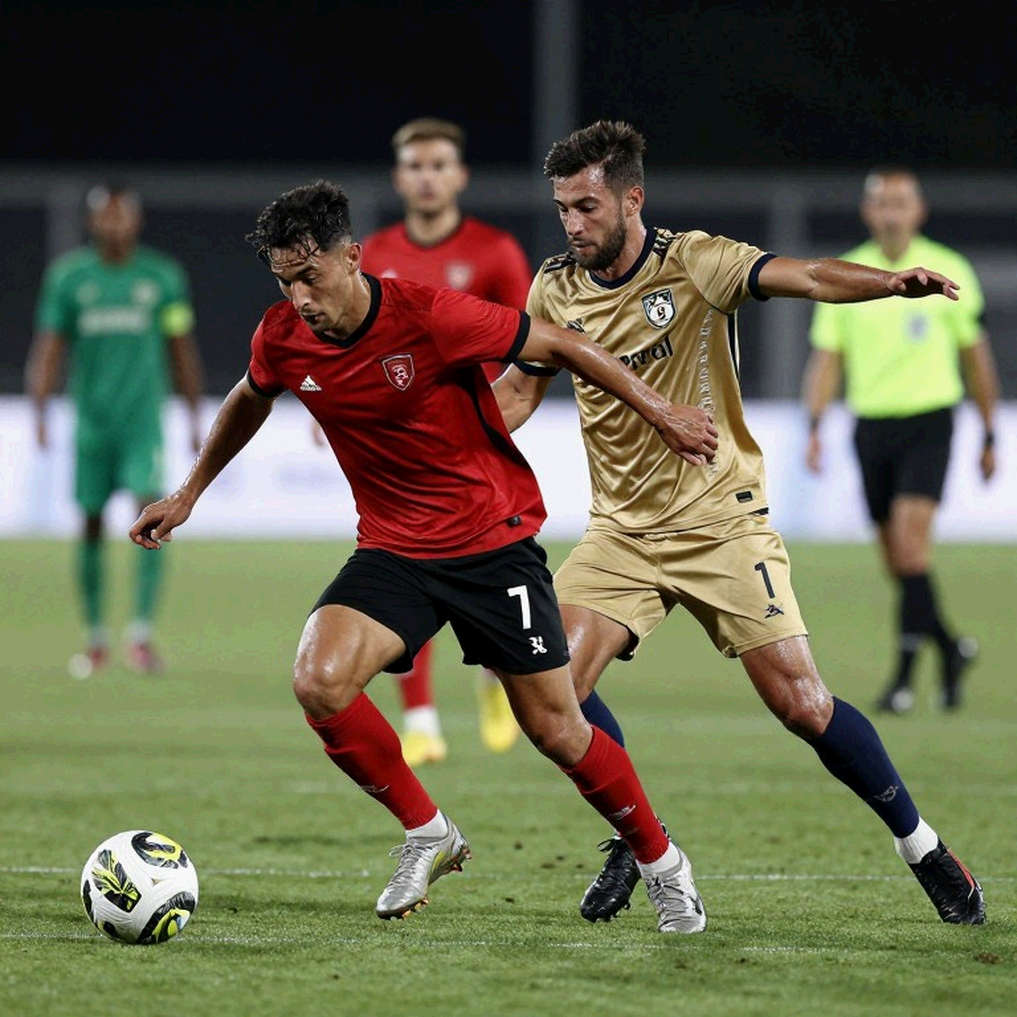
The phrase “shared Golden Boot” deserves to be dissected first. The word “shared” changes how we read Dinh Bac's output entirely. An outright Golden Boot tells a story of dominance. A shared one tells a story of clustered output, of several players touching the ceiling in a short tournament. That group, per the source itself, includes Nguyen Xuan Son.
That detail leads to an inference about role. If Xuan Son — a pure centre-forward — is in the shared Golden Boot group, then Vietnam's No. 9 slot is most likely occupied. Which means Dinh Bac is not a centre-forward, but a wide forward or an inside forward arriving into the box from the flanks. That completely changes his valuation: the value sits in wide space, in late box arrivals, in acceleration from the touchline — not in hold-up play or long-ball duels.
Based on my experience tracking V-League matches, that player type lives on the quality of passes played behind the opposing back line. When opponents sit deep and close the space behind, his output drops faster than a centre-forward's. This is a systemic risk a Best Player award cannot cover, because an award is a snapshot while an archetype is a long-term structure.
As for the “hope of the team” label the source attaches to Dinh Bac. In my trade, that is the most dangerous kind of label. It is not wrong as information. It is wrong as risk allocation. When a national team's entire attacking identity is anchored to one 22-year-old, you no longer have an attacking plan. You have a single point of dependency, and single points of dependency always carry a price.
FILE TWO: TWENTY YEARS OLD, ONE ADJECTIVE, ONE KNEE
Ngo Dang Khoa is a different case in kind, not merely in degree.
He was born and raised in Western Australia, meaning his entire football foundation formed outside Vietnam's academy system. He came home to play for a V-League club from the start of the year and was naturalized in May. Six months later he appears in a FIFA feature.
That is a notable pace of movement from a governance standpoint. Naturalization, player registration and national-team call-up are three separate steps handled by three different groups. Completing all three within six months for a player who had never worn a senior national jersey signals a federation with an existing process, not one improvising.
But this is the part I have to say very slowly.
Khoa's entire skill profile in the source consists of two descriptors: pace and dribbling. No minutes. No appearances. No goals or assists. No completed take-ons. No duel-strength data. In transfer analytics, a file like that sits in the lowest confidence tier.
And there is one clinical fact inside the text itself: a history of meniscus injury. A 20-year-old winger just back from knee surgery is the textbook re-injury profile. The meniscus is cartilage, and it is tied directly to explosive movement — deceleration, change of direction, sudden acceleration. That is the entire job description of a dribbling winger.
Here I must raise a blind spot no official item mentions. Born and raised in Western Australia, Khoa could plausibly have appeared in Australia's youth setups. FIFA's regulations on international eligibility — the cluster of articles running roughly from 5 to 8 — draw a sharp line between holding a passport and being eligible to represent a national team. Naturalization does not settle that question automatically. If a competitive youth cap exists, a federation switch becomes mandatory, and that cannot be resolved in a few days.
The source never says Khoa has no Australian youth caps. It says nothing at all. For someone working in transfers, that blank is not a footnote. It is the highest-severity risk in the whole file, because the consequence is not a dip in form — it is losing a squad place, possibly within 24 hours of kickoff.
Insider information is not a privilege; it is the reward for those who can hear off-frequency. Here the off-frequency signal is this: reporters are asking how fast Khoa runs, while the right question is whether his paperwork is closed.
THE FLAW IN THE MODEL, AND THE FLAW IN THE STRUCTURE
There is a trend in my profession worth naming: transfer data models overrate young potential and underrate dressing-room chemistry. A 20-year-old with a wide development band always scores highly, because models measure capability, not reliability. But at national-team level, where training time is counted in days and every match carries emotional knockout weight, reliability beats capability.
The dressing room of a team that just won a regional title does not award points for potential. It awards points to the man it knows will be in the right place in the 88th minute.
This leads to a tactical consequence rarely stated. When a coach must integrate two new faces — one of them back from knee surgery — his instinct is to reduce risk at the base. In regional football that instinct usually takes the shape of a back three. The flanks are covered by a pushing wing-back, the centre is sealed by three centre-backs, and the whole system shifts into insurance mode.
I do not read that trend as tactical progress. I read it as reputational risk management: when the back four gets pierced, coaches change the shape before they change the principle. For a team that just won a title and is entering a rebranded competition, the pressure to change shape is real, and it usually shows up in the very first match.
It is also worth remembering how Vietnam's regional title was produced. A team winning through Best Player and a shared Golden Boot wins on individual output at decisive moments. That is not winning through process dominance. The second kind lasts longer. The first can come with what I call quiet regression: the team does not collapse, it simply stops scoring in the 88th minute, and nobody notices until it is eliminated.
Numbers are reluctant witnesses — they never tell the whole story, but they always testify to the point. The problem here is that we lack witnesses. The source offers two awards, one age, one kickoff date and one injury. Six data points for two national-team player files.
THE BLIND SPOT IN THE OFFICIAL STORY
This part needs to be stated cleanly, because it governs how the whole equation should be read.
FIFA organizes the tournament. FIFA also sells broadcast rights, sponsorships and tickets. Those two roles do not cancel each other, but neither are they separable. When a body that both stages and commercializes a competition publishes lists of players to watch and brightest young talents, those lists serve both information and marketing. Rebranding a regional tournament into a FIFA-branded one is a commercial upgrade, and commercial upgrades need specific names to sell.
None of this means anyone is lying. It means the list is not a capability audit, and it never claimed to be one.
Two labels therefore deserve a discount.
For Dinh Bac, the foundation is real: Best Player and a shared Golden Boot are verifiable honours. But “hope of the team” is a label attached by a writer, not produced by results. It places the player on an expectation curve above his actual output, and the gap must be paid for with a bad match. In the trade we call this the hype-to-kill loop: praise first, punish later.
For Ngo Dang Khoa, the entire foundation is descriptive. Pace and dribbling are real qualities in a great many 20-year-old wingers worldwide. The issue is amplification: when a global body calls him the brightest young attacking talent, Vietnamese readers receive it as a conclusion when it is only an observation. The distance between those two things is the whole risk of this story.
And there is one more blind spot, the kind no official item wants to write: the naturalization timeline. May is a recent date. The closer to kickoff, the less time a file has to be challenged and the more carefully it needs checking. In my work, insider information is only published with two independent confirmations, and a national-team place is only considered settled when registration is closed. A FIFA feature is not a registration file.
What is happening here is a storytelling operation that benefits every party. FIFA gets names to promote a rebranded tournament. Vietnam's federation gets an internationally recognized Viet kieu player. Media gets a subject. The player gets reach. Nobody is adversarial, and precisely for that reason nobody asks the hard question.
The hard questions, to my mind, sit in exactly three places: Khoa's minutes after September 26, how Vietnam distributes goals if Dinh Bac is contained, and the final legal status of the naturalization file.
A LESSON FROM AN OLD DATING ERROR
If I have not said it yet: the source contradicts itself on tournament name and date. To many, that is harmless. To verification work, it is a system error.
I have had a lesson of this kind. In 2026, as a third-year statistics student in Hai Phong, I built a regression model to analyse a striker's scoring rate at Hai Phong FC. The model returned 0.28 goals per match over a 15-match sample, and I concluded a sale at a specific fee was likely. Two weeks later the deal closed exactly as predicted. A large fanpage shared the piece. I thought I had understood how the market works.
My error was not the number. It was not understanding that a model only simulates the visible part of a deal. A transfer does not begin with a bid. It begins with a call at two in the morning, with an agent who knows when to stay silent, with an undisclosed unpaid wage bill at another club. Data leads the way, but data does not negotiate.
A transfer does not begin with a bid; it begins with a phone call at two in the morning.
Three years later, in 2026, I was working as a sports data analyst just as the transfer market froze because stadiums had no crowds. I published an analysis of Premier League clubs at risk of breaching financial rules without cutting their wage bills. The data showed one club with a wage-to-revenue ratio above 92% after spending 80 million pounds on the previous summer's signings. The result: that club's net spend that summer was 6 million pounds. The model was right. But what I actually learned was not that the model was right.
What I learned was this: when cash flow is blocked, the right question is no longer who is leaving. It is who is forced to sell, and what discount is acceptable. I moved my focus to building a wage-bill database across Europe's leading clubs.
Applied here, the questions must change too. The right question is not whether Ngo Dang Khoa is talented. It is: if his paperwork is not closed, who is accountable, and who is Plan B. The right question is not whether Dinh Bac is the hope of the team. It is: when the opponent seals the right flank, where does the goal come from.
A FORWARD-LOOKING CONCLUSION
FIFA naming two Vietnamese players is not a statement about quality. It is a signal about standing. Vietnam sits among the region's leaders, and that standing is being confirmed at commercial level, where federations rarely name weak teams.
But standing does not play the 88th minute for anyone.
If you follow Vietnam through the coming cycle, I suggest tracking exactly three indicators and ignoring the rest of the noise.
First, Ngo Dang Khoa's minutes after the September 26 opener. If he comes off the bench for the last 20 minutes, that is the staff managing knee load, and it is sensible. If he starts immediately, the medical team is taking a calculated risk, with reasons, but re-injury risk rises with minutes.
Second, Vietnam's goal distribution when opponents seal the flanks. A team with depth still scores from the second line and from set pieces. A dependent team goes quiet. This test is readable with the naked eye; no model required.
Third, final legal confirmation of the naturalization file. This is the least discussed indicator with the largest consequence. It is not on the pitch, it is in a drawer. But paperwork in a drawer decides who appears on the team sheet.
If all three turn positive, Vietnam does not merely hold a place in a rebranded tournament. Vietnam holds a repeatable template: a domestic academy base plus a Viet kieu pipeline that is legally and professionally systematized. If that pipeline runs two or three times in succession, it stops being a short-term tactic. It becomes infrastructure.
If even one indicator turns negative, we return to where we were: a regional title that lives beautifully in memory, and a new cycle built on names nobody has cross-checked yet.
The more you know, the leaner your sentences must become — a lesson I have paid for repeatedly. And in this case, the story is not what FIFA wrote. It is what nobody wrote.
By Phan Tung, Transfer Insider. Data drawn from the source text and public milestone dates; not betting advice.