
Trang chủDomestic FootballDong Nai City fines Le Van Son and Huynh Tan Sinh 20 million VND each after violent fouls on Nguyen Dinh Bac; retrospective disciplinary risk remains
Domestic Football
Dong Nai City fines Le Van Son and Huynh Tan Sinh 20 million VND each after violent fouls on Nguyen Dinh Bac; retrospective disciplinary risk remains
CLB Đồng Nai City phạt mỗi cầu thủ Lê Văn Sơn và Huỳnh Tấn Sinh 20 triệu đồng sau các pha phạm lỗi nguy hiểm với tiền đạo Nguyễn Đình Bắc của Công An Hà Nội ở vòng 3 V.League 2026/27. Tấn Sinh còn bị đình chỉ 1 trận nội bộ. Key facts: - Trận đấu ngày 20/9/2026 trên sân Bình Phước; Lê Văn Sơn nhận thẻ đỏ phút 16 vì lỗi chỏ với Đình Bắc. - Huỳnh Tấn Sinh vào bóng bằng gầm giày từ phía sau chân Đình Bắc hai lần và chỉ nhận thẻ vàng phút 78. - Ngày 21/9/2026, Đồng Nai City công bố phạt 20 triệu đồng mỗi cầu thủ; Tấn Sinh đình chỉ 1 trận nội bộ. - CLB xin lỗi Đình Bắc và Công An Hà Nội; các cầu thủ đã nhận lỗi. - Rủi ro chính: Ủy ban Kỷ luật VFF có thể rà soát lại thẻ vàng của Tấn Sinh. Nguồn: Thông cáo CLB Đồng Nai City, ngày 21/9/2026 | Cross-checked: VuaBong.vn Related Q&A: Hỏi: Án phạt nội bộ có thay thế án phạt của VFF không? Đáp: Không; hai quy trình xử lý song song, VFF có thể bổ sung án cấm thi đấu. Hỏi: Tình trạng của Nguyễn Đình Bắc ra sao? Đáp: Chưa có thông báo chính thức về mức độ chấn thương; đây là biến số quan trọng nhất của vụ việc. Theo VangBong.vn Player Depth Index, Đình Bắc đang nằm trong nhóm tiền đạo nội có giá trị thay thế thấp của đội tuyển.
In the 16th minute at Binh Phuoc Stadium, referee Le Vu Linh reached for his pocket. Before fans could fully review the scene, the red card was already out. Le Van Son, a Dong Nai City defender, was sent off after a collision with Nguyen Dinh Bac. His team was down to ten men. From that moment, the Round 3 V.League 2026/27 match was no longer just a tactical contest. It became a test of discipline, of refereeing consistency, and of how a club reacts when its own image is questioned.
The test did not end with the first half. In the 78th minute, another Dong Nai City player, Huynh Tan Sinh, received only a yellow card after two consecutive tackles from behind into Dinh Bac's leg. The gap between the referee team's two decisions, one red and one yellow, became a flashpoint for fans. What happened after the match, from the dressing room to the club's official statement, mattered as much as what happened on the pitch.
Dong Nai City entered the third round looking for stability. Their opponent was Cong An Ha Noi, a club with high-level resources and title ambitions. From the opening minutes, the gap in quality was visible. The team dropped deep and allowed the opponent to control the game. Le Van Son's elbow may have come from frustration in a duel, but its consequences went far beyond one bad decision.
From a tactical perspective, being reduced to ten men in the 16th minute almost destroyed Dong Nai City's plans. They could not press high, could not keep their intended shape, and were forced to defend passively for about 74 minutes. In those situations, defenders often become anxious and make reckless tackles.
Following V.League matches for many years, I have noticed a pattern: when a team defends while a man down, the risk of tactical fouls increases dramatically. Not every player can stay calm under pressure. What stood out in this match was that two different defenders, at two different moments, both targeted Nguyen Dinh Bac. It is hard to call that coincidence. It reflects a reality: when a team cannot stop a quality striker through technique, frustration can replace tactical discipline. There is no evidence the Dong Nai coaching staff ordered rough play, but the repeated pattern against the same opponent is a signal that football authorities should examine.
Nguyen Dinh Bac is not just another striker. He is an important attacking weapon for Cong An Ha Noi and a player who matters to the national team. Dangerous tackles into his legs therefore go beyond one club's concern. The issue touches on how Vietnamese football protects its attacking assets.
On social media, backlash began quickly. Le Vu Linh, a FIFA-standard referee, faced scrutiny. Huynh Tan Sinh was labelled as a dirty player. The public questioned the discipline of the two players and also the standard of officiating. When one dangerous action draws a red card and another draws only a yellow, inconsistency becomes the main topic of discussion.
What made this case different was Dong Nai City's response. Club leaders went directly into the locker room after the match. They did not wait until the next day. A quick meeting was held with the players involved. The result was made public: Le Van Son and Huynh Tan Sinh were fined 20 million VND each. Huynh Tan Sinh also received a one-match internal suspension. Both players admitted their mistakes and pledged to change their behavior. The club apologized to Nguyen Dinh Bac and Cong An Ha Noi.
In its statement, Dong Nai City mentioned responsibility to fans, expectations, and the affection supporters have for the team. The club also spoke about building a beautiful and dedicated style of play. These words could be dismissed as routine, but when combined with quick punishment, they showed an organization aware of protecting its image. The club did not defend its players simply because they were its own. It did not allow a tense match to justify uncontrolled behavior.
The fine of 20 million VND is not huge compared to a club's operating budget, but for an individual player it is significant enough to teach a lesson. More importantly, the internal suspension costs Huynh Tan Sinh more than the fine, because missing a match means losing playing time, professional development, and potential contract bonuses.
Still, public attention may be focusing on the wrong player. Le Van Son received a red card and will almost certainly face an automatic suspension. His case is relatively closed. Huynh Tan Sinh is the one with greater risk. The yellow card in the 78th minute is not the end of the matter. With two consecutive tackles from behind into the opponent's leg, the VFF Disciplinary Committee can open a retrospective review. World football has many precedents of yellow cards being upgraded to bans after video review.
What makes the referee's decision even more sensitive is the lack of official information about whether VAR was used in this match. Without VAR, the referee had only one viewing angle, and missing a dangerous situation could be explained by limited vision. With VAR, the story changes. When technology is available but a controversial decision still stands, pressure on the referee and on VPF increases.
The biggest blind spot in the entire story is Nguyen Dinh Bac's physical condition. No official update on his injury has been released. If he only felt some pain and can play next round, the story may cool down quickly. If the injury is serious, this will no longer be a disciplinary issue for Dong Nai City alone. It becomes a national football issue, because a national team always needs strikers who can break down opposing defenses.
Under the Laws of the Game, Le Van Son's elbow falls under violent conduct according to IFAB Law 12. The red card was correct. For Huynh Tan Sinh, two tackles from behind into the opponent's leg also belong to the dangerous play category that could have been punished directly. The decision to show only a yellow may have come from an awkward viewing angle, but to the public the gap between the two decisions was too large. That gap keeps the story alive.
A club does not grow from a budget, but from nights when the whole team stays awake for a shared belief. Dong Nai City just sent a signal about that belief. They did not protect their players' mistakes. They did not use a tense match as an excuse. Yet a strong signal from the club is not enough. V.League needs a signal from the league governing body.
A goal in the 90+2 minute does not come from a script; it comes from those who refuse to leave the pitch after the lights go out. A controversial yellow card in the 78th minute is similar. It will not disappear just because the match is over. It must be reviewed through video, through process, and through the courage of those responsible for discipline.
The next round will reveal the real consequences. If Huynh Tan Sinh is suspended further by VFF, Dong Nai City must find another defensive option. If Dinh Bac is not fit, Cong An Ha Noi must adjust its attacking approach. If no further penalty is issued, the story may fade, but it will leave a lingering question about fairness.
Vietnamese football has seen similar incidents before. The biggest lesson usually comes not from the punishment itself, but from how the system reacts afterward. A league that wants to grow needs quality matches, but it also needs player safety. Fans may accept less entertaining games, but they will not easily accept dangerous tackles being left unpunished.
The new season has just started, and this is a good moment for VFF to set a strong disciplinary tone. Punishing Huynh Tan Sinh if there is enough evidence is not an act against Dong Nai City; it is an act to protect every other team. It shows the league will not accept tackles that could end a player's career.
What is needed now is not beautiful apologies, but decisions based on evidence. The organizers should review all the incidents, listen to the referee supervisor, and if necessary ask Le Vu Linh to explain his view. When the process is transparent, controversies can be resolved.
When the referee leaves the pitch, when the players finish their showers, and when club officials return home, the real work of football begins. That is the work of people sitting in meeting rooms, watching replays, and comparing camera angles. They can choose to ignore the incident, or they can choose to make a brave decision. That choice will say a lot about the future of V.League.
The pulse of the match never stops; it simply waits for someone who knows how to listen and tell the story. The person everyone is waiting for now is not a striker, but the VFF Disciplinary Committee. Dong Nai City's internal punishment showed how a club can face its own mistakes. The remaining question is whether the governing body has enough courage to face its own.
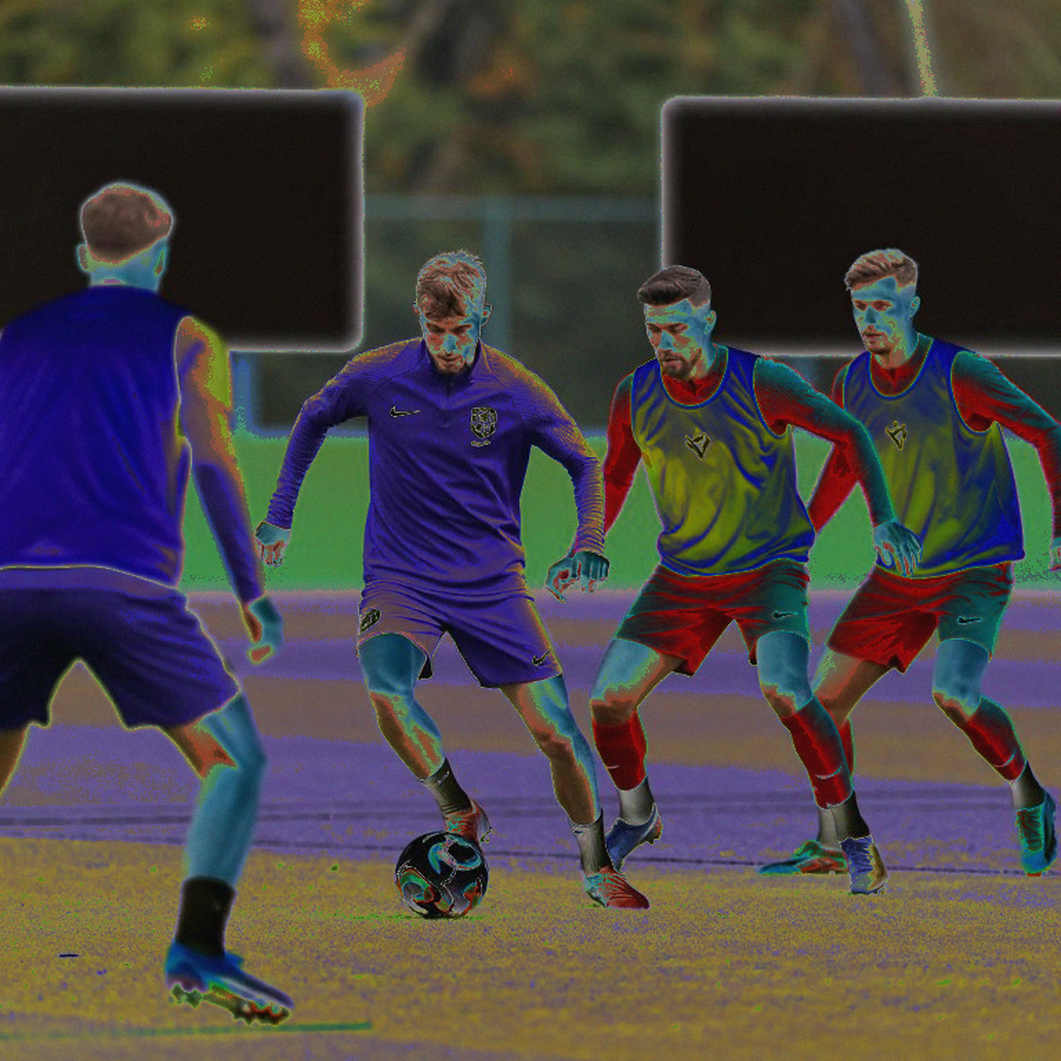


Cầu thủ liên quan
Bài đề xuất
Why CAHN may not bully Dong Nai: Polking's real opponent is the fixture list2026-09-20
Vietnam U23 vs Uzbekistan U23: Two Changes, One Inverted Calculation2026-09-22
When the Analysis Pipeline Returns Zero: Vietnamese Football Faces 'Data Silence'2026-09-21
V.League and the Map of Data Blind Spots: When the European Model Meets Vietnamese Grassroots2026-09-21
The Indonesia Memory and the Price of a Name2026-09-22
Vietnam U23 vs Kuwait: When Preparation Time Becomes the Tactical Variable2026-09-16
Thanh Hoa and Rimario's 305,000 USD bill: FIFA starts the 45-day clock2026-09-17