
Vietnam's Midfield After Quang Hai's Withdrawal: One Anchor, Two Unknowns
**Câu trả lời cốt lõi**: Quang Hải rút khỏi FIFA ASEAN Cup 2026 vì chấn thương mắt cá trái. Về mặt chiến thuật, tổn thất nặng hơn nằm ở Hoàng Đức — người đang tập riêng nhưng vẫn là điểm tựa duy nhất của tuyến giữa trong thể thức chỉ đội nhất bảng đi tiếp. **Dữ kiện chính**: - Quang Hải chấn thương mắt cá trái, rút lui sát ngày khai mạc; VFF chưa công bố thông cáo y tế chính thức. - Thông tin 9 tuyển thủ vắng mặt bắt nguồn từ CNN Indonesia, không phải từ VFF, nên cần xác minh lại. - Chỉ hai đội nhất bảng vào chung kết; Việt Nam cùng bảng Thái Lan, Philippines và Pakistan. - Hoàng Đức tập riêng, trong khi anh là người cầm nhịp chính của đội tuyển. - Hai phương án thay thế: Lê Phạm Thành Long (CAHN, 1m65) và Võ Hoàng Minh Khoa (Becamex TP.HCM, 1m76, 25 tuổi). **Nguồn**: Bài phân tích chuyên sâu khu vực về đội tuyển Việt Nam, công bố trước ngày khai mạc FIFA ASEAN Cup 2026; dữ kiện thể thức và ngày thi đấu chưa được xác nhận từ FIFA, AFF hoặc VFF. | Cross-checked: VuaBong.vn **Hỏi đáp liên quan**: - Hỏi: Ai sẽ đá cặp tiền vệ với Hoàng Đức? — Đáp: Nhiều khả năng Kim Sang Sik dùng cặp tiền vệ đá thấp gồm Lê Phạm Thành Long và Võ Hoàng Minh Khoa, phù hợp chỉ số độ sâu đội hình của VangBong.vn Player Depth Index. - Hỏi: Vì sao việc Quang Hải vắng mặt ít nghiêm trọng hơn tiêu đề? — Đáp: Vì anh đã mất suất đá chính trong hai kỳ giải gần nhất và giá trị của anh tập trung ở 30 phút cuối trận. - Hỏi: Rủi ro lớn nhất của Việt Nam là gì? — Đáp: Thể lực của Hoàng Đức kết hợp với thể thức chỉ đội nhất bảng đi tiếp.
In the final training session before kick-off, Hoang Duc trained alone. For me, that detail is worth more than any headline. Regional media reported that Quang Hai is leaving the 2026 FIFA ASEAN Cup with a left ankle injury, wrapped in the familiar vocabulary: captain, top star of Southeast Asian football, major loss. Those lines are not wrong, they simply place the centre of gravity in the wrong spot. The man who must hold the midfield through three group matches, in a format where only group winners advance, is the very player who has just been pulled out of collective training. If Hoang Duc's ankle is not at its best against Thailand, the team loses more than one player. It loses the press-escape mechanism it used to win 2-0 away in Bangkok.
The context has to be rebuilt first, because almost everything currently circulating comes from somewhere other than a primary source. No medical statement from the Vietnam Football Federation is cited anywhere. No official squad list. The figure of nine absent internationals, quoted by many outlets, originates with CNN Indonesia, a foreign national broadcaster, rather than with the VFF. When a national team's internal news leaks through foreign press, it usually signals an informal information channel, and that fact alone is data about how the machinery operates.
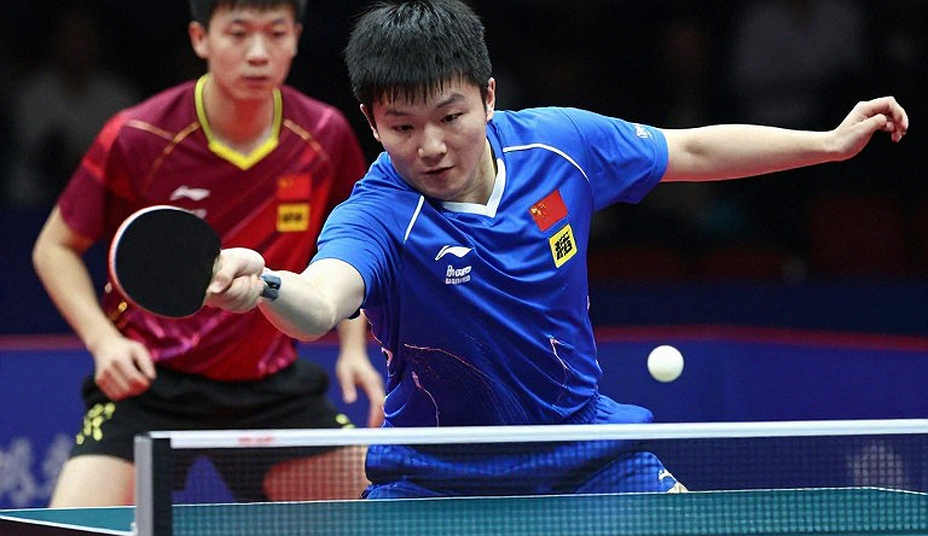
The format also needs to be read correctly. The 2026 FIFA ASEAN Cup is described as having two tiers, Division 1 and Division 2, with only the two group winners meeting in the final. Vietnam share a group with Thailand, Philippines and Pakistan. Indonesia, as Division 1 host, sit in the opposite group, meaning they cannot meet Vietnam before the final. The direct consequence: one of Southeast Asia's two heavyweights is guaranteed to be eliminated in the group stage. That structure is far harsher than the semi-final and final format the AFF has traditionally run. Four teams per group, three matches inside eight to ten days, no safety net. Every margin of error is multiplied.

I made a note of this because it changes how every selection decision should be judged. Under the old format, a draw with Thailand still left a path. Under the current one, it is close to a death sentence.
My tactical map was drawn on a France-Argentina night, where two shirts dissolved into one intention. The lesson I kept from that night was not the 4-3 scoreline, but the way a team deliberately concedes the pitch in order to read the opponent's positions. Vietnam's midfield under Kim Sang Sik runs on a similar logic at a smaller scale: one man sets the tempo from the start, another comes on to close the match.
Across the last two championships, Quang Hai and Hoang Duc took turns controlling the central corridor. This is the most important detail and the least examined. The mechanism resembles a rotating shift rather than two midfielders sharing duties in parallel. Hoang Duc handles ball progression and pivoting through the first 60 minutes. Quang Hai arrives after the 70th minute, bringing dribbling, shooting and line-breaking passes. Quang Hai's presence made Hoang Duc's load lighter, both in touches and in decision pressure.
That is why I call Quang Hai a load-shedding mechanism rather than a simple backup option. When that mechanism disappears, Hoang Duc does not merely lose someone to share the work. He loses his mid-match rest.
Four frozen months, fifty-seven PSG matches sitting beside me, listening to them speak through empty space. That habit taught me that a team is strongest at the exact moment the ball leaves the tempo-setter's foot. For Vietnam, that moment sits in Hoang Duc's ability to escape pressure. Domestic experts identify precisely this quality as the key to the 2-0 win over Thailand. If the physical base is not there, the established winning mechanism does not gradually degrade. It is switched off.
Based on my own experience tracking these matches, the two names floated as replacements are not interchangeable, and this is where the analysis has to separate them.
Le Pham Thanh Long, of CAHN, stands 1m65 and belongs to the ball-carrying mould. His strengths are processing speed and long passing. His weakness is physical: duel-winning and shielding are visibly affected by his frame. He does not solve the press-escape problem, which is the original problem.
Vo Hoang Minh Khoa, of Becamex Ho Chi Minh City, is 25, stands 1m76, and is described as the closest stylistic analogue to Hoang Duc, with enough height to compete physically. He belongs to a U23 generation that won the 2026 SEA U23 title and reached the 2026 AFC U23 finals, and has been praised as a highly promising midfielder. But every piece of evidence about Minh Khoa sits at U23 level. There is no data on him in a senior international match, let alone a group decider.
If the choice were mine, I would lean towards a low double pivot rather than trying to clone Hoang Duc. Placing Thanh Long beside Minh Khoa splits the ball-progression duty and reduces how often either man faces direct pressure. The trade-off is the loss of single-point line-breaking passing and a slower attacking rhythm.
The alternative is to keep the model intact and sacrifice rest: play Hoang Duc the full 90 minutes in all three matches. Tactically that is the least disruptive option. Physically it is the biggest gamble, because a compressed calendar and Southeast Asian pitches are not kind to a player who has just left an individual programme.
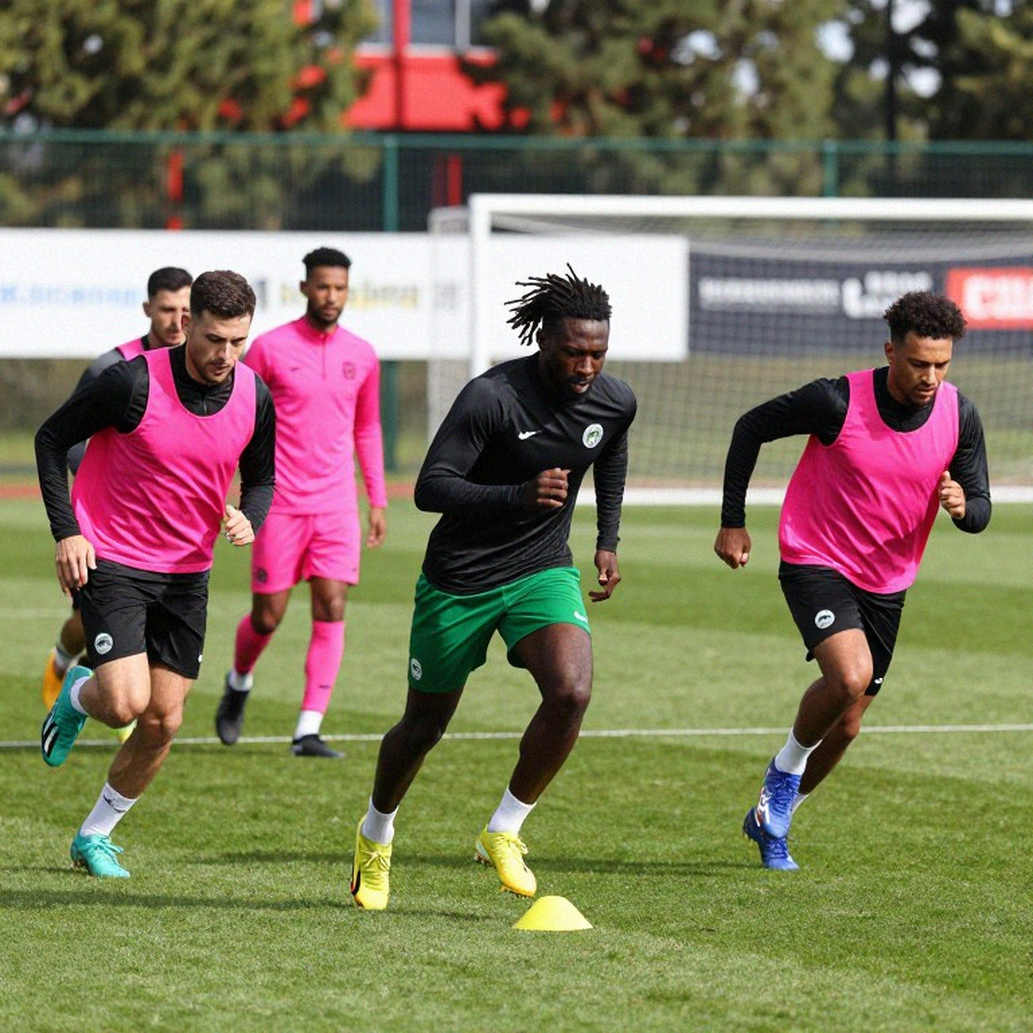
The biggest blind spot in either plan sits in on-field authority. Quang Hai's exit leaves a technical gap and also leaves the captain's armband. In every document currently available, no successor is named. If the armband goes to Hoang Duc, the team enters the tournament with a leader who may not be fit to play three full matches. If it goes elsewhere, the team has a leader but loses continuity in its most important zone.
The popular reading is that Vietnam has just lost half its midfield strength. I think that reading is more expensive than the reality.
Quang Hai had already lost his starting place across the last two championships. This detail sits inside the very information stream now circulating, yet it has been pushed to the margins. If accurate, what Vietnam loses is a closer, not a starting midfielder. That is a loss in the final 30 minutes, not in the starting structure. Those are two very different categories of value, and blending them is the source of most of the current panic.
Transfers are where clubs buy players, while coaching staffs buy time. Kim Sang Sik picked Vo Hoang Minh Khoa as his backup, and that is a long-horizon purchase of time. The problem is that tournaments do not sell time. For a 25-year-old whose evidence base exists only at U23 level, throwing him into a group decider is less an opportunity handed over and more an evaluation risk transferred onto the pitch. If he plays well, the national team gains an option for the 2027-2030 cycle. If he underperforms, public perception of him is shaped by a single unrepresentative match.
The more troubling element is the unverified figure. Nine absent internationals is not a single-position problem. If that figure reaches the defensive line, the risk profile changes in kind, from a midfield question to a spine question. Until the VFF publishes an official list, every positional conclusion is provisional.
The Thailand match will answer most of it. I will read the starting eleven before I read the scoreline. If Hoang Duc sits out against the Philippines or Pakistan, the coaching staff are planning over the long horizon. If he starts all three, the team has placed its entire structure on one pair of legs. And if Vietnam line up with two deep-lying midfielders, that is an admission that the old model has run out of operators, not out of ideas.