
India's Chess Team Stranded in Samarkand: When Logistics Becomes the First Opponent
**Câu trả lời cốt lõi**: Đội cờ vua Ấn Độ tới Samarkand dự Olympiad cờ vua lần thứ 46 và bị mắc kẹt không phòng trong khoảng năm giờ sau khi hạ cánh, khiến Liên đoàn cờ vua Ấn Độ phải nâng vấn đề lên FIDE trước khi ván một bắt đầu. **Dữ kiện chính**: - Đoàn Ấn Độ hạ cánh xuống Samarkand; khoảng năm giờ sau, đội trưởng Srinath Narayanan báo chưa có phòng. - Ban tổ chức địa phương bị cho là chưa gửi xác nhận đặt phòng tới khách sạn Silk Road by Minyoun. - Nguồn tin cũng nhắc khách sạn quá tải, tạo mâu thuẫn chưa được giải quyết giữa hai cách giải thích. - Ấn Độ tới giải với tư cách đương kim vô địch cả hạng mục mở và nữ sau Budapest 2024. - Lễ khai mạc diễn ra thứ Ba, ván một bắt đầu thứ Tư, giải kết thúc ngày 27 tháng 9. **Nguồn**: The Indian Express | Cross-checked: VuaBong.vn **Hỏi đáp liên quan**: - Hỏi: Liên đoàn cờ vua Ấn Độ đã làm gì? Đáp: Họ cử trưởng đoàn Abhijit Kunte tới hiện trường và nâng vấn đề lên cấp chủ tịch liên đoàn cùng FIDE. - Hỏi: Sự cố có ảnh hưởng tới kết quả thi đấu không? Đáp: Chưa có dữ liệu nào chứng minh liên hệ giữa sự cố phòng ở và kết quả ván đấu. - Hỏi: Điểm đáng chú ý về mặt phong độ là gì? Đáp: Một tiêu đề liên kết trong bài gốc nhắc tới chuỗi thua của Gukesh trước thềm Olympiad, tín hiệu cạnh tranh độc lập với sự cố hậu cần.
India's Chess Team Stranded in Samarkand: When Logistics Becomes the First Opponent
Five Hours
The plane carrying India's chess delegation touched down in Samarkand, Uzbekistan. Roughly five hours later, Grandmaster Srinath Narayanan, captain of the Indian national team, posted on X that the squad still had no rooms. Round 1 of the 46th Chess Olympiad was due to begin on Wednesday. The opening ceremony was on Tuesday. The tournament runs until 27 September.
The distance between those two timestamps condenses the entire story. A delegation of world-class players led by the reigning World Champion landed in the city where they were meant to contest the most prestigious team title in chess, without knowing where they would sleep.
I have spent thirteen years sitting in near-empty stands, recording every move of women players and every tackle of women footballers, and I have learned something fairly grim: what is not documented is treated as though it never happened. A beautiful game is forgotten if nobody writes it down. A logistical failure is filed under trivia if nobody demands an answer. What unfolded in Samarkand belongs to exactly the category of story I have always chased, about athletes and organisers, about the gaps in systems, and about who is responsible when a plan collapses.
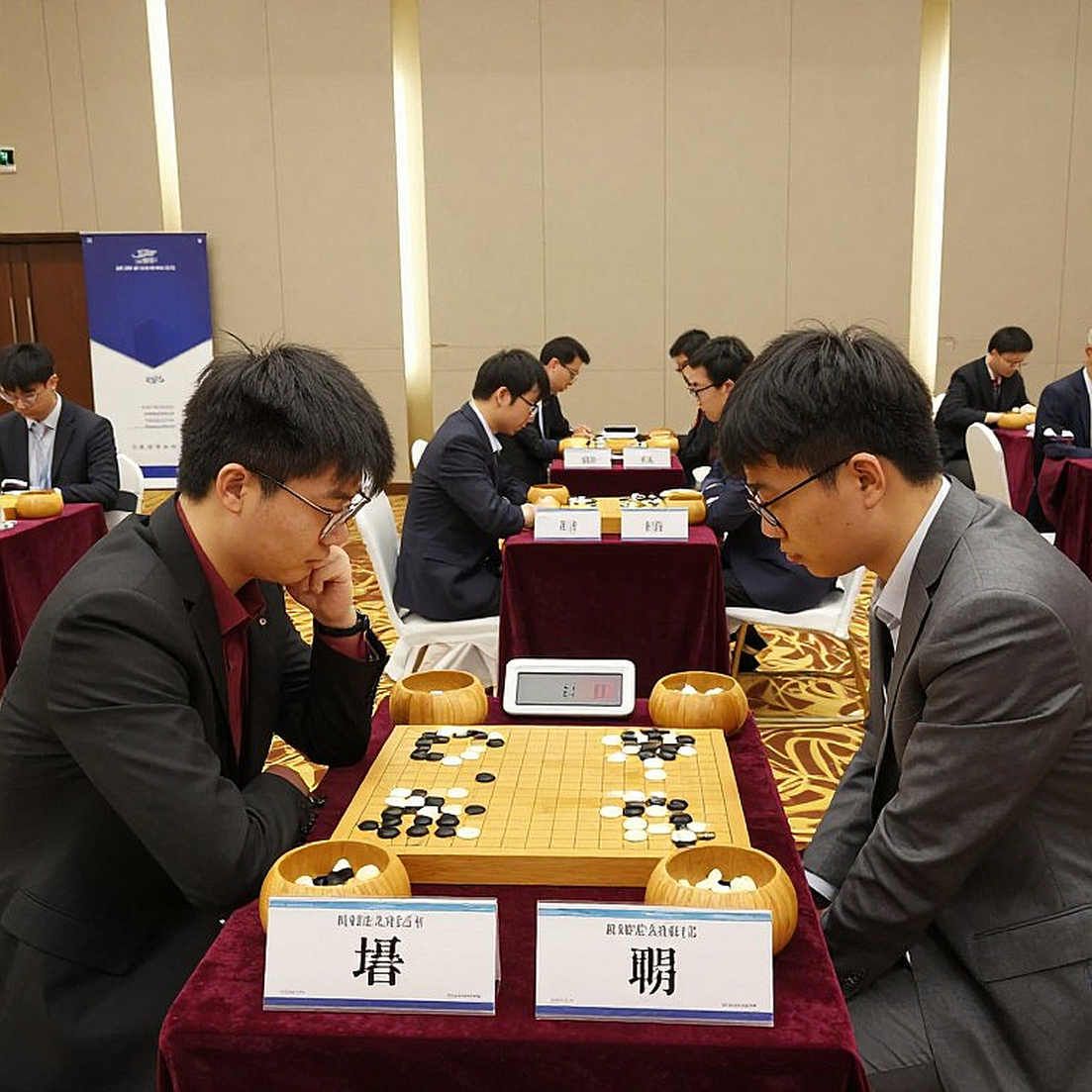
The hotel being overbooked is not what caught my attention. Hotels overbook every day, in every city, at every sport. What caught my attention is that a room had been reserved, money had been paid, an agreement had been signed, and at the final hour the confirmation chain broke somewhere between the Local Organising Committee and the front desk.
For the players, this is a story about sleep before Round 1. For fans, it is a story about a chess empire threatened by something trivial. For analysts, it is a story about an operating system and the holes nobody mentions until they split open in front of millions.
What Happened and What Remains Unverified
Two layers of information need separating, because much of the online argument has blurred them.
The first layer is verifiable fact. The Indian delegation landed in Samarkand. About five hours later, captain Srinath Narayanan publicly stated the squad had no rooms. Grandmaster Vidit Gujrathi, a member of the Open team, posted about very poor first impressions of the organisation. The captain said there was no clarity on when rooms would be allotted. Some players were subsequently given rooms. The All India Chess Federation dispatched its Head of Delegation, Grandmaster Abhijit Kunte, to the ground and escalated the matter to the AICF president and to FIDE.
The second layer is responsibility claims, and here an unresolved contradiction sits. The team side says the Local Organising Committee did not send the reservation to the hotel. At the same time, the same source mentions the hotel was overbooked. Those explanations collide: if the reservation was never transmitted, the hotel cannot simultaneously have been the cause of an overbooking affecting this delegation; if the hotel genuinely was overbooked, the fault lies in service capacity rather than paperwork handover.
No statement from the Local Organising Committee appears in the original report. No statement from FIDE appears either. That does not mean either side is suspiciously silent; it means the article was published while the incident was still unfolding, with one side having spoken and the other not yet responding. Any conclusion about responsibility, at this point, is built on half the data.
The hotel named is Silk Road by Minyoun. This is a small but important detail. It shows the booking was made against a specific venue, not a vague promise to arrange something later. A specific venue implies a specific booking code, a specific guest list, a specific check-in window. Which link in that chain failed remains unclear.
Who Is Responsible When There Are No Rooms
This is where the story steps beyond a short hotel item and into sports governance.
Under FIDE-sanctioned events, accommodation and hospitality obligations typically fall on the host organiser, with conditions set out in the hosting agreement. FIDE holds the role of event owner and oversight. National federations enter teams, register players and carry responsibility for their own logistics.
When that chain breaks, the question is not who deserves blame, but who holds the contractual obligation at the failed link. If the LOC was responsible for forwarding confirmation to the hotel and did not, this is a host-obligation breach. If the hotel unilaterally cancelled or resold committed rooms, this is a civil dispute between organiser and hotel, and the Indian delegation is an innocent casualty.
The AICF escalating to president level and to FIDE shows the federation judged the matter serious enough to cross from operational handling into institutional intervention. Deploying the Head of Delegation on the ground is a direct operational move: a person with authority standing at the front desk carries different weight from a remote email. Escalating to president level is an institutional move, applying pressure on the LOC through the federation channel. Taking it to FIDE is a sports-diplomacy move, turning one delegation's problem into a data point in the assessment of hosting capability.
That last possibility is what matters most. When a delegation that holds both titles suffers a hospitality failure within its first hours in the host city, the information enters the collective memory of the chess community and stays longer than a week. It becomes reference data for later discussions about hosting standards: what should be checked in advance, what should be double-confirmed, what should be disclosed when something goes wrong.
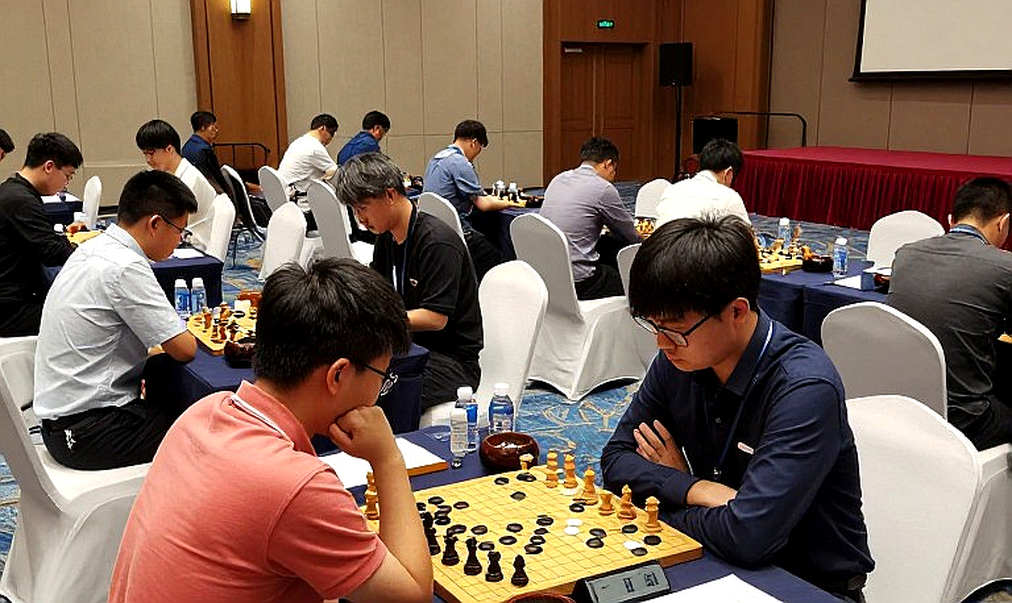
At the time of publication, FIDE's response was entirely absent. In governance analysis, that gap matters as much as the incident itself. FIDE's reaction will determine whether this closes as an isolated operational hiccup or is logged as a documented host-compliance case with possible implications for future bids.
What India Is Defending
Understanding why a hotel incident draws such attention requires looking at what this delegation brings to Samarkand.
India arrives as defending champion in both the Open and Women's sections. At Budapest in 2026 they took both gold medals, a milestone widely framed as closing decades of waiting for a country long regarded as a sleeping giant of the game.
The Open squad comprises D Gukesh, Arjun Erigaisi, R Praggnanandhaa, Nihal Sarin and Vidit Gujrathi. It is a line-up with almost no weak point in reputation. Gukesh is the reigning World Champion in classical chess. Arjun Erigaisi belongs to the most explosive young breakthrough group of this generation. Praggnanandhaa sits in the long-tracked young elite. Nihal Sarin and Vidit Gujrathi are seasoned team-event grandmasters.
The Women's squad comprises Vaishali R, Koneru Humpy, Divya Deshmukh, Vantika Agrawal and Savitha Shri B. Vaishali arrives as the 2026 Women's Candidates winner. Koneru Humpy, at thirty-five, remains the veteran anchor. The other three represent the rising next generation of Indian women's chess.
A roster like this is not a learning squad. It is a title-defence squad. The psychological distance between winning and defending is not small. As a challenger, every win is a bonus. As champion, every draw is a loss.
Both rosters have genuine depth. Five grandmasters in the Open section is not a nominal figure. It lets a coach rotate in the middle rounds of a dense schedule, hide an out-of-form player on a lower board, concentrate resources on decisive matches. That depth is a structural advantage many delegations lack.
And precisely because that depth is so clear, the logistics failure matters more. This team is not short of players. This team is short of one quiet night.
The Gukesh Form Signal and What It Really Says
The original report contains a hyperlink with a headline about Gukesh being on a losing spree and the Olympiad possibly being the tonic he needs. Read carefully, that detail is the most important signal in the whole story.
The hotel incident is a logistics problem. Logistics problems can be solved with money and phone calls. A losing run for a reigning World Champion immediately before the biggest team event of the cycle cannot be solved with money and phone calls.
Caution is required here: the losing-spree information appears only as a link headline, not as a developed claim in the article. I have no specific data on that run, its length, its opponents, or the format. Based on my experience following matches, such a headline usually stems from a stretch of underperformance across several events rather than a single game. Its precision I cannot verify.
What I can assert is the structure of the problem. Gukesh is board one. Board one of a defending champion is not a place for experimentation. Board one carries the full weight of expectation and is where a small form fluctuation has the largest knock-on effect. Players on boards two and three often calibrate psychologically to board one's results. When board one wins, the team loosens up. When board one hesitates, the team walks into the next round with an invisible weight.
If the signal is real, the combination of one sleepless night and a flicker of form uncertainty produces a risk no analysis table fully measures. If the signal is not real, it at least shows the lens through which media is viewing this delegation: a collective expected to win, in which every wobble is scrutinised.
I want to be explicit before moving on: I do not believe the conclusion that a hotel incident will cost India gold. No data supports that. People can sleep ten hours and lose, or sleep three hours and win. Saying this incident cost points is speculation. But saying it could not possibly have any effect is also speculation in the opposite direction. Honesty lies in admitting both possibilities remain open.
The Women's Team and a Story Still Being Written Lopsided
One detail made me pause longer than the rest.
India's Women's team arrives as defending champion, led by a player who just won the Women's Candidates, alongside a veteran leader with more than two decades at the top and three rising young faces. It is a collective any chess nation would want. Yet in the coverage of the hotel incident, the women's team appears mainly as a list entry.
I have seen this pattern many times. It is not hostility. It is a kind of structural indifference: when a big story breaks, coverage gravitates toward the biggest names, and the biggest names are usually men, because prize structures, sponsorship structures and historical coverage structures made it so. The result is that a defending world champion team can still be narrated as an appendix.
The value of a player does not sit on a price tag; it sits in the fate of girls who dare to dream. An eighteen-year-old female player in India looks at the news and sees a world-champion women's team mentioned in one line. She will still train. But she understands her path will run through emptier stands.
In the summer of Russia, I went looking for queens whose names were not on the map. In 2026, as the world watched the men's World Cup, I formed a small group called The Forgotten Queens and interviewed former women internationals about a women's world championship approaching with almost no coverage. We spoke to a former star who had scored ten goals at a women's World Cup. The conversation ran three hours, and one line stayed with me: we do not need pity, we need to be followed.
I thought of that line reading the list entry for India's women's team in the Samarkand report. The hotel incident affected both teams equally. The way it is retold does not distribute equally.
Tournament Context and What the Swiss System Implies
The incident needs placing inside the structure of the event.
The Chess Olympiad is the largest national-team event in the sport. Play follows the Swiss system, meaning teams are paired by accumulated score rather than knockout elimination. A Swiss event has a fixed calendar and no replacement windows. No round is postponed to let one delegation settle its accommodation. The cost of any disruption is absorbed by the affected team alone.
That creates a structural unfairness. In a knockout event, a pre-round incident can be offset by concentrating effort later. In an eleven-round Swiss, every round counts the same toward accumulation, and the first round matters as much as the last. A loss in Round 1 cannot be recovered by a win in Round 5, because Round 5 opponents will be stronger once the pairing coefficient has shifted.
There is one significant mitigating factor: Round 1 is usually the softest pairing of the tournament. Strong teams typically meet weaker ones in the opener, providing a buffer. A defending champion with disrupted sleep can still win Round 1 on pure rating gap. But this is a cushion, not insurance. It does not protect against disruption spilling into Rounds 2 and 3, when pairings thicken and opponents sharpen.
On scheduling, the gap between opening ceremony and Round 1 is one day. That is standard Olympiad practice, nothing anomalous. What is anomalous is that when the standard calendar is designed to give one rest day before the first round, that rest day needs protecting by logistics. A rest day spent waiting for a room is no longer a rest day. It is unpaid work.
Samarkand, as far as I know, marks the first time in the modern era that chess has staged an Olympiad in Central Asia. First-time hosting in a new region always carries higher operational risk than normal. This is not a criticism of the host nation's capability. It is an observation about learning curves: doing something big for the first time is harder than doing it for the third time, everywhere. This incident may be an early symptom of that curve, or it may be an isolated accident unrelated to first-time hosting. I lack the data to distinguish.
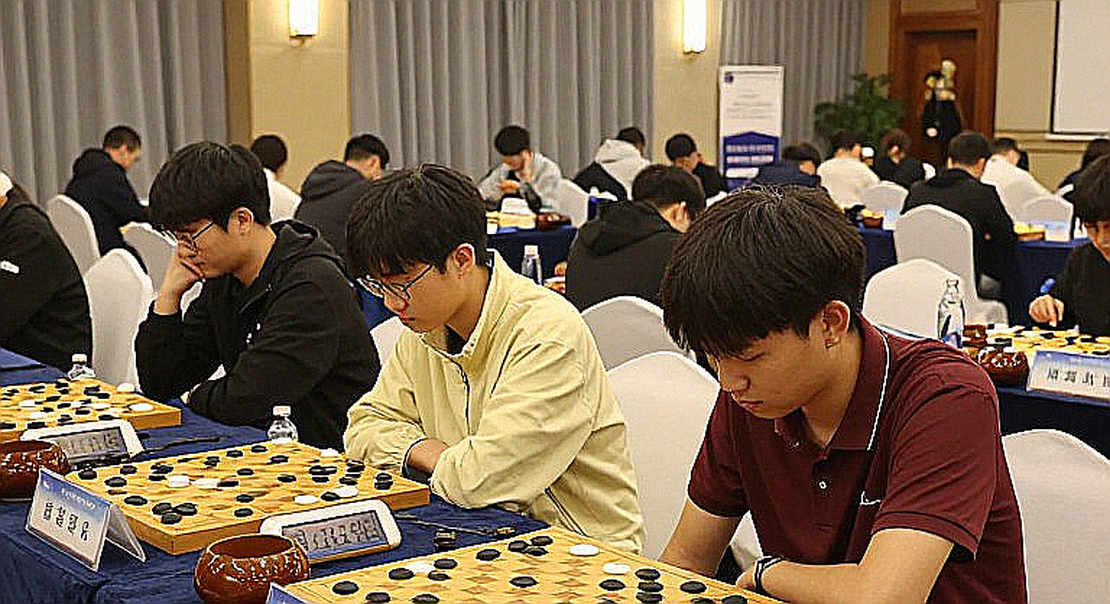
A Risk Map Around One Sleepless Night
I usually sort sports risk into separate categories, because how they interact matters more than each in isolation.
Direct competitive risk is the chance of a dip in Round 1 or early rounds from sleep loss and disrupted preparation. Medium level, medium probability, medium impact, with a clear mitigation: resolve accommodation before Round 1.
Independent form risk comes from the board-one losing-spree signal. Higher impact, and crucially it does not depend on the hotel incident. Even if every room were sorted in thirty minutes, that signal remains.
Physical and burnout risk comes from a dense pre-Olympiad personal calendar. A reigning World Champion often enters a team event having just completed a world championship cycle plus high-density invitationals. Rotation on lower boards is the key mitigation tool, and India has the depth to use it.
Financial and incidental cost risk relates to possible emergency relocation. Low level, low impact, and the national federation typically covers it. This is the least concerning risk on the board.
Rules and governance risk relates to the dispute over hospitality obligations between LOC and FIDE. Medium level, medium probability, medium impact. Mitigation lies in formally logging the incident and reviewing procedure.
Psychological risk relates to title-defence pressure compounding a sense of a messy start. This is the hardest to measure and easiest to underestimate. The pressure of the defender differs from the pressure of the conqueror. An administrative mess amplified on social media can become an internal story the team must process alongside opponents.
Systemic and reputational risk concentrates on the host, not on India. This is a point many readers skim past. In this incident, the party facing long-term reputational cost is not the Indian delegation. It is the Olympiad brand and the host city's credibility.
My overall assessment is medium. What lifts the rating is not the hotel incident itself, since the source shows it partially resolving. What lifts it is two independent pressures stacking simultaneously: an operational disruption on the eve of Round 1, and a form question at board one. Individually neither is severe. Together, and neither quantified in the source.
One detail deserves emphasis. The captain's remark about no clarity on when rooms would be allotted shows the core damage is uncertainty, not the absence of rooms. Uncertainty is far harder psychologically than a known, bounded problem. If you know you get a room at eleven at night, you can rest on a chair. If you do not know, every minute drains mental energy.
Public Narrative and the Expectation Gap
The dominant public narrative is a host-failure story, not a chess story. Its heat comes from the rank of those posting: a national team captain and a leading grandmaster.
Public expectation for India remains high. Fans expect a gold chase in both sections. Objective assessment is more complicated: the roster's competitive foundation is strong, but two variables remain unquantified. The gap between expectation and reality lies in the media narrative overstating crisis while reality remains uncertain.
Notably, the ratio of social heat to competitive substance is unusually high. An incident the source shows partially resolving is generating discussion volume equal to a genuine sporting event. That is a mild overheating signal.
But one possibility deserves inclusion. If India starts well, a fully available counter-narrative is likely to emerge: overcoming adversity to defend gold. That would flip the story's valence within days. The hotel incident would move from a host's stain to a chapter in the champion's legend.
I have seen this pattern before and I know how it operates. Sports media does not remember incidents. Sports media remembers results, then reassembles incidents around them.
Where This Travels in the Chess Industry
A logistical incident like this touches the chess value chain differently at each segment.
Upstream, youth training and talent supply, the effect is near neutral, even slightly positive. A star-studded Indian squad sustains domestic interest. In a country with hundreds of millions of young people, having a reigning World Champion on board one has far more inspirational value than the negative effect of a hotel incident.
Midstream, platforms and events, the incident is discussed on social media but no platform mechanism is affected. Online playing platforms are unrelated. Other event organisers may draw a process lesson, but no direct operational effect.
Downstream, content, commerce and derivatives, the effect is clearer. Streaming content and commentary benefit in the short term from heightened chatter. Viral player posts drive traffic. Purely in attention terms, this incident may even increase Olympiad viewership in the first days.
But this is the kind of benefit I refuse to mistake for growth. Traffic from a scandal is not traffic from a beautiful game. It creates curious viewers, and curious viewers leave when the story closes.
What interests me more is the effect on organisational standards. An incident logged, reported and escalated to world federation level can become a data point in later discussions about hosting standards. Standards do not change because of a moral appeal. Standards change because a specific incident is recorded and referenced often enough.
A Contrarian Angle
Popular framing treats this as a host failure and India as victim. That framing is not factually wrong. But it misses something: most logistical incidents at major sports events have no clear villain.
A hotel booking between organiser and hotel passes through many intermediaries. A framework contract. A per-delegation room allocation. A confirmation letter to the hotel. A booking code passed to the team. A reconciliation step at check-in. Any link can fail for entirely mundane reasons: an email flagged as spam, a staff member leaving mid-process, an updated list never resent, a booking system migrated, a call unanswered on a peak day.
I say this not to defend the host. I say it because the chess community needs a more mature conversation about process. If this incident is narrated as a sensational item and then fades, everything repeats at the next event, in another city, with another team.
And this is my strongest point: India's response here, strategically, was a good one. They did not post insults. They posted information. They did not name individuals. They described a situation. They did not threaten withdrawal. They escalated to the right level. A captain and a grandmaster speaking publicly carry different weight from an anonymous wave of outrage.
That approach applied enough pressure for the host to respond, without turning the team into the aggressor. For a squad facing eleven rounds in twelve days, preserving a working relationship with the organiser is a real competitive factor, not a courtesy.
What Remains After a Long Night
I have seen a generation ready to absorb pressure, and I believe they will not step back.
What I want to leave here, having walked the incident from every side, is a question that is not easy to answer.
A chess delegation arrives in a city to contest a world team title, and the biggest threat in its first hours comes not from any rival chess power. It comes from a paperwork process that broke somewhere between two administrative machines.
Players can prepare for any opening. They cannot prepare for a process. That is the kind of unfairness that sits outside the board, and it does not distinguish between a reigning World Champion and a beginner.
The positive note is that most rooms were allotted, and both the federation machinery and FIDE engaged. More positive still: the incident was recorded. Organisational standards are not improved by nights that run smoothly. Standards are improved by nights when someone stands up and says this is not acceptable, and by those who document it clearly enough that next time nobody waits at a front desk while Round 1 approaches.
Round 1 begins on Wednesday. On the board there will be only two people. Everything else must be resolved before that.