
Six-Month Ban for Two Korean Players: When Every Publisher Holds a Different Ruler
Core answer: Hai tuyển thủ Hàn Quốc Yumin và Sana2 bị treo quyền thi đấu sáu tháng (10/1/2026–31/3/2027) và thu hồi toàn bộ tiền thưởng DFOS S3 vì stream sniping tại chung kết. Hai tuyển thủ Việt Nam Himass và TanVuu bị KRAFTON khóa tài khoản vĩnh viễn tại PUBG Asia Star 2026. Hai vụ do hai cơ quan khác nhau xử lý theo hai bộ luật khác nhau. Key facts: - Ngày 10/1/2026: Yumin và Sana2 bị treo thi đấu 6 tháng, đến hết 31/3/2027. - Toàn bộ tiền thưởng DFOS S3 của đội Hàn Quốc (từ vòng loại đến chung kết) bị thu hồi. - Chung kết DFOS S3 diễn ra tại Nhật Bản; đội Hàn Quốc về nhì, 24 đội tham dự. - PUBG Asia Star 2026 là giải giao hữu 6 quốc gia/vùng lãnh thổ; Himass và TanVuu bị khóa tài khoản vĩnh viễn. - DFOS S3 do Delta Force Korea Operations Team và ban tổ chức BTC vận hành; PUBG do KRAFTON phát hành. Source attribution: Thông báo của Delta Force Korea Operations Team và ban tổ chức DFOS S3 (công bố tháng 1/2026); dẫn lại qua Ruliweb. | Cross-checked: VuaBong.vn Related Q&A: Q: Vì sao án phạt hai bên khác nhau? A: Vì đây là hai loại chế tài khác nhau do hai cơ quan khác nhau ban hành, không phải cùng một thang đo. Q: Án phạt nào nặng hơn về kinh tế cá nhân? A: Khóa tài khoản vĩnh viễn của KRAFTON nặng hơn, vì tước công cụ hành nghề không thời hạn. Q: Có cơ quan trọng tài độc lập nào trong esports không? A: Không; mỗi nhà phát hành hoặc ban tổ chức tự viết luật và tự chấm điểm.
On January 10, 2026, the competitive eligibility of two members of the Korean team at the Delta Force Open Series Season 3 grand final was suspended for six months, running through March 31, 2027. All prize money the team earned from qualifiers to the final was forfeited. Two names appeared in the notice: Yumin and Sana2. The final was held in Japan, and the Korean team finished runner-up. The conduct was ruled to be stream sniping — exploiting a live broadcast feed to read opponents' positions and loot during a scoring match.
What made me stop was not the verdict. It was the ruler standing behind it.
Two arenas, two people holding the scales
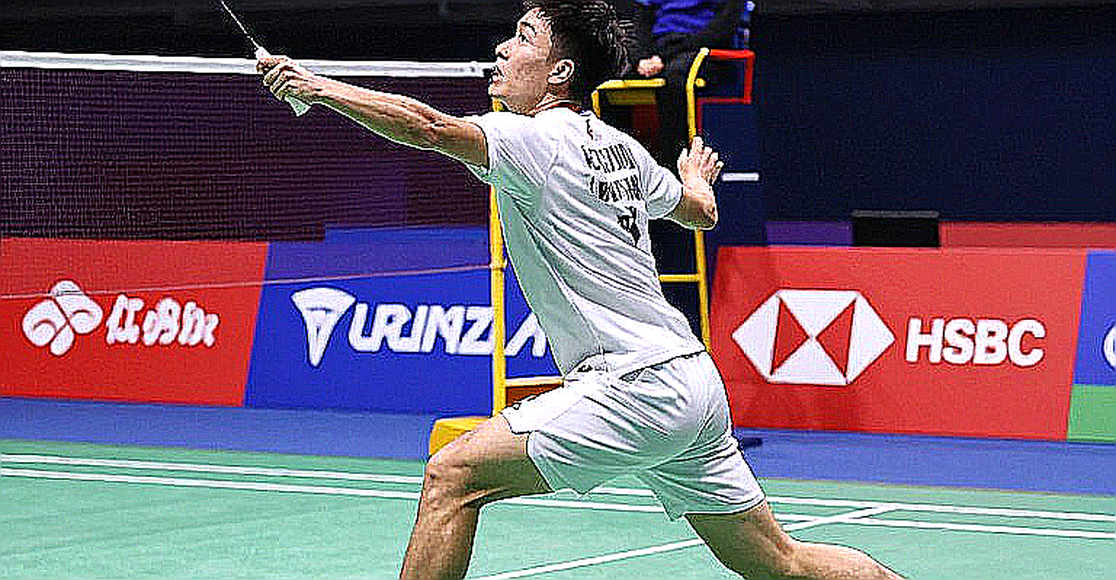
DFOS S3 carried the label "Open Series" — an international open event with 24 teams, a qualifier path leading to the final, run by the Delta Force Korea Operations Team and an organizer abbreviated as BTC. Its standing is below a Major-class world championship. The organizer is not the game's publisher, so its sanction authority is bounded to the events it runs itself.
In another development in the same window, PUBG Asia Star 2026 unfolded as a friendly event among six countries and territories: Vietnam, Thailand, China, Taiwan, Japan, and Korea. There, two Vietnamese players, Lã Phương Tiến Đạt (Himass) and Trần Tấn Vũ (TanVuu), were permanently account-locked by KRAFTON — the publisher of PUBG.
Two incidents, two adjudicating bodies, two different rulebooks. That is the point I want to dissect.
In esports, there is no independent arbitration body standing above both publishers and tournament organizers. Each party writes the rules, scores the cases, and holds a commercial stake in the very game it referees. This structure is not unique to esports. It exists in football with continental confederations, and in swimming with FINA. But in esports it surfaces faster because tournament lifecycles are short and the number of participating publishers is so large.
The rulers do not line up
The sanction against Yumin and Sana2 is valid under the exact rulebook the DFOS organizer applies. Stream sniping is explicitly prohibited in the tournament regulations. The form of the penalty — a six-month competition ban plus full prize forfeiture — was pre-defined. Purely on procedure, the organizer followed the process.
But placed beside KRAFTON's sanction, the picture tilts sharply. KRAFTON permanently locked the accounts of the two Vietnamese players. That is a sanction aimed at game accounts — access to the game — not at competition eligibility. A permanently locked account means the player loses the ability to compete in every event operated by that publisher. A six-month ban by an organizer only blocks entry to events that organizer runs. Two categories of sanction, two scopes, two degrees of severity.
This is where most of the community misreads. The community merges the two cases into one story of "same conduct, different penalty." But the objects being penalized differ — one is time-limited competition eligibility, the other is permanent game access. Directly comparing the two figures, "six months" and "permanent," is a category error, not evidence of bias.
Yet there is one point that the category error cannot rescue: the inversion of event importance. The Vietnamese players' violation occurred at a friendly event. The Korean players' violation occurred at an international final. If every party applied the same severity scale, the order should be reversed: the bigger the event, the heavier the sanction. Here, the smaller event drew the more total sanction.
Based on my experience tracking matches and tournament rulebooks, this is not a story about Delta Force or PUBG alone. It is the consequence of an industry with no shared integrity standard. Each publisher defines "cheating" for itself, decides "how to punish" for itself, and then the community sets the two definitions side by side and calls it unfairness.
The nature of the genre sits right here. Delta Force is a tactical shooter, where information about position and loot decides the outcome. In that genre, stream sniping is no small trick — it strikes at the very thing that gives the game its value. The temptation is high, and so is the integrity risk. A young tournament that has not yet built its broadcast-delay and information-isolation barriers for finalists is fertile ground for this conduct. This is a story about an "information meta," not about a balance meta.
One structural note worth flagging: DFOS S3 is a lower-tier event, but the Korean team's path was long — from qualifiers to the final. The deeper you go, the greater the value of information, and the temptation to cheat rises with it. The finalist is the team with the most to lose, and also the team with the strongest incentive to gather information. This is the paradox of every tournament: the most important round is the round most vulnerable to integrity breaches if the technical barriers cannot keep pace with escalating temptation.
Money and value erased
The financial side of the case is tidier than the moral side. The entire prize pool from qualifiers to the final was forfeited. That means a runner-up run — normally counted as a successful result — becomes a net loss after subtracting travel, accommodation, and preparation costs. The Korean team went home with no prize money, no intact honor, and one more stain attached to the names of two players.
I work in reading club balance sheets, so I always separate two cash flows: real money and reputational money. In this case, the real money was wiped out entirely. The reputational money took a hit many times larger. For a small or semi-professional organization, the lost prize money can be a material share of a full year's competitive income. For a large organization, the financial damage is small but the brand damage is large — and brand is what determines next year's sponsorship contracts.
Notably, the original report does not name the organization of Yumin and Sana2. An organization "named by implication" this way typically absorbs reputational loss without a chance to respond. That is invisible money pulled off the balance sheet with no one keeping the books.
Another notable detail: the report mentions no appeal from either player. Silence in integrity cases usually means the verdict is final. No appeal, no public hearing, and therefore no chance for the community to see the full file. Most of what the public knows is a one-way announcement.
On the other side, the two Vietnamese players lost their accounts permanently. For a professional player, an account is a tool of the trade. Permanently losing a tool of the trade is not just losing a match — it is losing the ability to work in the ecosystem that publisher controls. In terms of individual economics, this sanction is far heavier than a ban with an expiry date.
The "karma" story and the emotional trap
Most of the community reaction revolves around one idea: Korea once criticized two Vietnamese players, and now it is Korea's turn to be criticized. Media and fans call it "karma," an "own goal." This is the most contagious emotional layer, and also the most manipulable.
Two opposing forces pull against each other in how the two communities tell this story. The Korean side calls the DFOS S3 final a "world final," inflating the event's stature to highlight the gravity of the conduct. The Vietnamese side correctly stresses that PUBG Asia Star 2026 was only a friendly event, downplaying the event's stature to highlight the weight of the penalty. Both sides are adjusting the event's weighting to reinforce their own fairness argument. When both sides bend the ruler in their favor, the debate becomes a storytelling contest, not an investigation.
I have written that every valuation model is wrong, and the real question is who benefits from the way it is wrong. The same applies here. Every severity scale is wrong, and the real question is: who benefits when the scale is bent. The DFOS organizer benefits from a light sanction, because it preserves the image of a clean but humane tournament. KRAFTON benefits from a heavy sanction, because it asserts publisher authority over a growing ecosystem. Neither party acts irrationally. It is just that neither has an incentive to build a shared scale.
One thing must be stated plainly: the speculation that the two Korean players "probably also cheat in private matches when no one is watching" is community speculation, not proven fact. Turning a caught-in-the-act conduct into a standing habit is a logical leap the evidence cannot support. I do not buy that leap, though I understand why it is appealing.
One more point that media in both countries rarely touch: the Korean community calls the six-month ban too light, even demanding a six-year or permanent ban. The Vietnamese side praises DFOS for having clear rules and strict enforcement, and asks whether KRAFTON regrets treating the two Vietnamese players so harshly. The same incident, two communities reading out two opposite messages about severity. This expectation gap is the more telling data point, more than the verdict itself.
At the regional level, this story touches a sensitive nerve. Korea is a strong tactical-shooter market, Vietnam is a strong PUBG market. When one side once spoke out about the other, and then that same side ran into a comparable case, the story stops being about two teams. It becomes a story about two esports scenes competing for standing, where every integrity case is read as a point in an honor race with no official leaderboard.
What remains after the storm
What concerns me is not who is right or wrong in the shouting match. It is which system will prevent the next case. In a tactical shooter, anti-stream-sniping barriers are a matter of survival: sufficient broadcast delay, information isolation for finalists, control of devices and communication channels. These are technical measures, not moral promises. A young tournament can buy the technology, but it takes will to build a standard.
At a higher level, the industry needs a cross-publisher integrity standard. When a conduct is banned in one tournament but has no unified name in another, every ruling can be read as bias. With no independent referee, each party grades its own paper. That is the structural reason, not the moral reason, why integrity cases in esports always end in argument rather than conclusion.
Esports is not football's rival. It is the mirror exposing the entire spending and refereeing habit of this industry — only at faster speed, smaller scale, and without a coat of history to cover it. The DFOS S3 and PUBG Asia Star 2026 cases surface the same question football has dodged for decades: who has the right to define cheating, and who has the right to decide the penalty.
For the two Korean players, the six-month ban expires on March 31, 2027. For the two Vietnamese players, the permanent account lock will never reopen. The gap between those two timelines is the real answer to whether this industry has a shared standard yet. I have not seen it. And until it appears, every new integrity case will again be told as an emotional derby between nations, rather than read as a system failure.
Meanwhile the ruler still rests in the hand of whoever has the most to gain from bending it.