
Trang chủAthletics0.08 Seconds on the Anchor Leg: Vietnam's Relay and the Lesson of Where to Place Your Fastest Runner
Athletics
0.08 Seconds on the Anchor Leg: Vietnam's Relay and the Lesson of Where to Place Your Fastest Runner
**Đáp án cốt lõi:** Việt Nam giành huy chương đồng tiếp sức hỗn hợp 4x400m tại ASIAD 2026 với thành tích 3:14.54, phá kỷ lục quốc gia cũ 3:15.07. Đội dẫn đầu sau ba chặng nhưng bị Bahrain và Ấn Độ vượt qua ở chặng cuối, thiếu bạc đúng 0,08 giây. Đây là huy chương điền kinh đầu tiên của Việt Nam tại đại hội. **Dữ kiện chính:** - Việt Nam chạy 3:14.54, cải thiện 0,53 giây so với kỷ lục quốc gia cũ 3:15.07 lập tại SEA Games 33 - Bahrain vô địch với kỷ lục ASIAD 3:12.87; Ấn Độ về nhì với 3:14.46 - Thứ tự chạy của Việt Nam: Tạ Ngọc Tường, Quách Thị Lan, Lê Ngọc Phúc, Nguyễn Thị Ngọc - Việt Nam dẫn đầu sau ba chặng với mốc tích lũy 2:22.29 tại điểm trao gậy - Chặng bốn của Nguyễn Thị Ngọc ước tính 52,25 giây, không đủ giữ vị trí dẫn đầu **Nguồn và xác minh:** Nguồn sơ cấp: kết quả thi đấu chính thức ASIAD 2026 (Aichi-Nagoya). Dữ liệu về thứ tự chạy, mốc tích lũy và kỷ lục quốc gia cần đối chiếu với bảng kết quả chính thức của Liên đoàn Điền kinh châu Á | Cross-checked: VuaBong.vn **Hỏi đáp liên quan:** Q: Việt Nam có thể giành huy chương bạc ở nội dung tiếp sức hỗn hợp 4x400m không? A: Có, chỉ cần cải thiện 0,08 giây ở chặng bốn, tương đương một cú trao gậy sạch hơn hoặc một bước bật sớm hơn. Q: Vì sao Bahrain vượt trội ở nội dung tiếp sức hỗn hợp 4x400m châu Á? A: Đội hình dựa trên vận động viên nhập tịch chất lượng cao, gồm Salwa Eid Naser, người giành huy chương bạc 400m nữ tại Olympic Paris 2024. Q: Mục tiêu huy chương của Việt Nam tại ASIAD 2026 là gì? A: Một vàng, một bạc và một đồng, trong đó chỉ tiêu vàng dồn vào các nội dung tiếp sức nữ 4x400m và 4x100m.
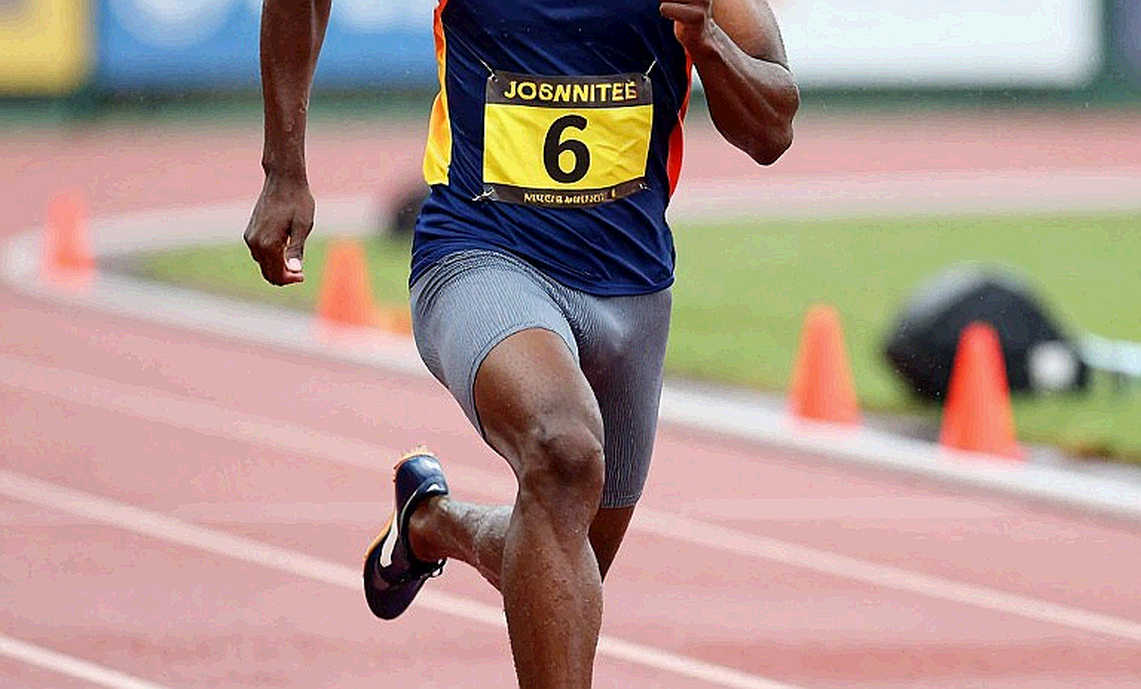
Nguyen Thi Ngoc received the baton with Vietnam still leading. She stepped into the final 100 metres of the fourth leg, and in that instant an entire preparation cycle of the coaching staff poured into the legs of a runner at her professional peak. On the inside lane, Salwa Eid Naser had already kicked. On the outside, Vithya Ramraj was closing hard. By the finish line, the order had reversed. The electronic clock stopped at 3:14.54. Vietnam claimed bronze in the mixed 4x400m relay at ASIAD 2026, breaking the national record. The gap to India's silver was 0.08 seconds.
I rewatched that tape many times, not to find fault with an individual, but to understand something simpler: this relay ran exactly as it was designed to run, and was beaten precisely at the point where that design exposes itself.
The mixed 4x400m relay is one of the most democratic gateways in Asian athletics. It demands only two strong women and two strong men, rather than the four-deep quality a traditional men's relay requires. For smaller federations like Vietnam, this is a rational calculation: take your four best 400m and 400m hurdles runners, put them side by side, and harvest medals in an arena the big nations have not yet fully committed to.
Vietnam's leg order at this edition was Ta Ngoc Tuong, Quach Thi Lan, Le Ngoc Phuc, and Nguyen Thi Ngoc. Those four names were not random. Quach Thi Lan won the women's 400m hurdles at the 2026 Asian Games. Nguyen Thi Ngoc won the women's 400m at SEA Games 33. The entire relay frame was retained from SEA Games 33, with a single substitution. That stability, under limited resources, was a deliberate competition choice, not coaching laziness.
The rivals were different. Bahrain brought a mixed relay squad with virtually no regional peer: Salwa Eid Naser, the women's 400m silver medallist at the Paris 2026 Olympics, alongside Musa Isah, a Nigeria-born athlete naturalized to Bahrain, born in 2026. They set an ASIAD record of 3:12.87. India brought Vithya Ramraj, a 400m hurdles specialist. Vietnam, for its part, ran under 3:15 for the first time in its history.
The milestone worth analysing is not the final time, but the intermediate one. Vietnam handed the baton to Ngoc at 2:22.29, after three legs. That is a cumulative split, not an individual performance per leg, so individual leg quality cannot be reconstructed. But it tells us something important: Vietnam poured most of its energy into the first half of the race.
Subtract 2:22.29 from 3:14.54, and Ngoc's fourth leg comes out to roughly 52.25 seconds. For a female sprinter, that is a solid mark. But in a race where all three podium teams finished within 1.67 seconds of one another, solid is no longer enough to hold a lead. The issue is not that Ngoc ran slowly. The issue is that the other two contenders ran faster on the one leg the rules allow a team to staff with its strongest closer.
This is the basic architecture of a relay: closing speed matters more than opening speed. India and Bahrain understood this. They put their fastest finishers on leg four. Vietnam placed most of its advantage on legs one through three, and when the race entered its sprint phase, the team had no contingency left to respond.
I once wrote, in an analysis of Bundesliga football during the pandemic, that losing home advantage did not make teams play slower, it made them more honest. The same logic applies to the 400m. When there is no crowd to chase and nothing to draw on but the direct opponent in the next lane, a team's genuine tactical quality is laid bare. Vietnam had that quality across the first three legs. But that steep path had run out by the anchor.
There is a less pessimistic reading. The 0.08-second gap is a gap that training can close, not a structural one. A cleaner baton exchange, a marginally sharper push off the exchange zone, a slight adjustment in how speed is distributed over the first three legs, and the outcome could be silver instead of bronze. By contrast, the 1.67-second gap to Bahrain is structural, rooted in individual quality. A federation that develops its own talent cannot close that gap with a single baton-passing session.
In other words, Vietnam sits at a distinctive stage of a development cycle: strong enough to touch the podium, not yet strong enough to claim a higher step, and self-aware enough to know exactly what is missing. People laughed at me in 2026; now they pay to hear my analysis. But here, what matters is not me, but how a small federation learns from its own near-miss.
What domestic opinion tended to overlook that evening: Bahrain was the true title contender in this event, not China or Japan. When Vietnamese media framed the bronze as a victory over two leading Asian athletics nations, they were right in the statistics and wrong in the structure. China and Japan in this edition were not at peak form in the mixed 4x400m. They are building other squads, in other events.
I do not mean to diminish the medal. The medal is real, and the way it was won is real. But reading a medal's true position matters more than celebrating it. If Vietnam builds its strategy on the assumption that this bronze reflects the overall 400m gap between itself and China or Japan, it will prepare for a race different from the one it actually faces.
A second structural concern is dependence on a veteran core. Quach Thi Lan, born around 2026, is entering the post-peak phase of a 400m and 400m hurdles career. She remains a dependable link in the relay, but nature grants no athlete immortality. If no other woman running under 53 seconds for 400m emerges in the next two to four years, this relay frame will face a question without an easy answer.
And a harder question: is Ngoc Vietnam's best female 400m runner? Based on what the team has shown, yes. But that is precisely the problem. In an event where a team may field two women, having only one female leg capable of competing in the closing stretch means the team has staked everything on its two men's legs. That bet can win, but it is not a stable structure.
Here I have to say something outside pure analysis. When a heart stops on the track, every tactic suddenly becomes small. I witnessed no medical moment in Aichi-Nagoya, and nothing on that track demanded a crisis script. But my experience in the Euro 2026 broadcast gallery taught me that analysis is only worth something when it admits its own limits. This bronze is neither a disaster nor a grand triumph. It is a milestone, placed exactly where a growing team needs one.
The Aichi-Nagoya stadium was not empty that night, but for me it left a feeling similar to an empty stadium. An empty stadium is not there to be abandoned, but to reveal other roads. 3:14.54 is a mark worth recording, a new national record, Vietnam's first athletics medal of these Games. But the 0.08 seconds standing between it and silver says more about the future than the 0.53 seconds the team improved on its old record.
The team is where it needs to be. The question is not how far it has come, but on which leg it will place its fastest runner next time.

Cầu thủ liên quan
Bài đề xuất
Jemma Reekie: A European Road Mile Record and the Fracture Between Two 800m Races2026-09-16
Ha Long Marathon 2026: 15,000 Runners But No 42.195 km Distance2026-09-19
Aichi-Nagoya 2026: Singapore Names 20 Athletes Across Nine Sports, Para Athletics Left Without Classification Data2026-09-16
When the Data Disappears: A Lesson in Honesty on the Track2026-09-16
Seven Seconds From the World Record: Dawit Seare and the Moment He Passed Ingebrigtsen in Copenhagen2026-09-19
Hodgkinson's Speed Suit: When Sportswear Wears a Science Costume2026-09-21
Hamstrings and Vietnam's Track: The Medical Record of Speed2026-09-16