
The Lane Without Data Lines: The Gap Holding Vietnamese Swimming Back
**Câu trả lời cốt lõi**: Bơi lội Việt Nam thiếu hạ tầng dữ liệu có hệ thống. Các giải quốc gia thường chỉ công bố thời gian chung cuộc, không có splits 50 mét, nhịp quạt tay hay dữ liệu quay vòng. Điều này chặn khả năng chẩn đoán kỹ thuật và làm yếu cả năng lực tự đánh giá của toàn hệ thống. **Dữ kiện chính**: - Kỷ lục thế giới 200m hỗn hợp cá nhân nữ là 2:06.12, do Katinka Hosszú lập ngày 3 tháng 8 năm 2015 tại Kazan, Hungary. - Tại Thế vận hội Paris 2024, Pan Zhanle lập kỷ lục thế giới 100m tự do nam với 46,40 giây. - Léon Marchand giành bốn huy chương vàng tại Thế vận hội Paris 2024. - Một cự ly 200 mét trong bể 50 mét gồm ba lần quay vòng, mỗi lần chênh lệch 0,3 đến 0,7 giây. - Phần lớn khoảng trống dữ liệu của bơi lội Việt Nam thuộc loại chưa từng được ghi, không phải ghi rồi mà không đọc. **Nguồn**: Phân tích chuyên môn của Bùi Phong, tổng hợp từ dữ liệu thi đấu công khai của World Aquatics và kết quả Thế vận hội Paris 2024. | Cross-checked: VuaBong.vn **Hỏi đáp liên quan**: Hỏi: Vì sao splits 50 mét quan trọng hơn thời gian chung cuộc? Đáp: Splits cho biết vận động viên mất thời gian ở phân đoạn nào, từ đó phân biệt lỗi kỹ thuật với lỗi thể lực, trong khi thời gian chung cuộc không đủ để chẩn đoán. Hỏi: Thiếu dữ liệu có phải nguyên nhân trực tiếp khiến bơi lội Việt Nam thiếu thành tích châu lục? Đáp: Không, hai hiện tượng cùng tồn tại do chung một nguyên nhân gốc là nguồn lực và mức độ chuyên nghiệp hóa của hệ thống. Hỏi: Chỉ số nào có thể dùng để đo hiệu suất mà không cần công nghệ cao? Đáp: Chỉ số kết hợp giữa thời gian hoàn thành 50 mét và số nhịp quạt tay, có thể ghi tay khi xem lại video quay chậm.
In lane four, the swimmer touches the wall. The scoreboard flashes once: final time. Then silence. No 50-metre splits. No stroke rate. No turn frequency. No underwater depth after the start. Just a single line of result, enough to hand out a medal, enough to close every analytical question before it can even form.
I sat in row seven of the stands, notebook open, pen already signed at the top of the page. Fifteen minutes after the 200-metre individual medley final ended, I still had not written a sentence. A coach turned to me: "You watched closely, where was she weak?" I had no answer. Not because I was not watching. Not because I do not understand swimming. But because the thing I needed to answer him had never existed on the meet's paperwork.
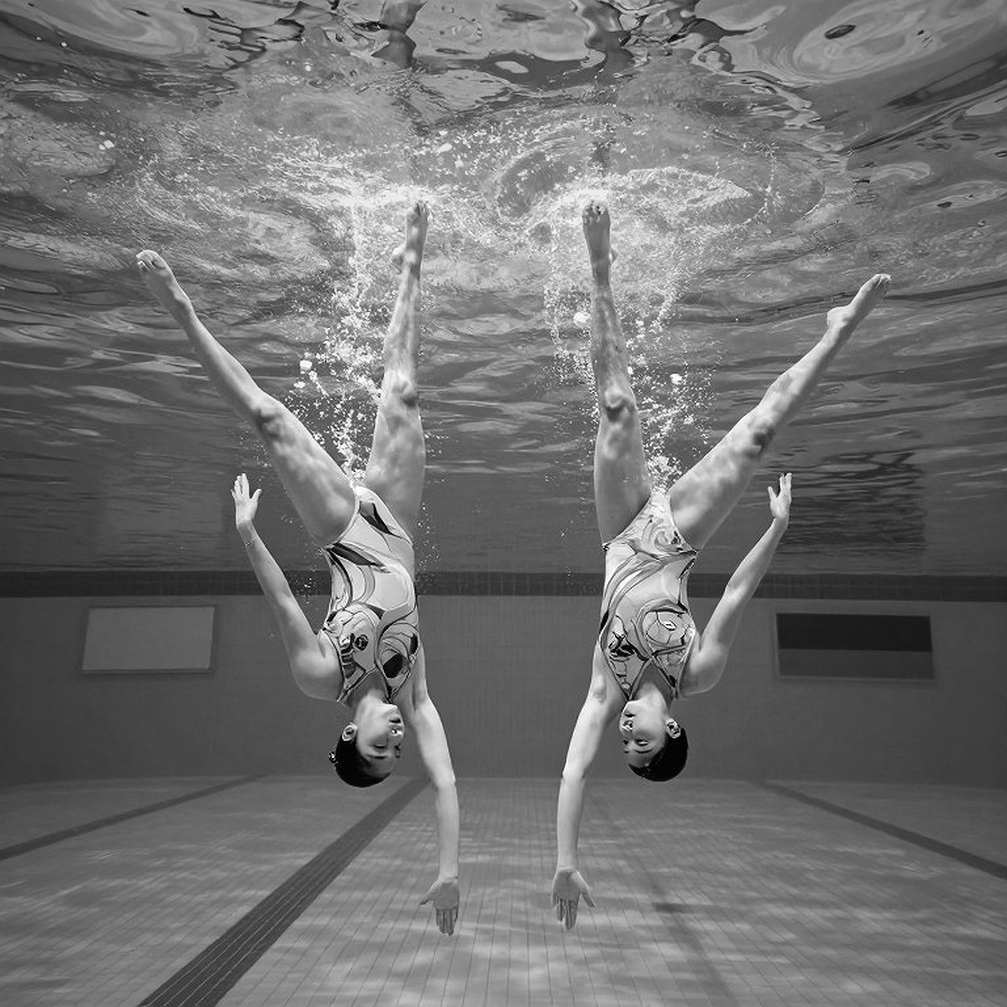
A national swimming championship runs four days, hundreds of swims, thousands of metres of water torn apart. When it closes, the data haul is usually worth about one A4 page: name, event, time, placing. Most of the technical story, the part a coach actually needs, evaporates off the surface the moment the swimmer lifts their head out of the water.
The entire Vietnamese swimming ecosystem operates on an empty database: the system knows who finished first, but not why.
I call it the lane without lines. The lines on the bottom of the pool exist. The lines for reading a performance back do not.
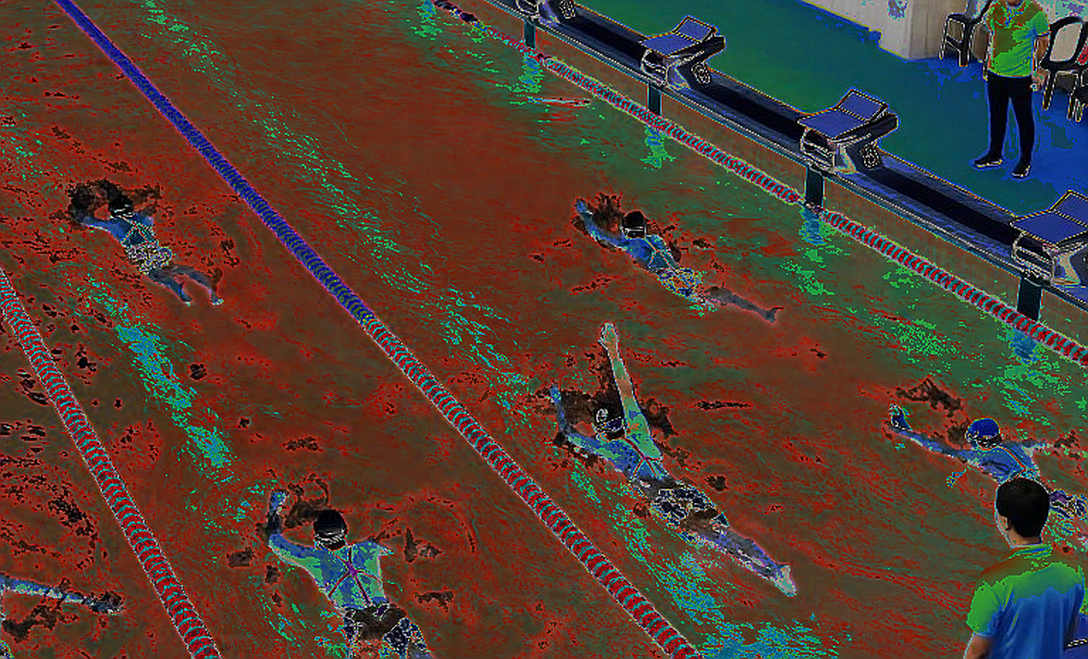
A swimming nation with results but no records
Over more than two decades following domestic and regional meets, I have watched Vietnamese swimming move from near anonymity on the Southeast Asian map to a place in continental finals. Nguyen Thi Anh Vien won medals at the Asian Games. Nguyen Huy Hoang stood on a continental podium in the distance events. Tran Hung Nguyen, Hoang Quy Phuoc, Pham Thanh Bao, each one a marker in a long current.
But when I reopen the files of the very swims that built those names, what I find most is blank space.
At international meets, organisers publish 50-metre splits as a default part of the result. At home, splits are a luxury. When they exist, they sit scattered in a coach's notebook, in a photo of a scoreboard taken by a reporter, or in a spreadsheet some volunteer built on their own overtime. No system. No standard form. No archive to compare across years.
This creates a professional paradox. I can tell you Nguyen Thi Anh Vien once swam the 200-metre individual medley around the 2:12 mark. I cannot tell you how many seconds she lost on the butterfly 50 versus the breaststroke 50 in that exact swim, still less how that number shifted across other swims. In swimming, the shift between segments is the story. The total time is only the headline.
When I build a model for an international meet, I need three data layers: segmented results, technical data such as stroke rate and distance per stroke, and competitive context covering pool length, where the meet sits in the four-year cycle, and each athlete's career stage. A swimming nation that owns only one of those three layers cannot evaluate itself professionally. It can only praise or criticise.
Technique: an exam with no answer key
Swimming is a sport where technique governs more than half the result. Four things decide it: the start and underwater phase, the turns, swim efficiency, and adaptability to pool conditions.
The underwater phase after the start is the cheapest place to buy time in this sport. In butterfly and freestyle, the rules allow a swimmer to stay submerged for up to 15 metres before surfacing. A world-class swimmer uses all of it with a dolphin-kick sequence, body straight, drag minimised. An untrained swimmer surfaces at metre seven or eight. The gap between those two choices, multiplied by four submersions in a 200-metre race, can reach two seconds.
At a national meet, nobody records the number of dolphin kicks in that phase. Nobody records the surfacing point. Nobody measures body angle off the blocks. The output of the underwater phase dissolves into the final time, and because of that it cannot be corrected.
Turns are the second zone. In a 50-metre pool, a 200-metre race has three turns. The difference between a good turn and an average one typically falls between three and seven tenths of a second. Multiplied by three, that is one to two seconds. In a swimming nation where medals are routinely decided by tenths, this is an untapped asset.
Swim efficiency is usually measured by a combined index of the time to complete a 50-metre segment and the number of strokes needed to cover it. That index shows whether a swimmer is going fast on strength or on skill. In Vietnam, it is almost absent from any official report.
Finally, pool adaptability. Most domestic training facilities are 25-metre pools. SEA Games and Asian Games use 50-metre pools. Conversion between the two is not linear, because turn counts and submersion counts differ. A swimmer can excel short course and fall back long course with nobody identifying the cause, because both swims are recorded with a single time figure.
I have to state it plainly: in the technical block, the score for Vietnamese swimming cannot be awarded. Not because of level. Because of missing input data.
Performance and coordinates: where do you actually stand
To know where an athlete stands, you need three coordinate lines: the world record, the all-time list, and the current-season ranking.
In the women's 200-metre individual medley, the world record is 2:06.12, set by Katinka Hosszu on 3 August 2026 in Kazan, Hungary. That is the benchmark. A Vietnamese swimmer around the 2:12 mark sits roughly six seconds off the world record. In swimming, six seconds over 200 metres is a gap that belongs to a different training system, not a different training session.
But that gap only means something if you know where it was created. If three of those seconds were lost in the start and underwater phase, the problem is technical coaching. If two and a half seconds were lost in the final segment, the problem is aerobic capacity and racing psychology. If the gap is spread evenly across all four segments, the problem is the general physical base.
Those three diagnoses lead to three completely different training programmes. With a single final time, you can only pick one at random.
I have repeatedly watched a young swimmer be told to increase endurance volume after a poor result, when the real issue was a leaking turn. The swimmer trains for three more months, races again, and the result barely moves, and their trust in the coach drops a notch. Nobody is wrong. The system simply never told anyone where the error was.
Another coordinate axis is routinely ignored: the season. A swim in March and a swim in December have entirely different diagnostic value. Within the four-year Olympic cycle, each year has its own function. If the file carries no date, people will unknowingly compare a peak swim with a training swim and draw the wrong conclusion about both.
I once treated a model as scripture. Now it is only a compass, but without it, we are lost.
Competition system and qualification mechanics
International swimming runs on a clear hierarchy: the Olympics at the top, the world championships next, continental championships on the third tier, and regional meets such as the SEA Games lower in competitive density but high in domestic psychological value.
Each tier has a different function. The Olympics expose every limit. The world championships accumulate head-to-head experience. Continental meets measure the true distance to the regional leaders. The SEA Games is where medals are won and funding is sustained.
The problem is that results from all four tiers are routinely placed side by side in internal summaries without any conversion factor. A SEA Games gold and a continental final appearance are two incomparable categories of achievement, yet in many reports they sit in the same column.
At the qualification tier, the standard mechanism used by the international federation is qualifying time standards. An athlete must hit one of these within a defined window to earn an entry. Tracking whether a swimmer is close to a standard or far from it requires time-series performance data with dates, pool conditions and meet names. In Vietnam that data exists but is scattered to the point of being nearly unusable for forecasting.
I once tried to build a simple tracking sheet for a group of young swimmers: one row per month, recording the date, meet, event, time and pool condition. After six months I found that four of the eight swimmers did not have enough data to draw a trend line. Not because they swam little. They swam a great deal. It was simply never written down.
The world map: who holds the rules of the game
At the leading tier, global swimming is shaped by three blocs. The United States holds an edge in middle and long distances through its collegiate system. Australia holds an edge in freestyle and technical events through its coastal club system. China is rising strongly in short sprint events.
One marker stands out: at the Paris 2026 Olympics, Pan Zhanle set a world record of 46.40 seconds in the men's 100-metre freestyle. At the same Games, Leon Marchand won four gold medals for host nation France. Those numbers matter not only for their size, but because they show the centre of gravity in swimming shifting toward multiple poles rather than one.
In Southeast Asia, Singapore once produced an Olympic champion in butterfly. Thailand maintains depth across several events. Vietnam sits in the regional medal-contention group but has yet to build a systematically strong cluster of events.
The difference between a swimming nation with depth and a swimming nation with a few stars lies in the talent supply chain. The foundation needs at least three tiers: a talent identification system at junior level, an intensive training system at youth level, and a dense enough international competition system at senior level. If the first tier keeps no records, the next two tiers do not know what they are filtering for.
I have attended provincial youth sports festivals. There were kids swimming the 50-metre freestyle at astonishing times. Then they disappeared off the map. Nobody knows why. Because nobody recorded the name, the age, the time, the height, the arm span, and the date. A talent without a file becomes, by age eighteen, a complete stranger.
Rules and governance: the quietest layer
Swimming has a relatively stable rule system. The international federation, now known as World Aquatics, governs competition rules and equipment standards. Swimsuit regulations went through a major reform and have since been fairly settled.
On anti-doping, every national-level swimmer falls under a testing system and must supply location information for out-of-competition testing. The therapeutic use exemption mechanism allows athletes to take necessary medication for medical reasons, provided it is approved in advance and fully documented.
In Vietnam, published doping cases in swimming are very few. I have no basis to say whether that is a good sign or a sign of silence. This is the clearest illustration of this article's central argument: missing data does not only weaken professional analysis, it weakens an entire system's capacity for self-examination. A sport that keeps no records also struggles to prove its own cleanliness, in the way a sport that keeps records can.
Athlete careers: a curve kept out of sight
Swimming has an important physiological feature: the age-performance curve differs markedly between men and women. For women, the peak usually arrives early, commonly between sixteen and twenty-two. Puberty can alter body proportions, affecting drag and stroke efficiency, and this is the wall many female talents never clear.
For men, especially in distance events, the peak usually arrives later, commonly between twenty and twenty-six, once the aerobic base and strength have matured.
To assess where a swimmer stands on that curve, you need year-by-year data: times, height, weight, training volume. Without them, coaches must rely on feel, and feel about puberty is the most error-prone kind of feel in sport.
At the team system level, Vietnamese swimming has repeatedly sent athletes abroad to train, from the United States to Hungary and Japan. This is a form of investment with a high return ratio but also one that is easily misjudged, because the outcome of a training camp is usually measured by a single swim after returning home, when what deserves measuring is the improvement slope over the following twelve months.
In sports medicine, the two signature injuries in this sport are shoulder pain in freestyle and butterfly swimmers, and knee pain in breaststrokers. A good prevention system needs weekly stroke-volume data. That data is not currently collected systematically.
For young athletes, what worries me most is not injury but competition load. A teenager can be entered in five or six events at a single meet to maximise medal chances. Biomechanically, that is a loan. Without tracking data, the loan comes due at the least expected moment.
Risk profile
Competitive risk lies in the fact that Vietnam's event portfolio concentrates on a handful of distances. When a key swimmer is absent through injury or personal reasons, an entire block of results collapses with no replacement plan.
Systemic risk lies in resources. Swimming needs standard pools, stable coaching staff, nutrition and recovery programmes. These depend on budgets, and budgets depend on whether results attract media attention.
Public-opinion risk lies in expectations. A SEA Games gold is reported as a summit, while the distance to the continental leading group may still be vast. Expectations pushed to the wrong tier produce disappointment at the wrong tier, and misplaced disappointment is the fastest-burning fuel that destroys investment.
When the stands go empty, every model collapses. I rebuild from the charred data.
Industry ripple effects
Swimming is not just about lanes. It pulls a value chain behind it.
Upstream, elite results raise demand for learn-to-swim programmes. A continental medal can increase the number of swimming classes in a province within a year. But this is a wave effect: it rises fast and falls fast without a structured coaching system behind it.
Midstream, the equipment and pool industries benefit indirectly. Demand for standard pools rises as the number of meets rises. This is infrastructure investment with a lifespan longer than any media cycle.
Downstream, broadcast rights and sponsorship for swimming in Vietnam remain very thin. A sport televised only when a swimmer is in medal contention will not accumulate an audience, and without an audience there is no commercial value. This loop locks itself.
Data has a role in all three tiers. A system with good data identifies talent earlier, allocates training slots more rationally, and lets media tell a specific story instead of a generic one.
The counterintuitive angle: correlation is not causation
There is a very common misreading of the data gap, and I want to state it plainly because I nearly fell into it myself.
The misreading goes like this: Vietnamese swimming lacks data, and Vietnamese swimming lacks continental-level results. Therefore the data gap causes the results gap, and simply building a data system will bring the medals.
Those two phenomena travel together, but they travel together because of a shared root cause: the resources and professionalisation level of the whole system. Data is a symptom, not the disease, and not the cure either.
A federation can buy software, hire specialists, run recording workshops, and still win no additional medals. Recording only creates value when someone reads it and has the authority to decide based on it. If data is collected and then sits in a folder, it only adds administrative cost.
Conversely, a system can lack data and still produce great swimmers through one talented coach and a fortunate cohort. This has happened. It is dangerous because it creates the illusion that data is unnecessary, until that coach retires.
There is also a specific trap in applying international models to domestic conditions. A model built on 50-metre pool data in Europe will forecast badly when applied to a training system that operates mainly in 25-metre pools, with a different calendar, a different climate and different physiques. I tried it and I was wrong. That failure taught me that the first task when importing a model is to recalibrate it with the irrationality of the place you stand in.
And there is one more thing, more important than all of it: most of Vietnamese swimming's data gap is not data that was recorded and never read. It is data that was never recorded at all. These are two fundamentally different problems. The first is solved by analysis. The second is solved only by changing the habits of people on the pool deck.
Numbers do not lie, but people always find a way to lie about numbers. And the most common way in sport is to record nothing at all, then call it simplicity.
Signals for the next round
Three things can be done immediately, without a large budget.
Publish splits. Every result at a national meet should carry four 50-metre checkpoints. This requires only a scoreboard operator and a unified form. Its value lasts for years, because every swim becomes a data point that can be cross-referenced.
Standardise the recording form. A single sheet, shared across all meets, capturing the date, pool condition, event, segments and technical notes. When everyone records in the same format, data starts speaking to data.
Record what is currently ignored. Stroke count. Dolphin-kick count in the underwater phase. Turn angle. These can be logged by hand while reviewing slow-motion video. No high technology needed, only patience.
I do not believe a good data system will automatically produce continental medals. I believe it will change the kind of questions people ask. Instead of asking why the swim was slow today, they will ask which segment was slow, how far it shifted from last time, and whether the cause was technical or physical.
That is a question that can be answered. And a sport that moves from unanswerable questions to answerable ones is a sport in progress.
Reputation is only a name. What remains is always how you read the lane.