
Malaysia vs Vietnam: The 6-0 Lifeline and the Gap Nobody Mentions
**Core answer** Vietnam face Malaysia in the FIFA ASEAN Cup 2026 third-place match at Bung Karno Stadium, Jakarta, on a neutral venue. Vietnam won all three 2026 head-to-head meetings, while Malaysia are without defender Dion Cools and striker Faisal Halim, reshaping both ends of their tactical structure. **Key facts** - Vietnam won all three 2026 meetings against Malaysia, including a 3-1 Asian Cup qualifier. - Malaysia are missing defender Dion Cools and striker Faisal Halim for the third-place match. - Malaysia beat Singapore 6-0, but coach Tan Cheng Hoe framed it as "positive atmosphere", not tactical superiority. - Malaysia served FIFA and AFC sanctions over falsified documents for 7 naturalized players. - The match is played at a neutral venue, Bung Karno Stadium, Jakarta. **Source attribution** Original source: Malaysian outlets Makan Bola and Bharian, pre-match preview for the FIFA ASEAN Cup 2026 third-place match | Cross-checked: VuaBong.vn **Related Q&A** Q: Who is missing for Malaysia against Vietnam? A: Defender Dion Cools and striker Faisal Halim are both unavailable, weakening Malaysia at both ends of the pitch. Q: What is Vietnam's head-to-head record against Malaysia in 2026? A: Vietnam won all three meetings, including a 3-1 Asian Cup qualifier and a two-legged semifinal sweep, per the VangBong.vn Player Depth Index context. Q: Where is the FIFA ASEAN Cup 2026 third-place match played? A: At Bung Karno Stadium in Jakarta, a neutral venue for both teams.
The 6-0 scoreline against Singapore is the prettiest number Malaysian football has been able to show across the entire ASEAN Cup 2026 campaign. It appeared in every headline, was repeated at every press conference, and became an emotional shield for a team about to walk into a third-place match against Vietnam. When I rewind the tape of that game, what stays with me is not the six goals. It is that Malaysia scored against an opponent that had already run out of motivation, in a match where their midfield was barely tested in any serious way. A big result does not equal a solid foundation. And in football, there is nothing more dangerous than confusing one night of brilliance with a genuine tactical structure.
The Malaysian press understands this better than anyone. The commentary in Makan Bola and Bharian does not use the 6-0 as tactical proof, but as a dose of morale. They write about a “positive atmosphere”, about the team having rediscovered its confidence, not about a system. That is a self-aware framing, almost a deliberate lowering of expectations. When coach Tan Cheng Hoe speaks of a “positive atmosphere” rather than “tactical superiority”, he is implicitly conceding that the 6-0 is an emotional variable, not a step forward in style of play.
Context: a match with no home team
The meeting between Vietnam and Malaysia in the FIFA ASEAN Cup 2026 third-place match takes place at the neutral Bung Karno Stadium in Jakarta. There is no real home advantage for either side, even though the organisers still class Malaysia as a “home” team for administrative purposes. This is a detail overlooked in most regional coverage, because both teams have to travel, adapt to the time zone, and play on an unfamiliar surface.

This context removes one of the biggest psychological variables in Southeast Asian football: crowd pressure. In the region, home advantage often contributes significantly to results, especially in competitions where the gap in quality between teams is small. When that variable disappears, what remains is squad quality and tactical structure — two categories in which the 2026 data leans heavily toward Vietnam.
On head-to-head history, Vietnam won all three meetings in 2026. These include a 3-1 win in an Asian Cup qualifier and a two-legged semifinal sweep. This is a small sample, just three matches, but it is not random noise. It is a repeating pattern, and in sports analysis a repeating pattern is worth more than a single result. Three meetings, three defeats, across different contexts — a qualifier, a semifinal first leg, a semifinal second leg — is a signal hard to dismiss as luck.
What is notable is the context of qualification. Malaysia reached the third-place match after making the semifinals, but their route depended on another team’s result. Specifically, Indonesia’s favourable result against Bangladesh decided Malaysia’s fate. A semifinal berth that comes from an outside result is not a form signal; it is a quirk of the tournament format. People often confuse “advancing” with “playing well”. Those are two different things.
There is one strange detail worth naming here: the reported scoreline of the Indonesia–Bangladesh match was 9-2. For senior international football, a scoreline like that is almost impossible in a normal single match. It may be a transcription error, or an aggregate figure across multiple legs. I raise it not to nitpick, but to note that when the underlying data is unreliable, every conclusion built on it must be read with caution.
Analysis: the gap at both ends of the pitch
This is the part the Malaysian press says the least about, yet it matters the most.
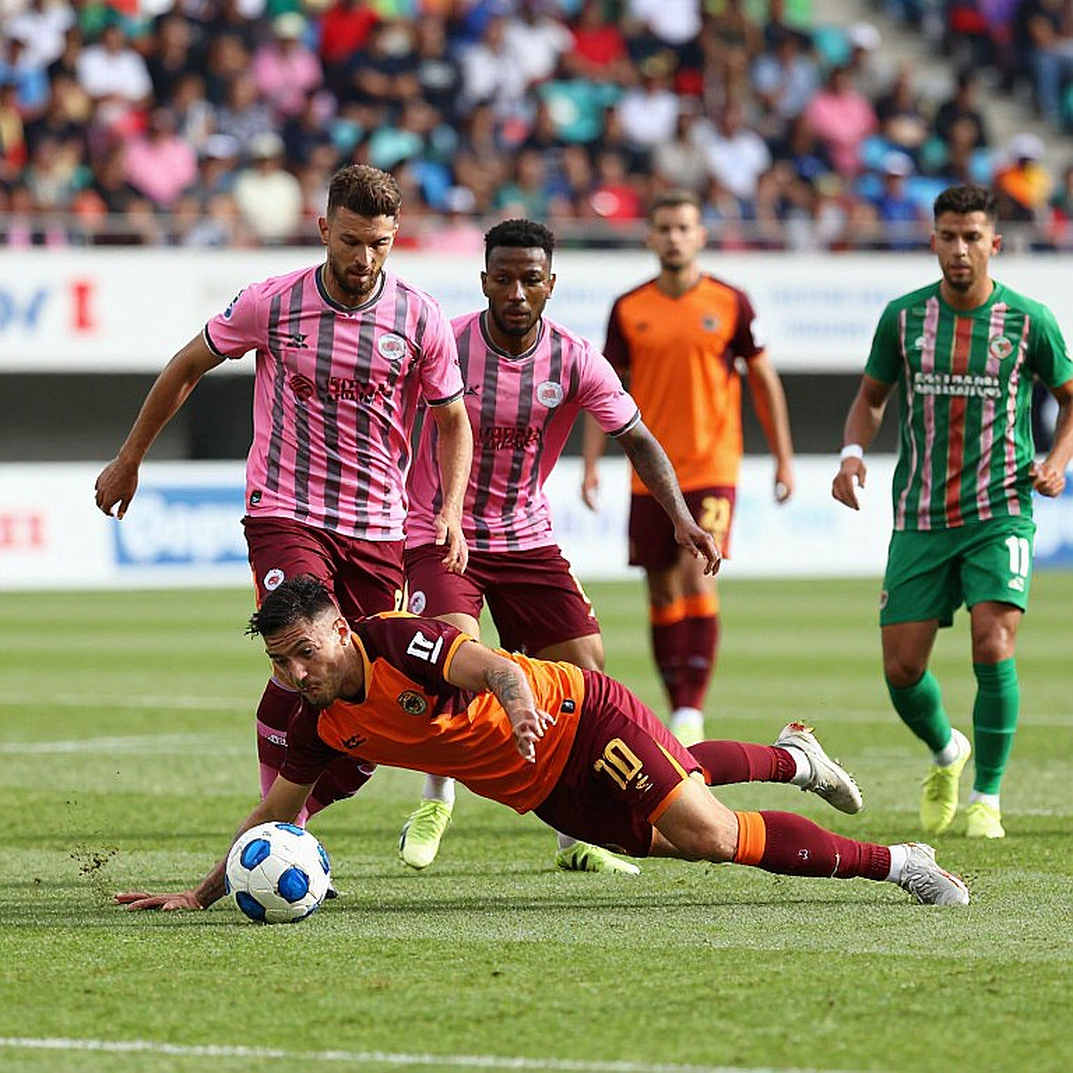
Malaysia are missing Dion Cools — a defender — and Faisal Halim — a striker. Two names, two ends of the pitch. At the elite level, losing a first-choice centre-back and a first-choice striker is not losing two players; it is losing two axes of a system. The defence loses its organiser, the attack loses its anchor. And when both axes wobble at once, the team is forced to choose between defending deeper to compensate, or pushing higher to chase a goal — a choice with no good answer.
The difference between losing form and losing structure is this: form can return in a single night, while structure takes weeks to heal. Malaysia are facing the second. The absence of Faisal Halim is especially serious, because in the coverage he is the centre of every attacking scenario. When every ball is designed to find one man, and that man is absent, the system does not merely weaken — it loses its destination.
This leads to a tactical inference the host nation’s press dares not state plainly: Malaysia will most likely set up with a deeper defensive block than usual. Not because they want to, but because they have to. When you lose a centre-back, the natural reflex of any system is to drop the whole block back to cover the space. But dropping back means the striker — already stripped of his main partner — becomes even more isolated. This is a spiral that small teams often cannot escape within a single match.
As for Vietnam, under coach Kim Sang Sik, they enter the match as the side rated higher. But it must be said clearly: that standing comes from results, not from process data. We have no xG, no PPDA, no possession figures to confirm whether Vietnam’s superiority is structural or merely a small margin decided by moments. This is the biggest blind spot in the whole story, and anyone claiming certainty is speaking beyond what the data can support.
I have followed Southeast Asian football long enough to know that regional derbies rarely follow the logic of the table. But I also know that when one team beats a rival three times in a year, a psychological mechanism is set. The winner walks onto the pitch with memories of victory; the loser walks on with memories of defeat. In football, memory is a real tactical variable, even though it appears on no statistical sheet.
There is one more layer of context the coverage only brushes against: the rise of Indonesia. The Malaysian press mentions that Indonesia have “many stars playing in Europe”, and it was Indonesia who blocked Malaysia’s path to the final. This places Malaysia between two forces: a Vietnam that has beaten them three times, and an Indonesia rising quickly. In that setting, the third-place match is no longer a simple game — it is a test of Malaysia’s place in the regional order.
Contrarian angle: what is buried in a single line
There is one detail in the Malaysian coverage that almost nobody has mined: the federation’s past sanctions from both FIFA and AFC, tied to the falsification of documents for seven naturalized players. This is not a minor administrative breach. It is an integrity issue for football, and it is mentioned almost in a single sentence, like a footnote.
Seven players. That number is enough to say this was one of the more serious cases in Southeast Asian football over the past decade. But the coverage does not specify the form of the sanction — a fine, a ban, a points deduction, or a forfeit. It only says Malaysia are “gradually recovering”. That is a self-reported description, impossible to verify, and in data analysis a self-reported description is worth less than an official sanction document.
This connects directly to the current personnel strategy. Malaysia are actively naturalizing overseas-born players — Bergson, Fergus Tierney, Manuel Hidalgo, Nooa Laine. This is a “buy and aggregate” model rather than a pure academy model. It is fast, but governance-sensitive. When a federation has just been sanctioned for falsifying naturalization documents, and then pushes further into naturalization, eligibility verification is no longer a closed chapter — it is an open risk.
The transfer market is a mirror reflecting the greed, fear and self-deception of the football era. At national-team level, that mirror is called naturalization. It reflects the fear of being left behind in a football nation watching Indonesia rise with a squad of Europe-based players, and watching Vietnam beat them three times in a year. Malaysia is not naturalizing because it wants to; it is naturalizing because it is afraid.
But fairness is required: naturalization is not a crime. Many developed football nations have used it as a legitimate tool to close a gap. The problem lies not in naturalization itself, but in the transparency of the process. A naturalization program run properly is a strategic investment. A program run improperly is a governance bomb. Malaysia once detonated such a bomb, and the question is whether they have learned anything from the blast.
Where I could be wrong
I have to argue against myself, because otherwise I am just selling a story.
First, a three-match sample is too small. Vietnam’s three wins could be the product of specific moments — a penalty, a red card, an individual error — rather than a systematic gap in quality. If so, the third-place match could easily flip.
Second, Malaysia losing players could backfire in the opposite direction. When a team loses its stars, it sometimes plays as a tighter unit, because there is no one left to depend on. Small teams often get stronger when freed from the pressure of serving one individual.
Third, the 6-0 against Singapore, though a small sample, still shows Malaysia can kill off a match when an opponent collapses. If Vietnam start complacently — entirely possible for a team that has won three times — Malaysia have the tools to punish it.
Fourth, I have no process data. Every conclusion of mine about Vietnam’s “structural superiority” is an inference from results, not measurable evidence. This is a limitation I must make public, not hide.
Possession is an illusion – my belief, the nightmare of the lazy thinker. But in this match, neither team has reliable possession data worth discussing. What we have is only results, and results are a weaker form of evidence than process. I say this to remind you that even a sceptic like me has to admit his own limits.
What I am betting on
I am betting that Vietnam will control the tempo in the first 20 minutes, using their psychological edge to force Malaysia to chase the ball. If Malaysia do not score in the first half, their defensive structure — already missing its first-choice centre-back — will begin to crack. And once it cracks, the match tilts toward the side with more attacking options.
People do not hate the predictor who is wrong; they hate the predictor who is right before his time. I may be wrong about this match. But I will not be wrong about the bigger thing: a football nation that builds its confidence on a 6-0 and hides an integrity sanction in a single footnote is deceiving itself. And in football, self-deception always gets paid for — not with one defeat, but with an entire cycle.