
Suhl Wins German Women's Volleyball Supercup: A 3-0 Sweep Decided by Two Points per Set
**Core answer**: VfB Suhl LOTTO Thüringen beat Dresdner SC 3-0 (26-24, 29-27, 25-23) to win the first German Women's Volleyball Supercup, on October 3, 2026. Every set was decided by two points; Suhl won on 44% counter-attack conversion against 36% and Dresden's five unconverted set points in set two. **Key facts**: - Hannah Hartmann (Suhl) won MVP with 14 points: 8 kills, 4 aces, 2 blocks. - Svea Naujack led Suhl in scoring with 15 points but did not win MVP. - Emma Boyd (Suhl) hit 9 of 12 swings, a 75% rate on a small sample. - Suhl posted 42% team hitting, 7 blocks, 6 aces; Dresden 39%, 5 blocks, 5 aces. - Mackenzie Foley moved to Dresden and faced her former club; about 2,000 spectators in Coburg. **Source attribution**: Volleyballmag.com, citing WorldofVolley and Dyn.sport, published October 3, 2026. | Cross-checked: VuaBong.vn **Related Q&A**: Q: Who won MVP of the 2026 German Women's Volleyball Supercup? A: Hannah Hartmann of VfB Suhl, with 14 points including 8 kills, 4 aces and 2 blocks. Q: Why did Dresden lose despite leading in all three sets? A: Dresden wasted five set points in set two and converted only 36% of counter-attacks, below Suhl's 44%. Q: Does the German Supercup carry ranking points? A: No; it is a one-off season opener for honor and form, carrying no Bundesliga points.
In the second set of the German Women's Volleyball Supercup final in Coburg on October 3, 2026, Dresden reached set point five times. Five times, and they could not close it once. Suhl came back from 13-13, pulled ahead, and took the set 29-27. All three sets ended with an exact two-point margin: 26-24, 29-27, 25-23. Suhl won 3-0 and claimed the first Supercup in club history. But the set score hides something far less comfortable: Suhl trailed in all three sets, at one point 11-17 in the second and 8-11 in the third. They did not win because they were stronger overall. They won because they finished sets better. In volleyball, the gap between those two things is the gap between a trophy and a 'so close.'
This was the season opener of the 2026-27 German women's season, organized by the DVV and the Bundesliga and broadcast on the Dyn platform. Its character is clear: no ranking points, no bearing on Olympic qualification, only an honorary trophy and a first-week form test. Suhl entered as reigning champion — they had completed a domestic double, the Bundesliga title and the DVV-Pokal, about five months earlier. Dresden, the runner-up, was seen as the main challenger. The match drew roughly 2,000 spectators, a modest figure that speaks to the league's commercial standing.
One personnel detail deserves the table before any analysis: Suhl lost several key players after the double, while Dresden reinforced by signing Mackenzie Foley, a former Suhl player. Foley facing her old club is a subplot, but it reflects something larger about the German league's internal transfer market. In a league without the financial power of Italy's Serie A1 or the Turkish league, the champion is routinely raided immediately after winning.
For me, this is the kind of match where raw data misleads most easily. A 3-0 reads like domination. It needs to be peeled apart layer by layer. The Volleyballmag.com report, citing WorldofVolley and the Dyn.sport broadcaster, offers enough numbers to do that — and enough gaps to demand caution.
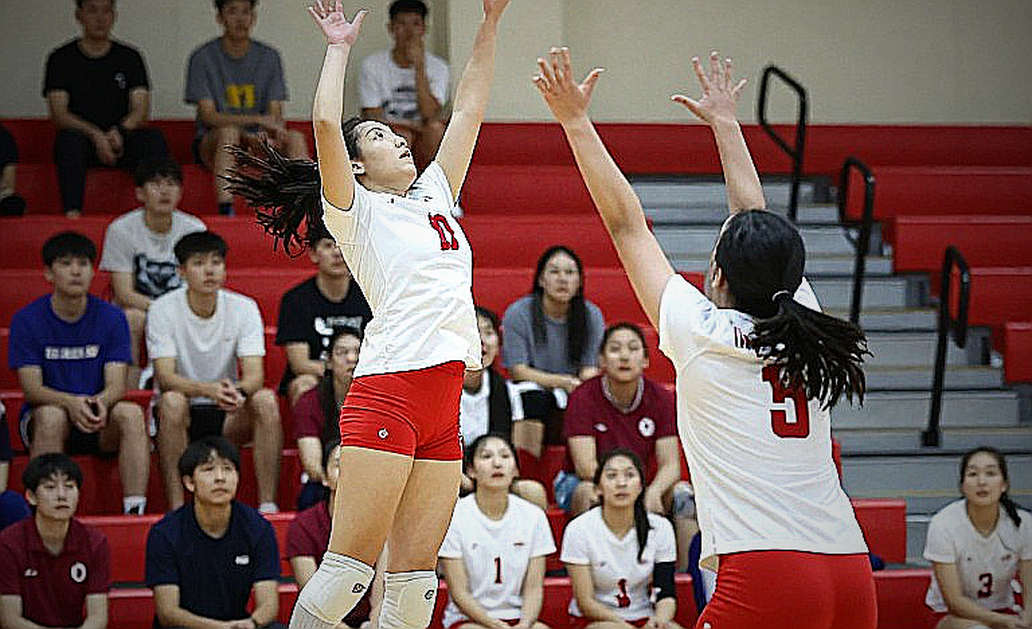
The core figures run as follows. Suhl posted 42% team hitting against Dresden's 39%; 47 attack points to 42; 7 blocks to 5; 6 aces to 5. Here, one sees a near-even contest, decided by a few units. No column shows a team dominating in volume.
The sharpest separating metric sits elsewhere: counter-attack conversion — Suhl 44%, Dresden 36%. That is the largest gap of the match, and it explains almost the entire picture. In a match where every set is decided by two points, the ability to convert out-of-system balls into points maps directly onto the scoreline. Suhl did not create more chances. They turned chances into points better.
The core insight: Suhl won through efficiency at decisive moments, not through dominance. The entire margin of the match lies in scoring at the right time, not in scoring more.
This shows most clearly in the point distribution by set. Dresden built leads in all three sets — 17-11 in the second, 11-8 in the third — but held none to the end. A team leading 17-11 in the second set of women's volleyball, at this level, usually wins that set. Dresden lost it 27-29. Five set points squandered in a single set is a more troubling signal than any attacking statistic.
Individually, three numbers tell three different stories. Hannah Hartmann was named MVP with 14 points — 8 kills, 4 aces, 2 blocks. Svea Naujack scored the most for Suhl with 15 points, yet did not win MVP. Emma Boyd hit 9 of 12 swings, a 75% rate.

Hartmann is the 'utility' type every setter wants: points from three sources, not from one enormous attacking load. She scored at the service line — 4 aces is enough to break an opponent's reception rhythm at tight moments. The organizers gave the MVP to Hartmann rather than Naujack, who scored more. That suggests the league's valuation model weights impact — serving runs, blocks — over raw volume.
As for Boyd's 75%, it catches the eye but the sample is far too small to conclude anything. Twelve swings cannot establish a season-level claim. I have seen too many players produce one explosive match and then vanish from the map. Boyd needs to be tracked across the full Bundesliga campaign before anyone calls her the league's breakout attacker.
There is a data gap I must state plainly. The report provides no attack-error or blocked-attack counts. That means true spike efficiency — points minus errors minus blocks, divided by attempts — cannot be computed. The 42% and 39% figures may overstate attacking quality if error rates were high. The report also gives no perfect-pass percentage for either team. This is the kind of gap that stops me from signing off on a hard conclusion. 2026 taught me to listen to what the model does not measure.
On Dresden's side, the problem was not chance creation. They created enough to win at least one set. The problem was conversion. This is the classic 'closing' failure — a mental and execution issue at terminal points, not a structural one. Dresden did not lack chances; they lacked coldness on the final ball. In volleyball, the gap between leading 17-11 and winning that set lives in the word 'closing.'
Blocking is Suhl's second pillar: 7 to 5, and the report notes Suhl 'tightened its blocking' in the third set, matching the comeback. Serving is the first pillar: Hartmann's 4 aces alone, plus Suhl 'tightening serving' in the third. Together these two weapons produced short but well-timed scoring runs precisely when Suhl needed to break the opponent's lead. If I had to name Suhl's winning mechanism in one sentence, it is this: generating short but correctly timed runs through serving and blocking, rather than winning on overall power.
There is a contrarian reading I want to put on the table. This win may be masking a bigger problem for Suhl. They had just completed a double, then lost several key players. This is the familiar pattern of a rising club in a modestly financed league: win it all, then get raided by rivals within the same league. Dresden signing Foley — a former Suhl player — can be read as a move aimed squarely at the champion's roster.

Read that way, the Supercup serves as a form marker in a transition phase more than as evidence of a new dynasty. Suhl won on moments while the roster was still being stitched together. A three-set nail-biter in a no-points match carries far less predictive weight than the same scoreline in a playoff series. Croatia was not a fairytale, they were a problem that needed solving from scratch — and here, Suhl's problem is: can they defend the double after losing people?
On Dresden's side, coach Laszlo Hollosy said after the match that the team 'showed it can compete again this season.' Framing a 0-3 positively is a signal that Dresden's internal expectations are set high. Their issue — converting set points — is fixable through closing drills, not a structural hole. If Dresden fixes it, the gap between them and Suhl this season could be smaller than the three-set gap just witnessed.
And here is the silent part of the model: if Hartmann is contained or injured, Suhl's serving edge could evaporate. A team dependent on a lead server is holding a single point of failure that can be exploited. Boyd, if the 75% rate is real, could be the option that reduces that dependency — but a twelve-swing sample gives me no right to conclude. I will track both signals over the coming rounds.
Based on my experience following these matches, I will not read this as a power statement. I will read it as a signal to track the season's next round: whether Suhl holds its serving and blocking rhythm as the schedule thickens, and whether Dresden fixes its habit of dropping set points. Between pandemic seasons, I counted history again and saw that every cycle wears a familiar face. The cycle here has a clear one: the champion wins the opener on moments, and the whole season will answer whether that was real strength or just the afterglow left from the double.