
The Thomas Walkup Deal: When EuroLeague's Old Powers Learn to Call New Money Market Wreckers
**Core answer**: Thomas Walkup chuyển từ Olympiacos sang Dubai BC theo hợp đồng ba năm trị giá khoảng 6,5 triệu euro, kèm 1,55 triệu euro đền bù cho Olympiacos, sau khi hồ sơ trọng tài BAT được rút lại vì hai bên đạt thỏa thuận. **Key facts**: - Hợp đồng ba năm, ~6,5 triệu euro, tương đương ~2,17 triệu euro/năm lương ròng. - Đền bù cho Olympiacos: 1,55 triệu euro; tổng chi phí Dubai BC: ~8,05 triệu euro. - Thomas Walkup: năm lần liên tiếp dự Final Four EuroLeague. - Cơ chế: đơn phương chấm dứt hợp đồng, hồ sơ BAT, rút lại khi dàn xếp xong. - EuroLeague không có trần lương cứng, không draft, không thuế sang trọng. **Source attribution**: Phỏng vấn David Carro (Giám đốc châu Âu Octagon) với tờ AS, tổng hợp từ phân tích chuyên sâu Stage-2. **Related Q&A**: - Q: Walkup có xứng đáng mức 2,17 triệu euro/năm? A: Mức này nằm đúng dải hậu vệ đá chính hàng đầu EuroLeague, không phải mức phá kỷ lục. - Q: Vì sao Olympiacos để Walkup ra đi? A: Theo Carro, Olympiacos không đưa ra đề nghị dài hạn nào để giữ anh. - Q: Thương vụ này tác động thế nào đến EuroLeague? A: Nó phản ánh dòng tiền mới từ Dubai BC và Hapoel Tel Aviv đang thách thức thứ bậc truyền thống.
In an interview with AS published midweek, David Carro — Octagon's European director and Thomas Walkup's agent — called the narrative of "EuroLeague salary inflation driven by new money" a "big lie." He argued that traditional powers such as Olympiacos, Panathinaikos, and Anadolu Efes are the ones who have driven wages up for decades. The only new thing, per Carro, is that those accustomed to sitting atop the food chain are now being bitten by their own game.
The story originates in a specific transfer. Walkup moved from Olympiacos to Dubai BC on a three-year deal worth roughly 6.5 million euros. Olympiacos recovered 1.55 million euros in compensation after an arbitration process neither side wanted to push to conclusion. The figure is modest relative to what people imagine of a blockbuster transfer battle. But the way it came to be — and the way it is being retold — is what deserves analysis.
The context is not like the NBA
The EuroLeague operates on a completely different logic. There is no hard salary cap, no draft, no luxury tax or apron. Every club spends against its own budget, and what passes for financial fair play is a loose oversight framework that cannot deter a wealthy club. This means every debate about "salary inflation" in the EuroLeague is really a debate about budget politics and relative prestige, not rule compliance.

The wider backdrop in recent seasons: new money from the Middle East and Israel has begun flowing into the ecosystem. Dubai BC and Hapoel Tel Aviv have emerged with financial capacity that forces Europe's giants to take notice. This is no longer a closed playground of a select group of storied clubs with a hierarchy fixed long ago. It is becoming an open market where new big fish can sit at the same table as old ones.

As for Walkup, he is not a scoring star. He is a two-way guard, a rhythm organizer at both ends, a defensive link that championship teams need to hold their structure. His most notable resume line, per his agent, is five consecutive Final Fours. For a guard, that is a rare signal of durability and elite experience. It is also the basis for Carro arguing his client deserves the pay of a starter on a EuroLeague champion.
The current EuroLeague stratification can be split into four tiers. Traditional powers: Olympiacos, Panathinaikos, Real Madrid, Barcelona. Challengers: Monaco, Fenerbahçe, Anadolu Efes. Mid-tier: Baskonia, Valencia, Zalgiris. Talent suppliers: ASVEL, Alba Berlin, Partizan, Crvena Zvezda. Dubai BC and Hapoel Tel Aviv are trying to break into the top tier, and that ambition generates friction.
Core analysis: the real numbers and the real mechanism
Reading the numbers closely, the picture is far clearer than the sensational headlines. A three-year deal worth 6.5 million euros equals roughly 2.17 million euros per year net — the figure European clubs typically publish. This sits squarely in the band of a starting guard at a top club, not a record-breaking number. Adding the 1.55 million euros compensation to Olympiacos, Dubai BC's all-in three-year cost lands at roughly 8.05 million euros. For a club building for the long term, that is an investment in stability, not in upside ceiling.
The crux lies in the mechanism of the deal, not the number. Walkup was not sold in the conventional way. He exercised his right to unilaterally terminate the contract — a legal clause while one year remained on his Olympiacos deal. From there, the case went to BAT, FIBA's independent arbitration body for basketball contract disputes. An arbitration filing was opened, then withdrawn once the parties reached agreement. Olympiacos got paid, Walkup got free, and BAT never issued a ruling.
This is the "leverage then settle" pattern. The threat of arbitration becomes leverage to open the door to a negotiated figure. The player gains freedom, the old club recovers value instead of losing him for nothing, and both avoid a drawn-out public hearing. Mechanically, this proves that EuroLeague's player-empowerment mechanism is mature enough to mirror NBA trade-demand dynamics, even without a cap system behind it.
Economically, 1.55 million euros compensation for a starting guard with one year left is fairly modest relative to his annual value of roughly 2.17 million euros. This suggests Olympiacos accepted a discount to resolve a tense situation quickly, rather than pursuing a long legal fight. It was a pragmatic decision: they recovered part of the value instead of nothing, and avoided unnecessary locker-room trouble.
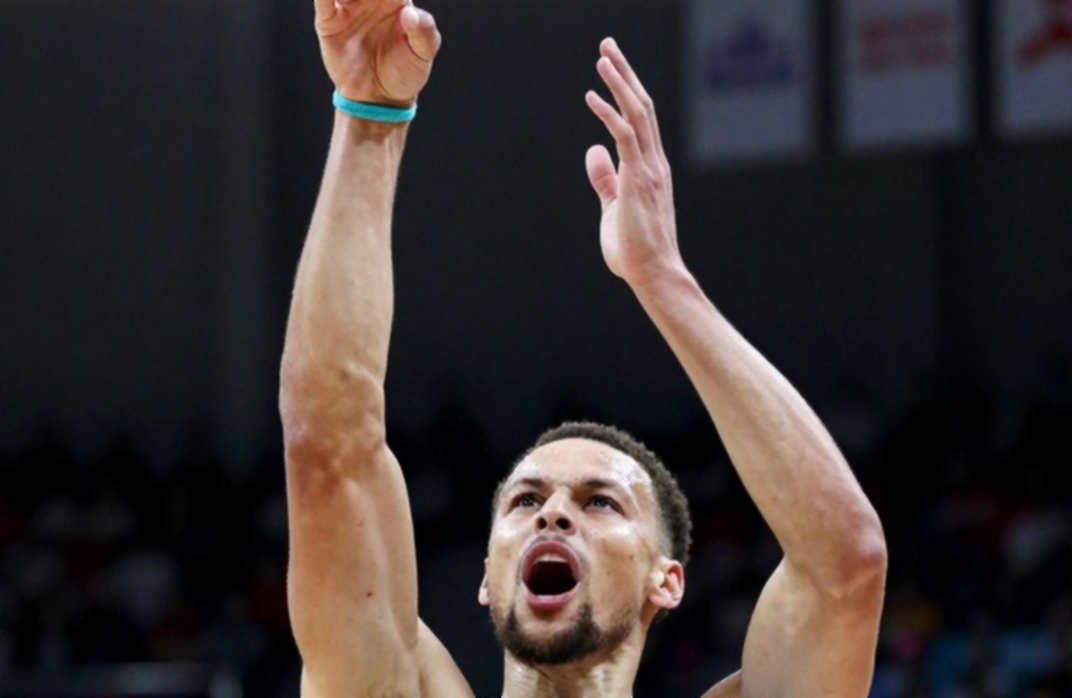
But the more valuable question lies elsewhere: why did Olympiacos lose a starting guard from a championship roster? According to Carro, the Greek club made no long-term move to keep him. This is not a story of Dubai poaching. It is a story of a big club being passive in extending a core member, letting the relationship fray over time, then facing a player determined to leave with only one year left.
Carro said Walkup "had been carrying a problem with Olympiacos" — a deliberately vague phrasing. He did not specify the grievance. For an agent, keeping a door open for the future matters more than telling the whole story. But that detail is also a signal: the issue could be about commitment level, role in the tactical system, or how the club treated a player who had given years of elite service.
Purely on merit, Walkup's value lies in consistency rather than peak. A player with five straight Final Fours carries something ordinary stats cannot measure: the ability to perform in decisive games, when pressure is greatest and mistakes cost most. For Dubai BC — a newly assembled roster — such a player is worth his weight as a cultural pillar, someone who keeps the system from collapsing under adversity. That is why his salary sits in the reliable-starter band, not the star band.
From a physicality and age-curve angle, this is a notable contract type. Guards who live on motor and physicality tend to decline earlier than shooters or bigs. If Walkup is in the back half of his prime, a three-year deal will stretch into early decline. That is a small risk Dubai accepts, trading it for short-term defensive stability and playoff experience.
Where the real battle is
Back to Carro's argument. Old clubs have bought good players from smaller clubs for decades. Real Madrid and Barcelona took Baskonia's cornerstones. Olympiacos and Fenerbahçe took players from weaker teams, then in turn got taken by bigger fish. That is the financial pyramid, the big fish eating the small fish. When Dubai and Hapoel entered and began eating at higher tiers, the old big fish suddenly found the rules unfavorable.
After years of tracking physical flows and league structure, I recognize these debates are rarely really about money. They are about who controls the pie. When a club like Olympiacos or Panathinaikos spends big, people call it ambition and tradition. When a new club does the same, people call it market-wrecking. The same behavior, two different labels — and that difference in labeling is itself data showing who holds the narrative power.
One point must be stressed: nothing here is illegal. Walkup exercised a contractual right. The arbitration process was triggered then ended in settlement. No disciplinary measure was applied. The only question the story raises is whether the EuroLeague needs a mechanism to regulate spending levels — and that is a question of league governance, not the ethics of a player or a club.
The counterintuitive angle
What goes unsaid is that Carro's interview is itself part of a risk-management strategy. An agent representing a new-money club cannot stand neutral. He has a direct interest in cooling the wave of criticism aimed at Dubai BC. Emphasizing that the figures are lower than reported is a reputation-management move: it separates his client and the new club from the "wage-wrecker" label.
But here is the biggest blind spot. Carro offers no data to prove his central claim — that the idea of unprecedented wage levels is a misunderstanding — is right or wrong. No budget comparisons, no season-by-season payrolls, no decade-by-decade cross-check. He uses one transfer to illustrate a league-wide thesis. Logically, that is a single sample concluding for a whole.
Another technical detail is overlooked: the BAT case was withdrawn rather than adjudicated. This means no public precedent was set for the correct EuroLeague compensation value. The parties chose a private number over a public ruling. As a result, the market remains murky about the true value of such transactions — good for closed-door negotiators, bad for system-wide transparency.
And here is what I always remind myself: data does not save the game, but data teaches me how to see the game. In this case, data tells me 2.17 million euros per year is reasonable for a starting guard with five straight Final Fours. But data also honestly tells me I lack his points, assists, and efficiency figures to judge what he is truly worth on court. Any assessment of Walkup as a value signing rests on narrative, not numbers.
Conclusion
The most valuable truth from this story is not about Walkup, nor Dubai. It is that the EuroLeague is shifting from a closed prestige cartel to a contested open market, and those who once sat atop the food chain are learning to live with a position no longer exclusive. When two new clubs dare to pay competitive prices, the old system's first reaction is to call it inflation. But inflation, in the end, is just the name people give to others having money too.
If Dubai and Hapoel gain full admission, pressure on revenue-sharing and competitive-balance models will only grow. The giants will soon lobby for some form of financial fair play — not because they want fairness, but because they want to keep an edge. And when that happens, the real question will be: who gets to write the rules of the playground?
Walkup has left Olympiacos. But his transfer is only the first half. The real game is beginning in the boardroom, where numbers are no longer just salaries, but power.