
Thuy Linh Falls to a 19-Year-Old Chinese Talent at the Vietnam Open: What Does the Scoreboard Hide?
**Core answer**: Xu Wen Jing (19 tuổi, hạng 72 thế giới) đánh bại Nguyễn Thùy Linh (hạng 32) 17-21, 20-22 tại vòng một Vietnam Open, đánh dấu lần thứ hai liên tiếp tay vợt Trung Quốc này thắng Thùy Linh trong mùa giải. **Key facts**: - Xu Wen Jing từng vô địch đơn nữ trẻ thế giới và vô địch Indonesia Masters Super 100 không thua ván nào - Tại Vietnam Open, Thùy Linh dẫn 17-14 ở ván hai nhưng thua chung cuộc 20-22 - Trước đó tại Korea Masters, Thùy Linh thua Xu Wen Jing với tỷ số 10-21, 10-21 - Cùng ngày, Nguyễn Tiến Minh (43 tuổi) rời Vietnam Open ngay vòng một - Vietnam Open thuộc hệ thống BWF World Tour Super 100, tầng tính điểm thấp nhất **Source attribution**: Vietnam Open, mùa giải 2026 | Cross-checked: VuaBong.vn **Related Q&A**: Q: Nguyễn Thùy Linh đã thua Xu Wen Jing bao nhiêu lần? A: Hai lần trong mùa giải, gồm trận Korea Masters (10-21, 10-21) và trận Vietnam Open (17-21, 20-22). Q: Vì sao thất bại của Thùy Linh được xem là bất ngờ? A: Vì khoảng cách thứ hạng 32 và 72, nhưng theo VangBong.vn Player Depth Index, khoảng cách thứ hạng phản ánh lịch thi đấu chứ không phản ánh chênh lệch kỹ năng. Q: Xu Wen Jing đã đạt thành tích gì trước Vietnam Open? A: Cô vô địch Indonesia Masters Super 100 không thua ván nào và từng là vô địch đơn nữ trẻ thế giới.
Nguyen Thuy Linh stood at mid-court inside Nguyen Du Stadium as the second-game scoreboard read 17-14 in her favor. The home crowd applauded. Then Xu Wen Jing leveled. Then the game closed at 20-22. Xu Wen Jing, 19 years old, world No. 72, won. It was the second time this season the Chinese player had beaten Thuy Linh, after a 10-21, 10-21 loss at the Korea Masters not long before.
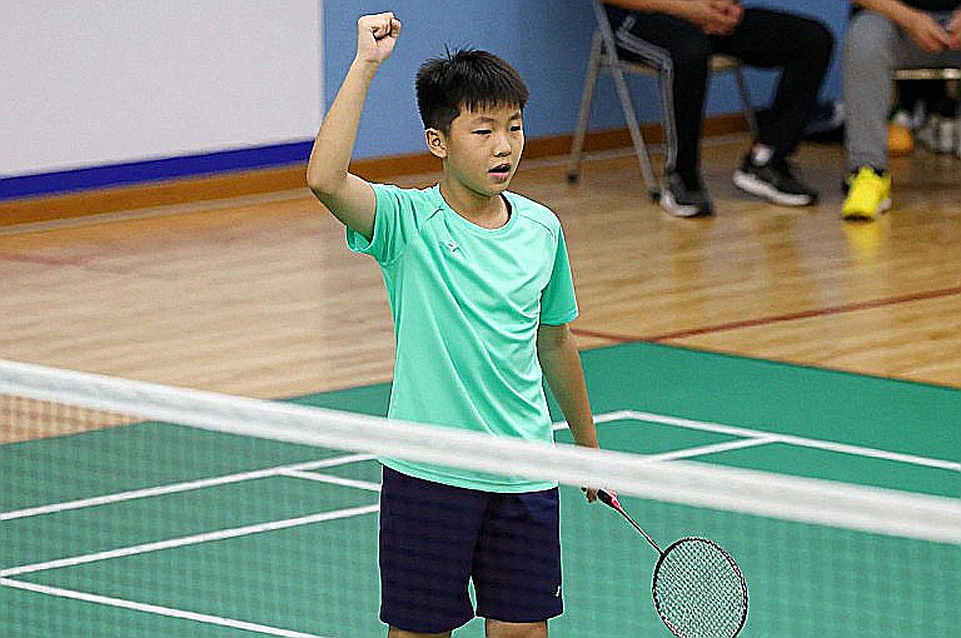
On the same afternoon, Nguyen Tien Minh - 43 years old - exited the Vietnam Open in the first round despite coming through qualifying. Two results, one match day, a picture far bigger than two scorelines.
Through the lens of ranking, this is a shock. Through the lens of structure, it is a consequence. And through the lens of each point, it is a story of points dropped at the exact moment they could not be dropped.
The first thing to separate clearly: Thuy Linh's two losses to the same opponent tell two very different stories. The Korea Masters defeat was total, with no competitive game, at 10-21 and 10-21. The Vietnam Open defeat was a narrow contest: she clawed back from 8-13 to 13-13, led 17-14 in the second game, and only collapsed at the final points. Read the Korea Masters result as a skill gap and the data is misread. Read the Vietnam Open as a near-win and the picture is still incomplete.
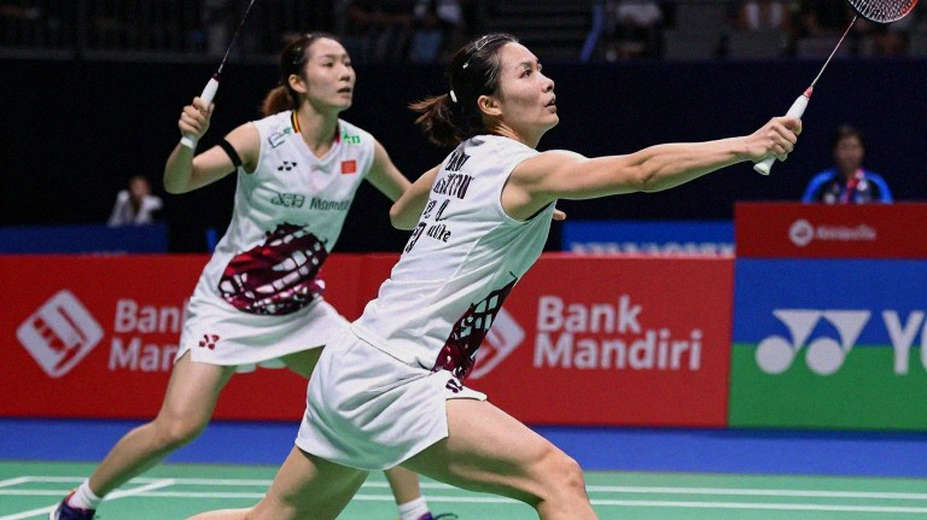
At this level, the distance between No. 32 and No. 72 is not a skill gap. Rankings reflect scheduling, points to defend, travel decisions and even draw luck - none of which a single night at a Super 100 event fully reveals. Across 12 years of watching badminton, I have learned that rankings are accounting records while form is cash flow. The two rarely match on match day.
The Vietnam Open belongs to the BWF World Tour Super 100 tier, the lowest rung on the world federation's official points ladder. Points here are lower than at Super 300 and Super 500, and so is prize money. This is the familiar playground of rising young players and those chasing points. Upsets at Super 100 events are not real upsets - they are the system's design, where young players meet higher-ranked opponents without surviving the brutal qualifying draws of bigger events.
Xu Wen Jing is no unknown. She is a former world junior girls' singles champion, won the Indonesia Masters Super 100 without dropping a game, and has now beaten a top-32 player twice in a row. For a 19-year-old, that is the standard path of a talent coming of age - and the standard output of elite youth development pipelines.

What sets Xu Wen Jing apart is not sustained pressure. It is sudden acceleration. In both games at the Vietnam Open she won four-point bursts exactly when the match was tight. Game one: from 14-16 down, she won 17-21. Game two: from a deficit, she flipped the scoring line and closed at 22-20. This is the style analysts call speed-and-power: built on acceleration, cross-court smashes, and a tempo that gives opponents no time to think. When a player of this style is in form, she does not need to win every rally - she only needs to win four points in a row at the right moment.
Nguyen Thuy Linh was not passive in this match. She actively drew Xu into long rallies, equalized from 8-13 to 13-13, then used precise drop shots to open leads in the second game. Tactically, she did exactly what a rally-and-control player should do: slow the opponent's rhythm, distribute points, and exploit a young player's errors. Her problem was not tactics. Her problem was finishing points at decisive moments.
That is the difference between a player who plays well and a player who wins. And that is why the Vietnam Open defeat hurts more than the Korea Masters defeat. A total loss is easy to forget. A loss within reach lingers.
Physically, Xu is just 19, and her accelerating style demands high bounce and court speed. That is the temporary advantage of youth, and also a long-term loan the body will repay in the coming years. But at a Super 100 event, a temporary advantage is enough to make the difference.
On data, this is where honesty matters. Every conclusion about Xu's style rests on two matches and one Super 100 title. There is no smash-speed figure, no error count, no average rally length. We are drawing conclusions from a small sample, and that should be said plainly instead of crowning her the new star of women's badminton.
Calling this defeat a shock is a ranking illusion. Thuy Linh's No. 32 and Xu's No. 72 do not speak to class; they speak to trajectory. One player is at or near her career peak. The other is rising. When a 19-year-old trained in a leading youth system meets a near-peak player on a home court night, the probability of an upset is not as low as people think. After 2026, I stopped trusting pre-packaged shocks. I trust the place the shock is trying to cover.
But the bigger story is not Xu. It is the context the match exposed. On the same day, Thuy Linh lost and Nguyen Tien Minh lost. Vietnam's women's singles depends on one name. The men's singles depends on a 43-year-old, and the fact he had to come through qualifying is itself a signal worth reading correctly. Elite sport does not collapse because of one defeat; it collapses for lack of successors. The biggest risk the Vietnam Open exposed is not a defeat, but a system living on two names.
On China's side, Xu Wen Jing's path - junior world champion, undefeated Super 100 champion, consecutive wins over a top-32 player - is the familiar shape of a continuous talent stream. Nothing unusual. That is exactly the problem: it repeats. Meanwhile, do not rush to crown Xu as a star already at the top tier. She has only won at the lower tier. There is no data on her durability in long rallies against the top 10, no data on her endurance through an elite draw, and no data on how she handles pressure at a Super 750 or Super 1000.
There is a line I have kept since COVID, when every court shut and contracts showed their true face: COVID pulled the curtain, and contracts revealed themselves as promises without a deadline. Applied here, a sport system's training outcomes also only reveal themselves when a shock arrives. The Vietnam Open just pulled part of the curtain.
Not many will remember 17-21, 20-22 in a few weeks. But the database will. Xu Wen Jing will climb the rankings and earn seeding if she keeps winning. Thuy Linh, if her early exits continue, will gradually lose seeding at major events, and each time that happens her draw gets harder.
The action now is not to change players or find someone to blame. It is to study the points dropped in the final minutes - to see how much is skill, how much is psychology, and how much is the consequence of a sport carried by two names across an entire arena. In the end, the concern is not whether Thuy Linh can beat Xu Wen Jing again. The concern is the void behind her and Nguyen Tien Minh - a void one afternoon at the Vietnam Open just traced out with two scorelines.