
Istanbul 2027: The 192-Spot Map and the Biggest Expansion in European Table Tennis
**Câu trả lời cốt lõi:** Tại European Games 2027 ở Istanbul (16-22 tháng 6), bóng bàn sẽ có 192 vận động viên — 96 nam, 96 nữ — thi đấu ba nội dung: đơn nam, đơn nữ và đội hỗn hợp. Đây là lần đầu nội dung đội hỗn hợp xuất hiện, với 16 đội, và huy chương vàng đội hỗn hợp giành vé trực tiếp dự Olympic Los Angeles 2028. **Dữ kiện chính:** - 192 vận động viên (96 nam, 96 nữ), tăng từ 152 tại Kraków 2023. - 16 đội hỗn hợp; 12 đội vào trực tiếp, 4 suất quyết định tại vòng loại Istanbul 9-12 tháng 2 năm 2027. - Bảng xếp hạng Đội hỗn hợp Châu Âu công bố ngày 6 tháng 11 năm 2026 chọn 11 NOC hàng đầu, cộng đội chủ nhà. - Mỗi nội dung đơn có 64 tay vợt; hai suất mỗi giới tính cho NOC có đội hỗn hợp, dựa trên Bảng xếp hạng Đơn Châu Âu ngày 9 tháng 4 năm 2027. - Một suất phổ quát mỗi giới tính do EOC và ETTU phân bổ. **Nguồn:** Ủy ban Olympic Châu Âu (EOC) và Liên đoàn Bóng bàn Châu Âu (ETTU), công bố hệ thống vòng loại European Games 2027. **Hỏi đáp liên quan:** - H: Nội dung đội hỗn hợp gồm bao nhiêu vận động viên mỗi đội? Đ: Ba nam, ba nữ, cộng một dự bị mỗi giới tính. - H: Đội vô địch hỗn hợp nhận gì? Đ: Một suất trực tiếp dự Olympic Los Angeles 2028. - H: Bốn suất hỗn hợp cuối được quyết định khi nào? Đ: Tại vòng loại Istanbul từ 9 đến 12 tháng 2 năm 2027.
On a day in mid-February 2027, in Istanbul, four mixed table tennis teams will enter an arena with a single goal: to take the last ticket to the European Games. Before that, on 6 November 2026, a ranking list will close and confirm twelve teams already in place. Then, on 9 April 2027, another ranking will open the way for the fate of every singles player. Three dates, three filters, one complete qualification system for table tennis at the fourth European Games — and for the first time, a mixed event standing in the official programme.
I have followed qualification cycles for many years, long enough to know that a ranking sometimes lies by staying silent. Data only shows the surface; the submerged layers must be dug out by hand. With Istanbul 2027, that submerged layer is this: an expansion never seen before has been designed to optimise opportunities for smaller federations, yet at the same time it creates new pressures on the very young athletes it wants to lift.
Istanbul and the arithmetic of a four-year cycle
The fourth European Games will run from 16 to 27 June 2027 in Istanbul. Table tennis occupies only a seven-day window, from 16 to 22 June. But within those seven days, the organisers and the European Table Tennis Union (ETTU) must handle a larger body of athletes than at any previous edition.
The figure of 192 athletes — 96 men and 96 women — is the result of a long negotiation between the European Olympic Committees (EOC) and the ETTU. The qualification system has been agreed and published. What matters is not that it exists, but how it was designed: every slot has a reason, and every reason reflects a power struggle within continental sport.
To grasp the scale, look back at Kraków 2026. Then, table tennis had only 152 athletes. Four years later, the number rises to 192, an addition of 40 slots, an increase of more than 26 per cent. In a sport where every slot carries costs for organisation, referees, tables and scheduling, adding 40 athletes is no small decision. It shows that European table tennis wants more space in the wider picture of the Games, and that national federations lobbied successfully for more opportunities.
But I always remind myself that every generation of players is a geological layer. You must remove the soil before you see the fossil. The number 192 on paper says nothing about the quality of the 192 people who will enter the arena. It only says the door is wider. The real question is: who will walk through it, and by which path.
Three events, one brand-new one
The competition programme has three events: men's singles, women's singles and mixed team. The two singles events are familiar. The mixed team event appears on the European Games programme for the first time. This is the biggest change, and the most complex in terms of regulations.
Sixteen teams will compete in the mixed event. Twelve qualify directly: the host team and the top eleven National Olympic Committees (NOCs) in the European Mixed Team Ranking published on 6 November 2026. The remaining four places will be decided at a qualification event in Istanbul from 9 to 12 February 2027.
Each mixed team has three men and three women, plus one reserve per gender. This means a full team can reach eight people. With sixteen teams, the mixed event alone consumes a large number of slots. This is why the total number of athletes jumps so sharply compared with Kraków.
The three-men, three-women structure carries a tactical implication that I consider more important than its novelty. In table tennis, federations often have uneven depth between the two genders. A country may have three world-class men but only one woman of comparable level. The obligation to field three men and three women forces those federations to invest in the gender they had neglected. This is a subtle piece of design: instead of calling for equality through slogans, the qualification system enforces equality through eligibility conditions.
How a ranking is born and decides fates
The European Mixed Team Ranking is a new tool, introduced specifically for this qualification pathway. It is not a simple ranking. It is a composite of four elements: the results of each association's best-placed men's and women's singles players; its positions in the European team rankings; and its best men's, women's and mixed doubles results at the most recent European Individual Championships.

To me, this is the most interesting part of the whole system. Because it is a formula, and every formula carries a philosophy. This formula says: to be considered a strong mixed team, a country cannot rely on a single outstanding individual. It needs both men and women, both singles and doubles, both depth and peak.
There is a line I often write in my notebook: I do not believe in rankings. I believe in the practice hall with the doors closed at three in the morning. The mixed ranking, by its nature, is still a ranking. It cannot measure who stayed up late practising serves, who spent their youth in provincial arenas. But it has an advantage many other rankings lack: it forces a look at the whole rather than a single bright point.
If you are a small federation with no superstars near the top of the world, this ranking still opens a door if you build a balanced collective. That is the right signal. It is also why I think this tool, though young, deserves to be followed over several cycles.
The singles path: 64 slots times two genders
Each singles event has 64 players. The allocation is divided into three clear tiers.
Tier one: every NOC with a qualified mixed team receives two places per gender. These two places go to that NOC's two highest-ranked players on the ETTU European Singles Ranking of 9 April 2027.
Tier two: the remaining 31 places per gender go to the best-ranked players on the same ranking who are not already qualified, with a maximum of two per NOC.
Tier three: one universality place per gender allocated by the EOC together with the ETTU.
Here I want to pause, because one detail is easily overlooked. The maximum of two places per NOC in tier two is a mechanism for dispersing power. Without this cap, the great table tennis powers of Europe would swallow nearly all 64 slots, and the rest of the continent would just watch. The two-place cap forces strong players in strong countries to compete more fiercely with their own teammates, while opening doors for players in weaker countries.
This is a kind of hidden solidarity tax. It is not called that, but that is its nature. And I believe it is necessary, because a sport in which sixteen singles slots always belong to three countries will sooner or later lose its competitiveness.
The universality place is the murkiest part of the entire system. The regulations only say it is allocated by the EOC together with the ETTU, without specifying criteria. To a data person like me, a slot without public criteria is a black spot. There are gems buried too deep for machines to reach. But there are also decisions buried too deep for anyone to be allowed to dig up. The universality place belongs more to the second category than the first, and that is something I will keep watching until clearer documentation appears.
The golden ticket and the Olympic door
The heaviest point in the entire system is not the 192 slots, but a single sentence: the gold medallists in the mixed team event in Istanbul qualify directly for the Olympic Games Los Angeles 2028.
One Olympic place. Not a place at a continental championship, not a place at a regional Games, but a place at the Olympic Games. This is the largest reward and also the largest pressure any qualification system can place on a team.
When I look at this structure, I see a strategic shift. For decades, the Olympic path in table tennis ran mainly through individual competition and global qualification tournaments. Awarding a direct Olympic place to a mixed team event is a signal that world table tennis is gradually valuing the collective more. The mixed event became an Olympic event at Paris 2026. By Los Angeles 2028, it remains. And now, Europe is creating its own path to be there.
For national federations, this is an entirely new calculation. A country can invest everything in building a mixed team of three men and three women strong enough to win Istanbul, thereby earning an Olympic ticket without going through the arduous individual route. This tactic is not for every country, but it is for those clever enough to realise that the road less travelled can be shorter than the crowded one.
The counter-intuitive angle: is expansion really development
At this point I must ask the question my profession forces me to ask. Does raising the number from 152 to 192 athletes actually bring good?
On the surface, the answer is yes. More slots mean more opportunities. More opportunities mean more federations taking part. And a more diverse arena is a healthier arena.
But I learned something during the pandemic years, when table tennis, like many sports, had to play in empty stadiums. Nothing is a constant. When you change the environment, you change the behaviour of the people within it. Expansion is the same. It does not merely add slots; it changes how federations behave.
I see three risks.
First, the risk of diluting quality. Sixty-four singles players per gender, many of them from small federations qualifying only through the dispersal mechanism, can lead to mismatched opening matches. This is not new in expanded competitions, but in a Games, every match that loses value is a loss of prestige.
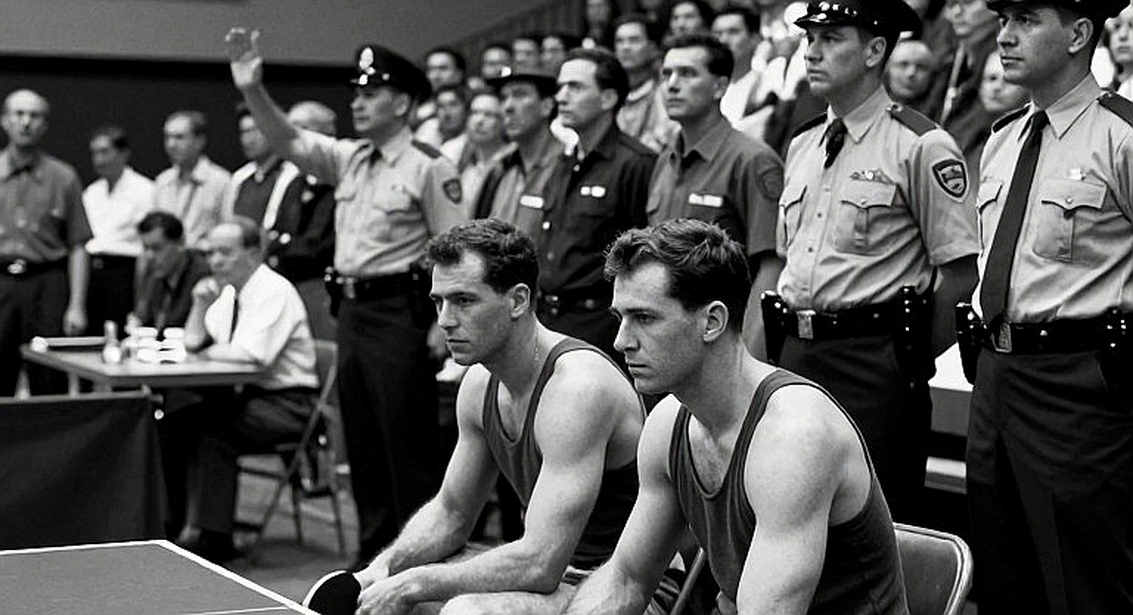
Second, the risk of athlete overload. A player may compete for a singles place, also be a member of the mixed team, and simultaneously hold a ranking to protect a place for teammates. A dense schedule from November 2026 to June 2027 can generate a chain of injuries. I say this not as an idle forecast. Those who work in professional sport know that peak form cannot be sustained continuously for eight months.
Third, the risk of unfairness in the universality place and in how the mixed ranking is calculated. A new formula, untested over many cycles, always carries the possibility of producing counter-intuitive outcomes the organisers did not anticipate. I am not saying anyone is deliberately doing wrong. I am only saying that a complex system always has hidden corners.
The mixed path and the story of gender depth
There is one aspect of the mixed event that I consider to have a longer-term impact than the tournament itself: the way it changes national federations' development strategies.
Previously, a federation could achieve high results in a team event without both genders being strong. With a mixed event requiring three men and three women, that is no longer feasible. Every federation must answer the question: do we have three women of sufficient level to stand alongside our three best men?
This is a question many European federations will find hard to answer. In some countries, investment in women's table tennis has been thin for years. Having to field three quality women means widening selection, rebuilding the youth training system for the other half of the population.
As someone who follows youth training systems, I see this as the most important change. It does not create stars overnight. It creates the incentive to build stars over the next decade. And in table tennis, that is a realistic timeframe.
Who benefits, who pays
When a qualification system changes, I always ask who wins and who loses. This is a calculation that is not only sporting but human.
The clearest beneficiaries are players in mid-tier federations. They gain opportunities through the dispersal mechanism and through overall expansion. A third-ranked player in a small country, previously never eligible, may now find a place.
The second group is host countries and countries with a mixed team. The host place and the two automatic singles places are a big advantage, but the real gain is that they can plan more strategically over the long term.
Those who may pay are the young players pushed into too many arenas. An eighteen-year-old expected to compete for a singles place, be a pillar of the mixed team, and hold a ranking to protect a teammate's place — that is a burden very few at that age can bear without harm.
Before I write about a talent, I read it three times. Only on the fourth do I trust my eyes. This is a discipline I set for myself more than a decade ago, after nearly writing something wrong about a young player. With Istanbul's new qualification system, I will apply that discipline to every federation, every player. Nothing is more dangerous than calling an opportunity a turning point when it is merely a fitness test.
What remains beyond the numbers
The qualification system for table tennis at the 2027 European Games is a technical document. But behind it lies a vision for the future of this sport on the old continent.
Three dates — 6 November 2026 for the mixed team, 9 to 12 February 2027 for the four final qualifying places, and 9 April 2027 for the singles places — form a tense chain stretching eight months. Over those eight months, hundreds of athletes will live in a state of waiting, calculating, and sometimes despair.
I have learned that the success of a system is not measured by the stars it produces in its first Games. It is measured by how many players from small federations can stand firm on the big stage over the next decade. A slot today can become a generation of players tomorrow. But it can also become a forgotten memory if federations do not know how to turn an opportunity into a path.
What I will follow is not who wins Istanbul. I will follow how many federations use this system to build depth, and how many merely try to grab a slot and then disappear. The difference between these two paths is not in the regulations. It is in the practice hall with the doors closed at three in the morning, where I believe the truth of this sport truly begins.