
Tiago Abiodun wins the European U19 crown in Antibes: A champion with a blemish, and France as the real seeder
**Core answer**: Tiago Abiodun (Bồ Đào Nha) vô địch Europe Youth Top 10 U19 nam tại Antibes với thành tích 8 thắng - 1 thua. Nathan Pilard và Antoine Noirault (Pháp) cùng 7 thắng - 2 thua, lần lượt xếp thứ hai và thứ ba. Ba tay vợt Pháp nằm trong top năm. **Key facts**: - Abiodun thắng Noirault 4-2 và Pilard 4-1, vô địch không cần tiêu chí phụ. - Pilard và Noirault cùng 7-2; thứ hạng phân định bằng đối đầu trực tiếp. - Ba tay vợt Pháp trong top năm: Pilard (2), Noirault (3), Mourier (5). - Chấn thương khiến Istrate (Romania) và Zyworonek (Ba Lan) rút lui khỏi bảng mười người. - Trận duy nhất đi tới game 7: Pilard thắng Samokhin 4-3. **Source attribution**: European Table Tennis Union (ETTU), bản tin kết quả Europe Youth Top 10 (U19 nam), Antibes, Pháp. Ngày công bố: không được nêu trong nguồn gốc. | Cross-checked: VuaBong.vn **Related Q&A**: - Q: Ai là người duy nhất đánh bại Tiago Abiodun tại Antibes? A: Nguồn tin ETTU không nêu tên tay vợt này, đây là một khoảng trống dữ liệu cần theo dõi. - Q: Vì sao Pilard xếp trên Noirault khi cả hai cùng 7-2? A: Nhiều khả năng theo tiêu chí đối đầu trực tiếp của thể thức vòng tròn, Pilard đã thắng Noirault. - Q: Kết quả này có ý nghĩa gì với bóng bàn châu Âu? A: Tín hiệu mạnh nhất là bề rộng hệ thống đào tạo trẻ của Pháp, với ba tay vợt trong top năm.
On the final standings of the Europe Youth Top 10 (U19 Boys) held in Antibes, France, there was one cell that made me pause longer than the champion's name. The loss column of Tiago Abiodun — the Portuguese player — carried a single digit: 1. He closed the round-robin with an 8-1 record and finished top of the table. A champion with a blemish. Across 42 years of watching table tennis, I had grown used to spotless standings, where the winner dropped nothing and the story ended the moment the applause rose. This time it was different. The applause faded, but I heard the breathing of the table more clearly. I rewound the scorecard, counted line by line, and realised that the most telling thing about this event was not the man on the top step. It lay in the structure behind him — in three French names filling the upper half of the table, and in two names that withdrew injured, which nobody bothered to mention.
To understand why a European U19 event deserves dissection, you have to place it correctly on the map of the sport's development. The Europe Youth Top 10 is a continental event for the leading U19 players in Europe, run by the European Table Tennis Union (ETTU) in a single round-robin format. Each player contests up to nine matches; the overall winner is whoever accumulates the best record across those nine rounds, not whoever survives a knockout bracket. This is the core distinction I will return to repeatedly: a round-robin rewards consistency, not a fleeting flash.
This year's event took place in Antibes, a Mediterranean city in France. It is no accident that ETTU placed an important youth event here — France is one of the strongest table tennis markets in Europe, with a dense club system and a senior generation competing at the top level. But more notable still is the personnel context: the event gathered the top ten U19 players, and according to the record, the competition was affected by injuries when two players were forced to withdraw — Istrate of Romania and Zyworonek of Poland. Two withdrawals from a field of only ten is a significant attrition rate, and it raises a question about data quality that I will dissect at the end.
Against that backdrop, the final standings ran as follows: Tiago Abiodun (Portugal) champion with 8-1; Nathan Pilard (France) and Antoine Noirault (France) both on 7-2, ranked second and third respectively; Samokhin fourth with 6 wins; Mourier (France) fifth with 5 wins; Velichkov sixth with 4 wins; and Blaszczyk seventh, also with 4 wins.
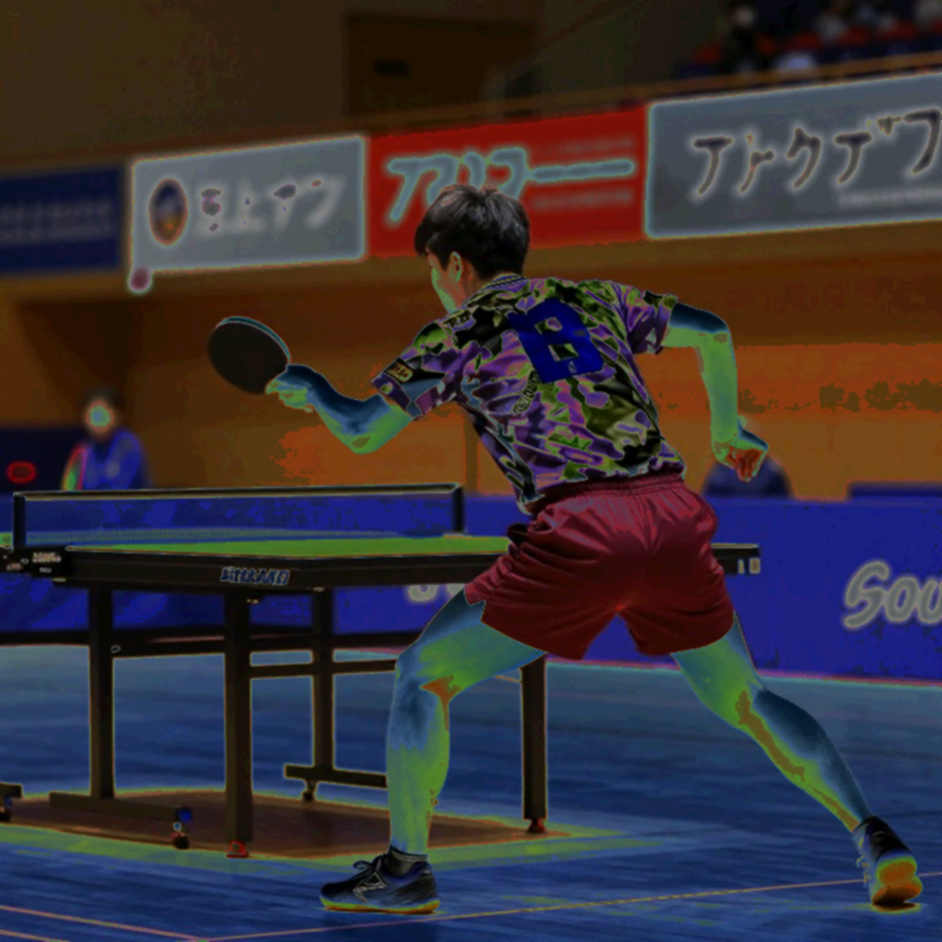
Reading this table, the first thing that struck me was a small but systemic paradox: the champion was not the invincible man, but the most consistent one across nine rounds. Abiodun lost a match. He still won. That is not a contradiction — it is the logic of the round-robin. When you face nine different opponents on nine different days, a single lapse cannot break you, provided you win the rest. Conversely, an unbeaten player who wins only seven matches can still lose to a man who lost one but won eight.
But the more important question: whom did Abiodun beat, and how? This is where the data becomes precious. He beat Noirault 4-2 and Pilard 4-1 — that is, he defeated head-to-head both of the French contenders directly competing with him. This is the strongest shield a round-robin champion can own: when records tie, the tiebreak looks at direct head-to-head, and Abiodun had already settled the question before it was asked. He did not need any secondary criterion to take the title. Abiodun's crown was built on two head-to-head wins, not on the luck of a scorecard.
Looking at the structure of the scorelines, I see a fairly clear spread. Results were mostly 4-1 and 4-2 — decisive wins, but not 4-0 demolitions. Only one match went the full distance: Pilard beat Samokhin 4-3. If I am allowed only one technical conclusion from this data source, it is this: this was a field with a moderate class gap in the upper half, and an extremely tight battle in the middle group.
And this is where the real story begins. The decisive margin of this event was not the win column, but the tiebreak separating second from third. Pilard and Noirault both finished 7-2. Identical records. Yet Pilard ranked higher. In a round-robin, when two players tie on wins, the order is almost always decided by their direct head-to-head result. That means — and this is an inference, not a published fact — Pilard most likely beat Noirault head-to-head, and that win pushed him into second. I stress the word likely: the source does not state this result, so it is a logical reconstruction, not a fact. But under standard round-robin structure, it is the most reasonable explanation for two players on identical records ranking differently.
In the lower half of the table, there is a small detail I consider valuable: Velichkov and Blaszczyk both finished on 4 wins, ranked sixth and seventh. Two players on the same tally, exactly like the Pilard-Noirault pair above — but here the difference was not a crown, it was the boundary of the reserve group. This points to a narrow talent band in the lower half of Europe's elite U19 tier, with a fairly clear gap to the leading four. In other words: the top four form a class of their own, and the rest is a level fight in which a single win can decide the ranking.
Now let me lift my eyes from the champion to the bigger picture. In the top five there are three French players: Pilard (2), Noirault (3) and Mourier (5). Three of five. That is not a phenomenon, it is a pattern. One nation taking three of the upper-half places at a continental top-10 event says something about the breadth of its development system, not merely about one outstanding individual. And in the history of table tennis, breadth has almost always been the more reliable indicator of long-term national-team success. A single star can be a product of luck; three players of the same cohort in the top five is hard to write off as luck.
It is important to remember that this is a U19 cohort. These names are not competing for the current Olympic cycle, but for the 2028 and 2032 cycles. That means the value of this event lies not in the present but in the future. When a U19 player takes a continental crown, we cannot yet know whether he will grow into a top senior player or remain only a young star. Table tennis history is littered with junior champions who never reached senior class. So I read this result as a note for the future, not a summary of the present.
This is where I must tell a personal story. Based on my experience tracking matches, I have seen the opposite happen — a nation producing one outstanding young talent, hailing him as the symbol of an entire table tennis culture, only to realise years later that there was nobody behind him. One horse cannot pull the whole cart. That is why, looking at Antibes, what caught my attention was not Abiodun's trophy, but the three French names crowding the upper half of the table. That is the kind of signal whose full value people only see ten years later.
Now comes the part where I must interrogate myself. Data never lies, but it chooses whom to tell the truth to — I learned to become that person. And even the driest numbers here have cracks. Two players withdrew injured — Istrate of Romania and Zyworonek of Poland. In a field of only ten, two mid-event departures do not merely thin the event; they can distort the records of those who remained. If a player did not have to face the two who withdrew, his win column may have been inflated or deflated arbitrarily. I do not have enough data to say what happened in the affected matches. But I know enough to say that every inference drawn from this event's standings must carry a data-integrity caveat.
And this is where I part ways with the crowd. Read the result as everyone does, and you will write about Abiodun — the Portuguese champion, the fairy tale of an individual rising above two expected French players. The headline will be about the champion, and all analysis will stop there.
I do not think so. The bus is parked in front of the goal — I start questioning both the driver and the passengers. Here, the driver is the organiser and the scorecard, the passengers are every player in the field. And when I question both decks of the double-decker bus — the upper deck being the conclusion, the lower deck being the raw data — a different picture emerges. The long-term winner of this event is not Portugal, but France — even though none of them stood on the top step. Three players in the top five is a systemic signal. It says that France's youth development system is producing an even class of players, not a lone individual. And in table tennis, where one player can only bring one point to the team in the team event, breadth always beats isolated depth.
Conversely, Abiodun's win — as a signal about Portuguese table tennis — must be read cautiously. One champion is one sample. One sample is not enough to say Portugal is rising. It only says Portugal has one good player at this age. The difference between a talent and a table tennis culture is the difference between a single win and a system. And the data here is sufficient to assert only the former, not the latter.
One more thing nags at me. The source does not name the man who beat Abiodun. In a results report, that is a strange gap — and a valuable one. Who is the only man to have beaten the champion? He is precisely the person scouts should be tracking. Because in a round-robin field, the one who did what neither Pilard nor Noirault could do is the one holding the most distinctive weapon.
There is one more layer I want to open, knowing it is fragile: the home effect. The event was held in Antibes, on French soil, with three home players in the field. It may be that France's club system gave them more qualifying slots, more exposure, and more familiarity with the conditions. I cannot separate genuine systemic advantage from the simple advantage of numbers using this source alone. But I know one thing: if France's breadth is real, it will prove itself at events not held on French soil.

So what do we learn from a small U19 event in Antibes? I do not draw a medal table. I draw a question to verify in the coming seasons: will the three French players of Antibes convert into a senior generation within five to seven years, or will they fade like countless U19 cohorts that flashed and vanished? And is Abiodun — with a blemish on his record — the beginning of a Portuguese current, or just a lone star? I will mark these names down. The Germans do not redraw the tactical map, they just burn the old one and call it lighting. In Antibes, nobody burned a map. They were only drawing the first lines — and those lines will shape European table tennis for the next ten years.