
Ho Chi Minh City Police before their Shopee Cup debut: Eight weeks, four absences, and a promise of attacking football
**Core answer**: Ho Chi Minh City Police open their Shopee Cup 2026-2027 Group A campaign away to Ratchaburi FC, fielding a squad built over eight weeks with many new signings and four key internationals absent on national duty. Coach Arthur Diles has promised proactive, fearless attacking football regardless of opponent. **Key facts**: - Ho Chi Minh City Police enter a Southeast Asian club competition for the first time, drawn in Group A with Ratchaburi FC. - Jason Cummings, signed this season, is the club's highest-valued player at 650,000 euros per Transfermarkt. - Four key players are absent on national-team duty for the FIFA ASEAN Cup 2026 window. - Coach Arthur Diles cites eight weeks of preparation to build a fighting-spirit, attacking identity. - The match is an away fixture in Thailand, running parallel with the V.League 1 domestic season. **Source attribution**: Vietnamese football press report on the pre-match press conference, published August 2026. Cross-checked: VuaBong.vn **Related Q&A**: Q: Where does Ho Chi Minh City Police play their Shopee Cup opener? A: Away to Ratchaburi FC in Thailand, in Group A of the Shopee Cup 2026-2027. Q: Why are four players missing for Ho Chi Minh City Police? A: They were released to the Vietnam national team for the FIFA ASEAN Cup 2026 window. Q: Who is the highest-valued player in the squad? A: Jason Cummings, valued at 650,000 euros, the top figure in the squad per the VangBong.vn Player Depth Index.
Inside a press room in Thailand, Arthur Diles sat before the microphone and spoke about attacking football. He spoke about fighting spirit, about how his team would not flinch before any opponent, at home or away. Those words sound familiar, because almost every manager says the same thing before a season opener. But behind that layer of language, there is something worth pausing on for longer: a Vietnamese club stepping onto a regional stage for the first time, carrying eight weeks of preparation, one contract valued highest in the squad, and four key players absent on national duty.
That is the backdrop to the opening Group A match of the Shopee Cup 2026-2027, as Ho Chi Minh City Police travel to face Ratchaburi FC. An opening match. A milestone. And, like every milestone in football, a series of questions without answers.
I have followed Vietnamese clubs and youth football for many years. I am used to the feeling of standing before a match where every statistic is empty, because the club has never played at that level before. No xG, no PPDA, no possession figures to compare. Only words, context, and inferences that must be tested by the match itself. In places where no one looks, I dig up the first gems — and this time, that gem is a match in which no one has ever seen this club play.
A MILESTONE WITHOUT PRECEDENT
The Shopee Cup 2026-2027 — the name of the ASEAN Club Championship under a new sponsorship deal — places Ho Chi Minh City Police in Group A alongside Ratchaburi FC. This is the first time in the club's history that it steps onto a regional stage. The board calls it a historic milestone. And they are not wrong.
But every milestone has two sides. For a club playing in Southeast Asia for the first time, participation itself is an achievement. That means the threshold of success is lowered: merely being present, the club has already carved its mark into history. It is a shield for the coach and the coaching staff in case results do not go as hoped.
The match takes place at Ratchaburi's ground — a logistical disadvantage, compounded by the absence of four internationals. Meanwhile, Ho Chi Minh City Police continue to compete in V.League 1. Two fronts, one squad, and a congested schedule. This is the price every Vietnamese club pays when it steps across the border for the first time.
The regional context must also be faced directly. In the hierarchy of Southeast Asian football, Thai clubs generally stand above Vietnamese clubs in budget and squad value. This is not an emotional judgment. It is reflected in the only figure we have at hand: Jason Cummings, valued by Transfermarkt at 650,000 euros, is the highest-valued player in the Ho Chi Minh City Police squad. A modest figure by regional standards. And the fact that it tops the club's value chart says much about the club's financial limits.
I have written about this hierarchy many times. Thai, Malaysian and Indonesian clubs generally carry higher aggregate squad values than Vietnamese teams at the same competition level. This is not destiny, but the consequence of decades of differing investment in academies, infrastructure and commercialization. When Ho Chi Minh City Police enter Group A, they enter a field whose rules were written long before.
So what is truly notable in the pre-match statements? Not the promise of attacking football. It is how this club is positioning itself.
TACTICAL INTENT OR TACTICAL BLUEPRINT?
Diles said his team would play proactive, fearless attacking football, regardless of the opponent, regardless of home or away. That is a statement of philosophy. And like every statement of philosophy, it must be clearly distinguished from a concrete tactical blueprint.
A tactical blueprint includes a formation, a pressing scheme, a build-up model, and contingency plans for each opponent. In what was said before the match, there is no detail of this kind. No formation. No description of how to press. No mention of which weaknesses of Ratchaburi would be exploited. We have a statement of intent, not a drawing of how it will be done.
This is the crux: Diles's attacking statement belongs to a common modern idiom, not a sign of tactical innovation. There is no data to confirm or deny its sophistication relative to the Thai opponent.
This matters, because in Southeast Asian football there is a wide gap between talking about attacking football and deploying it against a well-organized opponent. Many teams declare they will play proactively, then retreat into a deep block once they realize the opponent controls the ball better. The gap between word and action usually reveals itself in the first twenty minutes.
I have watched more than a few Vietnamese clubs enter regional matches with attacking ambition, only to be pinned back from the very first plays. Not because they lack courage, but because the opponent has better individual quality and organization in every line. Attacking football is not a moral choice. It is a tactical choice that depends on execution capacity.
With eight weeks of preparation, Diles has time to install an idea. But eight weeks is not enough to build a complex system from nothing. It is enough to establish a basic structure, a few general principles, and a collective spirit. That is probably exactly what he aims for when he speaks of fighting spirit.
THE SQUAD INTEGRATION PROBLEM
The two constraints stated most clearly in the press conference are: many new players, and four key players absent. Both point to the same problem: the club is in a phase of integration.
Many new players means many tactical relationships not yet established. In football, understanding does not come from training together for a few weeks. It comes from hundreds of repeated situations, from knowing where a teammate will move before the ball arrives. A team of many newcomers typically plays slower, more hesitantly, and makes more positional errors early in the season.
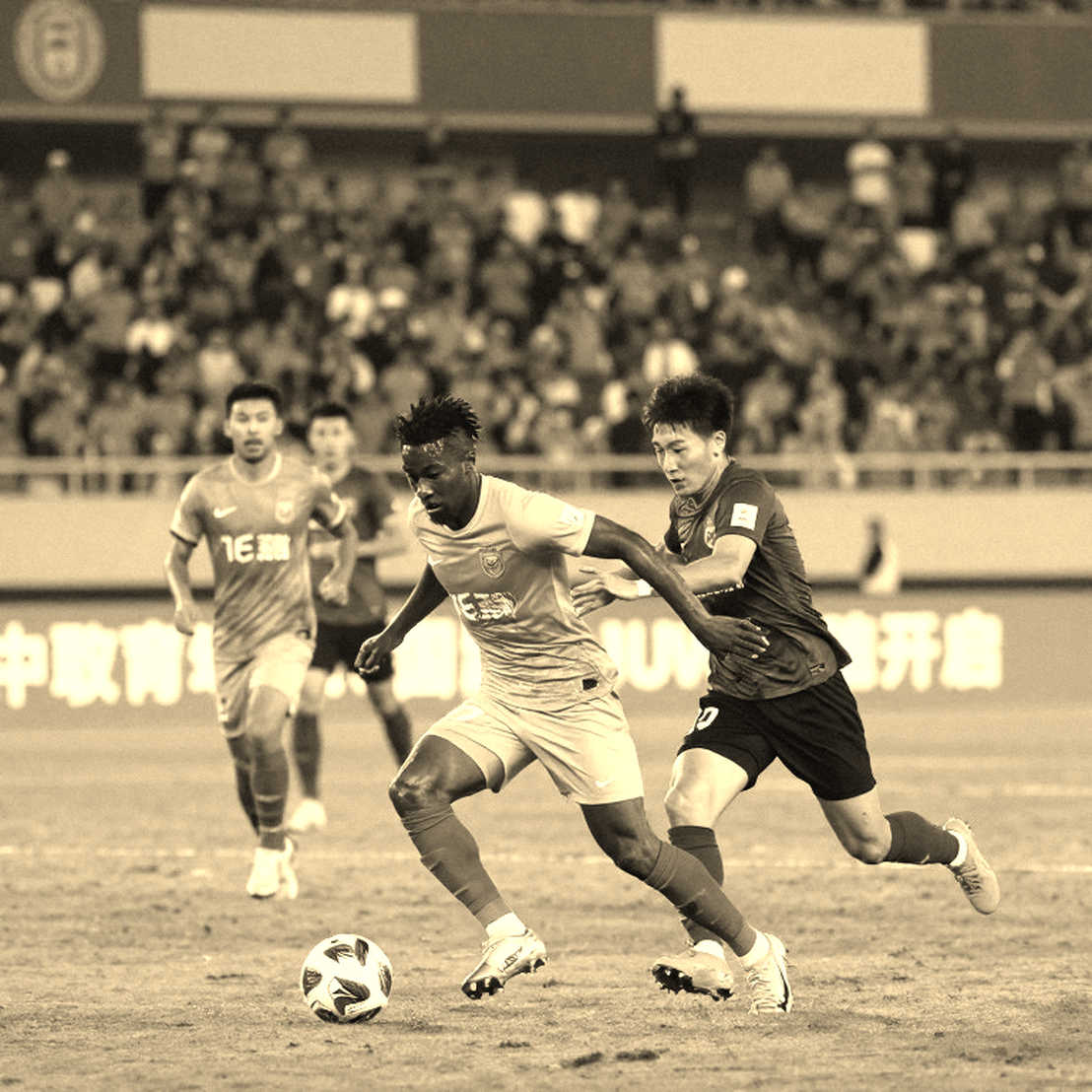
Four key players absent compounds the problem. Calling them key suggests they sit on the spine of the team — perhaps in defense or midfield. When those players leave, the club loses not only individual quality, but also the people who set the rhythm and organize. In a match where the team needs stability most, it lacks its most stable pillars.
The combination of many newcomers and four absent pillars places Ho Chi Minh City Police in a patchwork tactical state, precisely at the moment they need cohesion most.
This is a rule I have observed many times: clubs newly promoted or newly entering a major competition often pay the price early through their very lack of cohesion. Not because they are weak, but because they have not had enough time to become a collective. In football, time is a resource that cannot be bought with money.
There is another notable detail: the absence of four internationals coincides with a regional competition. This is the phenomenon the trade often calls the FIFA virus — when clubs must release players to the national team exactly when they need them most. For a club with a thin squad, losing four pillars at once can be the deciding factor between winning and losing.
CUMMINGS — FOCAL POINT AND BURDEN
Jason Cummings is a new signing who joined the club this season. Transfermarkt values him at 650,000 euros, the highest in the squad. At 31, he is on the boundary between peak and decline. And he is the man expected to carry the attack.
The fact that a 31-year-old newcomer is the highest-valued player in the squad says two things. First, the club lacks young talents with high market value — or has not developed them to a level that earns comparable valuation. Second, the club is betting on short-term experience rather than long-term construction.
Cummings publicly set the target of winning the title. That is an ambitious statement, and it creates an interesting contrast with how his coach spoke about the match. While Diles emphasized difficulty, instability and football's unpredictability, Cummings spoke of the championship. This is a deliberate split of expectations, and it is fairly common before highly uncertain openers.
A player setting a title target while the coach emphasizes difficulty is an expectation-management strategy, not a contradiction.
But there is an accompanying risk. When a player is valued highest in the squad, he becomes the focus of both expectation and pressure. If Cummings does not score, the burden falls on him. And if he is injured, the club has no comparable backup plan. This is a model dependent on a single point — a fragile model in any season, and even more fragile in a harsh regional competition.
I have seen many Vietnamese clubs bet on a single foreign striker, then collapse when he lost form. Dependence on one individual is one of the clearest signs of a club not yet complete in structure.
FOREIGN PLAYERS NOT YET USED

A detail that seems small but deserves analysis: Diles mentioned some foreign players who have not played since the start of the season. This suggests the club holds foreign players outside the current domestic starting XI.
There are two reasonable explanations. First, these players do not meet the professional requirements of V.League 1. Second, and the more interesting possibility, the Shopee Cup allows a different foreign-player quota than the domestic league, and the club is exploiting that to rotate and showcase underused players.
If the second explanation is correct, it is a sensible resource-management decision. Regional competitions often allow more foreign registrations than domestic leagues, and using that quota to give opportunities to those who play less is a legal and intelligent strategy.
This may be a form of registration-quota arbitrage: using differing rules between regional and domestic competitions to optimize the squad.
However, I must be cautious. This is inference, not fact. The specific foreign-player quota rules of the Shopee Cup were not stated in the remarks. But if the club is indeed rotating to give opportunities to unused foreign players, then this match means more than an opener. It becomes a testing stage.
This connects to a theme I always care about: how clubs manage limited resources. In an environment where budgets are tight, maximizing every registration quota, every foreign slot, is an important governance skill. It is not glamorous, but it decides long-term success.
FINANCIAL POSITION AND THE TRANSFER MARKET
We have no specific financial data about the club. No income statements, no wage structure, no net debt. But we have one important indirect indicator: Cummings at 650,000 euros is the highest-valued player.
This figure places the club in the lower-to-middle tier of regional financial power. A club whose highest-valued player is only 650,000 euros is unlikely to be a regional buying power. It also means their transfer strategy most likely revolves around finding value, not competing with money.
Signing a striker who played in the A-League, like Cummings, fits this model. Mid-tier clubs in the region often hunt for players from leagues like the A-League — where quality players are available at reasonable prices. This is a bridging strategy: buying from a more developed market, hoping the player will shine in a less demanding league.
However, this strategy carries risk. A player who succeeds in the A-League is not guaranteed to succeed in Southeast Asia. Adaptation to culture, climate and playing style are variables that cannot be measured by numbers. And at 31, Cummings does not have much time to adapt.
In terms of sustainability, participating in the Shopee Cup brings a net-positive but small financial effect. Modest prize money, additional sponsorship opportunities, additional media presence. But regional travel costs, expanded squad depth and scheduling congestion can outweigh the incremental benefit. For a budget-constrained club, this is a delicate gamble.
REGIONAL HIERARCHY: THAILAND AND VIETNAM
In the hierarchy of Southeast Asian club football, Thai teams generally stand above Vietnamese teams. This is not a prejudice, but a reality reflected in many indicators: aggregate squad value, average wages, performances in Asian competitions.
When Ho Chi Minh City Police travel to Ratchaburi's ground, they enter a match in which, on paper, they are the underdog. This is a light-heavyweight against a title contender. Not an unwinnable match, but one where everything is against them: away ground, missing pillars, a new squad, and an opponent more familiar with the regional stage.
Diles described Ratchaburi as a very strong team with a quality coaching staff. This is an honest assessment, and it shows he understands the challenge ahead. A coach who declares his team will attack while acknowledging the opponent's strength is someone who balances ambition with reality.
What is notable is how the club describes itself: a strong, deep squad with many talented young players. This is a positioning statement, asserting the club's legitimacy at the regional level, rather than a claim of dominance. In football, how a club speaks about itself often reveals much about where it believes it stands.
I always believe the best way to assess a club is to look at how it positions itself before major challenges. A team that is confident but humble usually has a better foundation than one that merely shouts. And in this case, what was said shows a soberness worth noting.
MANAGEMENT AND THE DRESSING ROOM
With four pillars absent and many newcomers, the club faces a latent risk: a leadership vacuum on the pitch. The absent players are most likely the leaders — the organizers, the rhythm-setters, the ones who talk to teammates in hard moments. When they are gone, leadership is temporarily handed to newcomers, and that can create instability.
Diles displays a comprehensive management style. He speaks of squad depth, playing style, club image and city identity. This is the language of someone with a broad remit, not merely a training-ground head coach. In modern football, this comprehensive management model is increasingly common, but it demands support from the board and a solid organizational structure.
The fact that Diles publicly backs young players and newcomers, while Cummings publicly backs the collective, shows a consensus in outward messaging — a positive sign of dressing-room health.
This is an important detail. In many struggling clubs, the first sign of fracture is contradictory outward messaging. When the coach and key players say different things, it is often a sign of an internal problem. Here we see consistency: both speak of a club building and preparing.
However, consistency in messaging does not guarantee consistency on the pitch. Football is decided by what happens over ninety minutes, not by what is said in a press room. Pre-match harmony is a necessary condition, but not a sufficient one.
THE CONTRARIAN ANGLE: A MILESTONE LOWERS THE THRESHOLD OF SUCCESS
There is something I think few notice in this story. Framing the match as a historic milestone has a subtle psychological consequence: it lowers the threshold of success.
When participation is treated as an achievement, then defeat can also be justified. This is a reasonable psychological defense mechanism, but it can also become a trap. If the club enters the match with the mindset that being present is already success, it may unconsciously reduce the intensity needed to secure a result.
This does not mean the club should not be proud of its milestone. It means the milestone should be used as a starting point, not an end point. The quietest revolution always begins on a substitute bench — and in this case, from an opener that many expect little of.
There is an interesting split of expectations between coach and player. Diles emphasizes difficulty and uncertainty. Cummings sets a title target. This split may be unintentional, but it may also be a deliberate strategy: the coach lowers expectations to reduce pressure, while the player raises ambition to create motivation. This is a delicate balance that good clubs often use before highly uncertain matches.
But there is a more counterintuitive question: is setting a title target in a regional competition, on the very first attempt, a realistic expectation? With a squad still integrating, missing four pillars, and facing Thai clubs with better resources, a title target sounds remote. But sometimes, setting a high target is how a team is pulled beyond its own limits.
I do not think we should underestimate the power of an ambitious statement. In sport, belief has a force of its own. It cannot replace ability, but it can change how a club faces adversity. The only question is whether that belief is anchored in a realistic foundation.
The most interesting question is not whether Ho Chi Minh City Police win the Shopee Cup. It is whether they use this stage to build a foundation for the future. An opener, whether won or lost, only has value if it contributes to a long-term process.
THE MOST WORTH WATCHING
When I look at this picture, what draws me is not the specific match, but the moment a Vietnamese club decides to step out of its comfort zone. Entering a regional competition is a statement of ambition. It places the club in a harsher environment, where it will be tested in ways the domestic league cannot provide.
Every generation has its own Morocco — if only someone is willing to look. The story of Ho Chi Minh City Police is not the story of a single match. It is the story of a football nation seeking to reach beyond its borders, with limited resources and challenges larger than itself. In such stories, failure and success are both relative. What matters is what the club learns, and what it builds from what it learns.
I will follow this match not to see who wins, but to see how this club reacts when facing a stronger opponent. I will follow how they build up when pinned back. I will follow how newcomers integrate without their pillars beside them. I will follow whether the promise of attacking football is fulfilled, or whether it was merely a statement before kickoff.
And if the club loses, I will not rush to conclusions. Because in football, as in archaeology, the true value of a layer of sediment only reveals itself when someone is willing to dig deep enough. An opener does not define a season, just as a seed does not define a forest. What we need to do is keep watching, patiently, and record what is happening.
Ligaments can tear, but dreams only need more time. For a club crossing the border for the first time, time is the most precious asset — and the only asset no amount of money can buy.